AI-Powered Construction Workforce Management System
Discover AI-powered construction Workforce Management System that automates scheduling, tracks compliance, and gives real-time visibility across every site.

Share this article

Streamline your frontline operations
See how WMS simplifies scheduling, compliance and workforce management in one powerful platform.
Introduction
While everything is on people, time and precision on the building sites, most crews still use disorganised spreadsheets and manual rosters to get things done. This move toward an intelligent, automated workforce management system is impacting staffing, tracking and delivery of a project at every stage of the build.
Combining visibility and prediction, it unites them in a platform designed for the modern building process and helps teams break away from guesswork to decisions that are backed by real, current data.
Transforming Construction Workforce Management with AI
There are always more moving parts to building projects, unpredictable site conditions that change from week to week, and the need for tight deadlines. This can result in scheduling problems, lost man-hours and compliance issues that aren't discovered until after the fact and after expenses have been incurred.
Intelligent tools do this by analysing data from the site and sending automated emails and messages for routine co-ordination and events that used to take hours of a supervisor's week to maintain, to keep rosters accurate. Rather than waiting for issues to arise, site managers can predict these issues long before they would impact and delay the client's timeline or the overall project budget.
Connecting Workforce Data With Business Operations
The old way of rostering with site software is no longer the case with AI-powered platforms. Many now associate workforce information with reporting, invoice generation and even tender management, providing companies with a single solution that can help them run the site and manage back-office work.
This connection equates to fewer handoffs between departments, significantly reduced data duplication throughout the business and a much more transparent audit trail if a client or auditor ever wants to know where a number came from.
Reducing Manual Work Across Teams
An integrated HRM function implies that onboarding, certifications and payroll are all in a single spot, not in various systems. This means there was less duplicate data entry across site teams and head office, with two people often typing in the same data twice.
It also provides HR and project managers with a single, accurate source of information on the workforce – eliminating the need to follow multiple spreadsheets that were never quite aligned.
Solving Problems Before They Reach the Site
By identifying risks early on, like an expiring certification or an overbooked crew, supervisors can take action before the situation gets to the job site or becomes an impact to client delivery.
This forward-thinking strategy will save time that would otherwise be spent putting out fires during the project as a result of preventable issues – the expense of which is always higher during the project than at the beginning. In time, this type of early warning system becomes one of the most useful aspects of the system for site managers who have many demands.
The Evolution from Manual Workforce Management to AI-Powered WMS
A number of successful steps have been made over the last few decades in the staffing coordination process, each of which improved upon the shortcomings of the previous. Timesheets were replaced by spreadsheet forms, and eventually spreadsheets became cloud-based and accessible via the phone or tablet on site.
Now, an intelligent WMS is the next step in that evolution, which can learn about historical patterns and worker performance, instead of just reporting on what has already happened after the fact.
From Static Records to Living Systems
Older systems are able to record what was previously done and provide a rear-view mirror to managers instead of a windshield. The modern platforms understand what most likely will happen next, which means that the supervisors do not have to only take into account the numbers of the previous week and make decisions for the current week.
This requires a shift to a more proactive approach to decision-making throughout the day and the entire project life cycle, as opposed to a reactive approach.
Learning From Every Project Cycle
The completed projects help to build a system's knowledge of how crews, timelines and site conditions relate to each other. This is a body of information that is built up with each successive build, giving the forecasters a much better chance of predicting with greater accuracy the next project, and minimising the need for manual corrections during the process.
The greatest improvements can be achieved with this metric by project types that are similar, as the system has more similar experiences to reference.
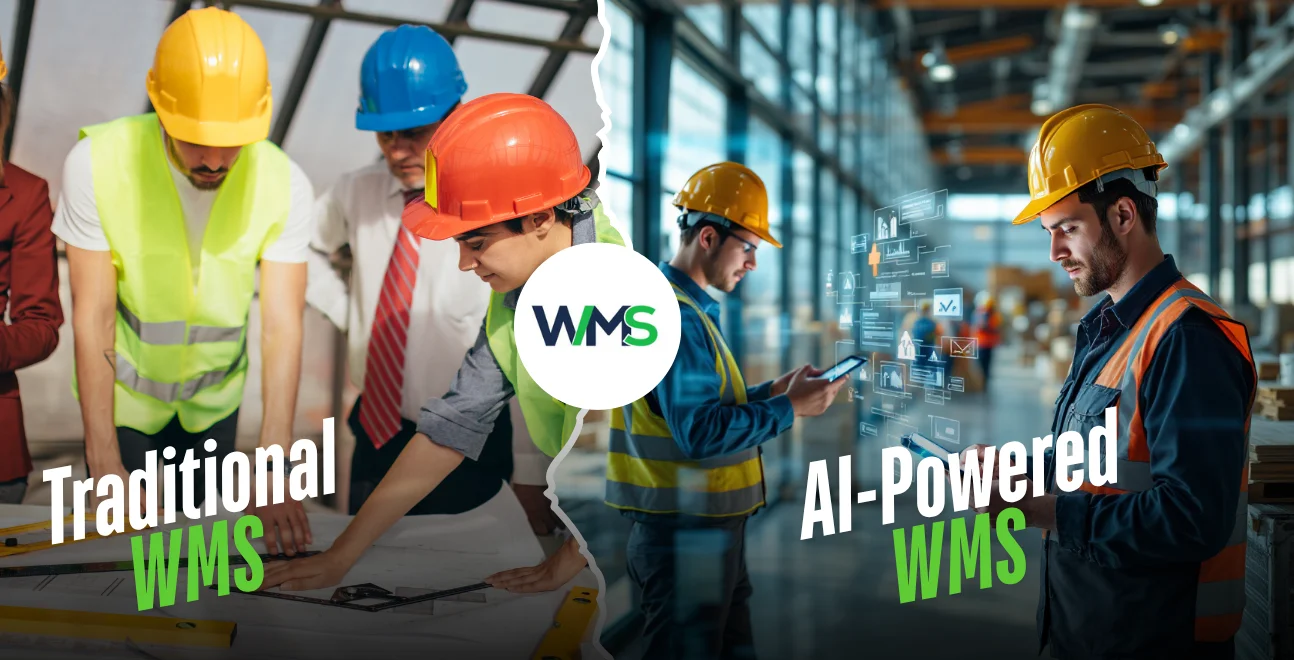
Traditional WMS vs AI-Powered Workforce Management System
| Feature | Traditional Platform | Intelligent Platform |
|---|---|---|
| Scheduling | Manual, reactive | Predictive, automated |
| Compliance tracking | Periodic manual checks | Continuous automated alerts |
| Labour cost visibility | End-of-week reporting | Real-time tracking |
| Site coordination | Phone calls and spreadsheets | Centralised digital dashboard |
| Decision-making | Based on past data only | Based on predictive insights |
Time is the key for a site supervisor. Previously, tasks that would take an hour of manual checking were now being performed automatically in the background, with the main focus being on the work that was being carried out physically on site as opposed to on paper.
That saved time becomes another way of working over the lifetime of a whole project, and when a number of sites are operating on the same platform.
AI-Driven Workforce Scheduling for Construction Teams
Job scheduling is one of the trickiest aspects of working on a job site, especially if there are multiple trades and subcontractors working on the project within a short timeframe. Smart scheduling tools use information about workers' skills, certifications and availability to create rosters automatically, eliminating the need for a supervisor to individually check worker qualifications against a schedule and spreadsheet.
In the event of an unforeseen change, the plan is adjusted instead of being completely left to the onsite individual.
Matching Skills to Site Requirements
In addition to availability, intelligent scheduling takes into account qualifications and safety certifications, so that all compliance requirements are automatically met, rather than checked after a job has started. This minimises the likelihood of an unqualified person being inadvertently called in to work on a task, a serious hazard and liability issue for all active sites.
Preventing Double-Booked Crews
Automated schedules also eliminate the possibility of having skilled workers scheduled on two sites at the same time—which can be a surprisingly common problem when project schedules are still being managed manually—for firms with multiple projects going on at the same time.
It saves time and client goodwill to catch it as it happens and not when they're arriving on the morning of the match and they stumble across it, and it avoids the awkward situation of having to pull a worker off one site to cover another one at short notice.
Real-Time Workforce Visibility with AI-Powered WMS
Site leaders frequently have multiple sites to oversee, and it's crucial to have real-time visibility to keep things running smoothly without too many phone calls.
A connected platform integrates information from all sites into a single dashboard and displays where delays may be building up without anyone knowing – and can alert them to the growing problem before it becomes a larger and more expensive issue down the road.
One Dashboard, Multiple Sites
Supervisors no longer have to make a phone call to each site to ascertain progress during the day. Attendance, task progress and resourcing are all in one location, updated as the work is completed, instead of being collated once a week and then out of date by the time it is received.
Giving Office Teams a Field-Level View
The off-site project manager has the same "real-time" view as a manager on-site at any moment. This fills that missing link between head office and site work and ensures that the client is kept up to date on the project with accurate information and not best guesses.
Predictive Workforce Insights for Better Construction Planning
Intelligent platforms really distinguish themselves from traditional platforms based on static records in predictive analytics. These systems analyse historical data in history to predict the labour demand for the next phases and identify possible bottlenecks in advance, allowing the manager to take action rather than react.
Forecasting Beyond the Current Phase
Predictive tools are not merely examining the team that is already there; they are also examining the future. They simulate future phases of the project and enable a team to plan for peak workloads and assist with accurately budgeting in the tender management and project costing phase – where getting the numbers right is all-important.
Reducing Under- or Overstaffing
The planned work versus the amount of work completed in the past will help pinpoint when additional hands are required on a particular phase, or when the number of hands being used at the present time is higher than what the schedule calls for.
This balance ensures margins are protected whilst ensuring the right delivery deadlines are met, and it takes a lot of the guesswork out of the equation previously only left to the experienced judgement of a site manager.
AI-Powered Time Tracking, Compliance and Labour Cost Control
On most building projects, labour is likely to be the highest single cost, so it's crucial that you track it well it's not an option.
Automated tracking not only helps to ensure attendance but also alerts staff to any irregularities, eliminating the need for manual timesheet reconciliation at the end of the week and minimising the potential for incorrect timesheet numbers to impact invoice accuracy and client billing further down the line, often one or more weeks after the work has been completed.
Reducing Payroll Disputes
Manual data entry errors are one of the most frequent reasons for payroll disputes that result in expensive rework on job sites today, and automated verification can help to reduce those. Less conflict also means less time spent by supervisors settling conflict, which could have been avoided completely by a clean, automated record.
Staying Ahead of Compliance Deadlines
The system will automatically surface upcoming certification renewals to give time for supervisors to take action before a lapse happens and puts the project, the worker or the client at risk.
This proactive alerting is a method that replaces the sort of tracking that is performed manually – which was characterised by one person remembering to glance at a spreadsheet on a hectic Monday morning.
Workforce Management System Intelligence Across Construction Sites
With multiple projects running concurrently, intelligence has to grow in proportion to the number of sites: it can't be a stand-alone application at head office.
A centralised workforce management system ensures that scheduling rules, HRM data and reporting formats are consistent, and senior management can consistently have an understanding of performance throughout all live locations, at any given time.
Consistency Without Losing Local Flexibility
Standardisation is not rigidity – it is important to site teams. Supervisors have the authority to make everyday decisions, but they're operating in a well-defined company-wide context that brings all sites together through the same system; there is no loss of communication between projects or shifts.
The Future of AI-Powered Workforce Management for Construction
But workforce technology will continue to evolve well beyond where it is now, and companies that start using it now are going to be the biggest winners on the curve.
Future systems will become increasingly connected to IoT devices and predictive maintenance systems, providing a more integrated site environment where data will automatically feed through the system and not need to be manually entered at the end of a long day.
In the building sector, it's about time to get ahead of the curve by implementing this type of smart construction Workforce Management System today, instead of waiting until it becomes a reality for companies, leading to faster, safer construction site operations and improved relationships with customers, driven by reliable on-time delivery.
Conclusion
For companies that aren't taking efficiency and compliance seriously, this intelligent construction workforce software isn't an option. It eliminates guesswork with intelligence, providing visibility and foresight to site teams to build faster, better and safer.
Optimise your operations with WMS
Streamline scheduling, compliance, and workforce management in one platform.
FAQ: AI-Powered Construction Workforce Management
AI-powered WMS to optimise construction scheduling, compliance and labour expenses at all active sites.
A component of a construction WMS that automatically creates rosters based on worker skill and availability and project schedules.
It is a feature of a WMS, that helps in the adjustment of construction crew schedules in real-time, based on the changing conditions in the site.
It eliminates manual administration, minimizes payroll mistakes and provides real-time construction site visibility from one WMS.
A traditional WMS captures what has happened on a construction site, an AI WMS anticipates and responds before problems even arise.
Yes, a WMS can scale to any size construction project – and be used by smaller companies to manage scheduling without added admin.
Related Articles
Explore more insights on workforce management, compliance, and operations.
Trades and Field Services Job and Invoice Management
Book jobs, record on-site hours, and send accurate invoices with WorkforceMS. Simplify trades and field services job and invoice management and get paid faster.

Muhammad Asim
14 Oct 2026
Cleaning Firm Roster Management with Task Verification
Plan cleaning rosters, track attendance and prove every task is done with WorkforceMS. Simplify cleaning firm roster management and keep clients confident.
Muhammad Asim
13 Oct 2026

Security Incident and Crisis Management Solutions
Plan rosters, track attendance and keep records ready with Workfoce Management System. Strengthen security incident and crisis management with clear, up-to-date staffing.
Muhammad Asim
12 Oct 2026
Ready to secure your operations?
