Contractor Management Software That Keeps Construction Projects on Track
Manage construction contractors, approvals and obligations in one WMS. Keep projects, sites and reporting on track with real-time visibility.

Share this article

Streamline your frontline operations
See how WMS simplifies scheduling, compliance and workforce management in one powerful platform.
The construction site is as paper-dependent as people-dependent, and a wrong clause or late approval can slow down a project.
This is where a modern workforce management system seamlessly folds in and automates the workflow, making the process of building a workforce from these various agreements into a single, traceable process. This means fewer surprises, more accountability and projects that are on track as planned.
Understanding Contractor Management in Construction
Each project relies on several concurrent agreements, including subcontractors' terms and commitments, suppliers' commitments, compliance documentation and variation orders. These agreements are not kept in any sort of system, and they're so hard to find even in the site office that they often end up in people's inboxes or shared drives.
The larger the project, the more documents that go along with it, and it's impossible to keep track of this way. This is especially the case when it comes to busy sites and projects, and there are several different contractors, suppliers and teams within the project that need to follow overlapping deadlines, all of which rely on accurate and timely information.
Why Traditional Methods Fall Short
Spreadsheets or paper files can be incomplete and are difficult to keep track of until it's too late. One missed renewal date, one unticked variation, one lost compliance certificate can have a knock-on effect on the rest of the site and lead to a lengthened handover period, as well as increasing costs on the site.
These little administration missteps don't always remain little and small; they tend to spread to scheduling, subcontractor payments and even client interactions. Traditional techniques rely on personal effort and diligence more than systems, and are therefore subject to human error, particularly when the project is in a more rushed or hectic period.
The Shift Toward Digital Oversight
Digital contractor oversight takes the guesswork out of oversight the project team can always refer to a single reference, and it doesn't have to be guesswork. The change brings about improved decision-making as information is comprehensive, up-to-date, and available to anyone who requires it, not just to a few people or departments.
This kind of management is not just a luxury for businesses with multiple locations and projects simultaneously; it's a necessity to ensure project schedules, budgets, and professional credibility.
Centralising Contractor Agreements Across Every Project Stage
A project goes through different stages of development: tendering, procurement, execution, and close-out; the specifications for each stage of these are different and change along the way. Centralising this information means teams no longer have to search for documents on various platforms, in email threads or with each team member.
Rather, a single, uniform repository is maintained, which shows the current status of all agreements used, and has linked invoice records that confirm work that has been invoiced for against each agreement, even if the project is at a certain stage of development.
One Source of Truth for All Stakeholders
Supervisors, project managers and administrative personnel all have a single source of information, as this information is stored in the same place as that of contractors. The uniformity reduces the chances of a conflict between parties, thus ensuring that everyone is on the same page regarding obligations, deadlines and responsibilities.
It also makes it easier to hire a new employee to become part of the business since it provides them with a history of the business or the context of past activity, rather than having to rely on a verbal handover which can have gaps in the history or be misinterpreted.
Reducing Duplication and Version Confusion
Another of the more frequent causes of expensive miscommunication is outdated versions being used throughout a site, which is avoided by centralisation.
With teams working on the most up-to-date document, it avoids misunderstandings that can arise at a much later stage in the project, at a time when it is much more costly to correct. This is particularly important on physical construction sites where things may not always be able to be undone.
Here's a quick comparison between contractor stages and some common functions in the workforce management realm:
| Project Stage | Common Contractor Activity | Workforce Management Function |
|---|---|---|
| Tendering | Draft and issue agreements | Document storage and templates |
| Procurement | Approve terms and pricing | Approval workflows |
| Execution | Track obligations and variations | Task and deadline tracking |
| Closeout | Confirm completion and sign-off | Compliance reporting |
Connecting Contractor Duties With Site Workforce Planning
While a contractor's duties are seldom conducted without the operation of the site, many companies still operate them separately. By binding agreements to workforce planning, scheduling is genuine; if there is a formal agreement, it will be reflected in the schedule, not just an understanding between the site lead and the contractor.
This link is vital to strong subcontractor management as it links those present on site with the work that they are contractually responsible for producing.
Aligning Scope With Rostering Decisions
As scope is made visible in conjunction with rosters and daily schedules, planners can be certain their resources are assigned to the tasks agreed upon without assuming responsibility or making the same effort twice.
Where this alignment is lacking, you can be sure of the following problems: no one is free from scheduling conflicts, you're doing needless rework, and skilled labour isn't being allocated efficiently but rather reactively, based on incomplete information.
Avoiding Gaps Between Agreements and Site Reality
Disconnected systems often mean that the paperwork says one thing while what is happening on the site tells a different story. Bringing duties and planning together closes that gap so that the obligations of the contractor are properly shown in activities instead of being filed away and basically forgotten until a dispute forces someone to search for them again.
Keeping Approvals, Deadlines and Documents Under Control
Approval delays remain one of the common and avoidable reasons for project slowdowns. These delays often come not from something, but from a simple lack of visibility. A structured system shows what needs attention well before it becomes a problem, giving teams the time they need to take action.
Automated Reminders for Critical Dates
Rather than depending on individual memory or handwritten notes, automated alerts tell the right people well before renewal dates, milestone approvals and deadlines. This greatly reduces the pressure on any one person to keep track of every detail across active agreements. It also lowers the chance of a date being missed during a very busy time.
Maintaining an Audit-Ready Document Trail
Every approval, every change and every signature is recorded automatically. This creates a solid record that is ready for audits or disputes whenever they happen. This kind of tracking is very important where compliance rules and financial responsibility are matters. Without records, it can quickly become a legal or financial problem.
Streamlining Contractor Management With Real-Time Project Visibility
Real-time visibility changes how teams react to problems when they appear on site. Instead of finding a problem days or weeks later hidden in paperwork, managers can watch it happen and act before it gets worse.
Live Dashboards for Project Leads
Dashboards bring together contractor status, pending approvals and future deadlines in one view so there is no need to check many spreadsheets or systems. Project leads can act fast instead of waiting for scheduled reports that may already be old when they read them.
Faster Decision-Making Across Teams
When up-to-date information is ready at once, teams use time checking facts from many places and more time fixing the problems right away. Quick, well-informed choices keep schedules at each site and, for each project, realistic and truly possible, not wishful dates that slip away with each delay.
Strengthening Contractor Accountability With a WMS
Accountability relies a lot on clarity. A WMS gives that clarity by making obligations clear, measurable and easy to look up. When responsibilities are written down clearly and tracked all the time, contractors will always meet those responsibilities because the expectations are clear from the start.
Clear Ownership of Tasks and Milestones
Giving tasks to named contractors removes any doubt about who is responsible for what and when it must be done. This clarity cuts down on finger-pointing when problems appear because responsibility is written down rather than being guessed or fought over later.
Performance Tracking Tied to Agreed Terms
A workforce management system can keep track of whether work's being done according to the terms that were agreed. It gives project managers evidence about how reliable contractors are over time. This data becomes very useful when choosing which contractors to hire for projects, turning intuition into a clear record of past performance.
Improving Construction Control With a Workforce Management System
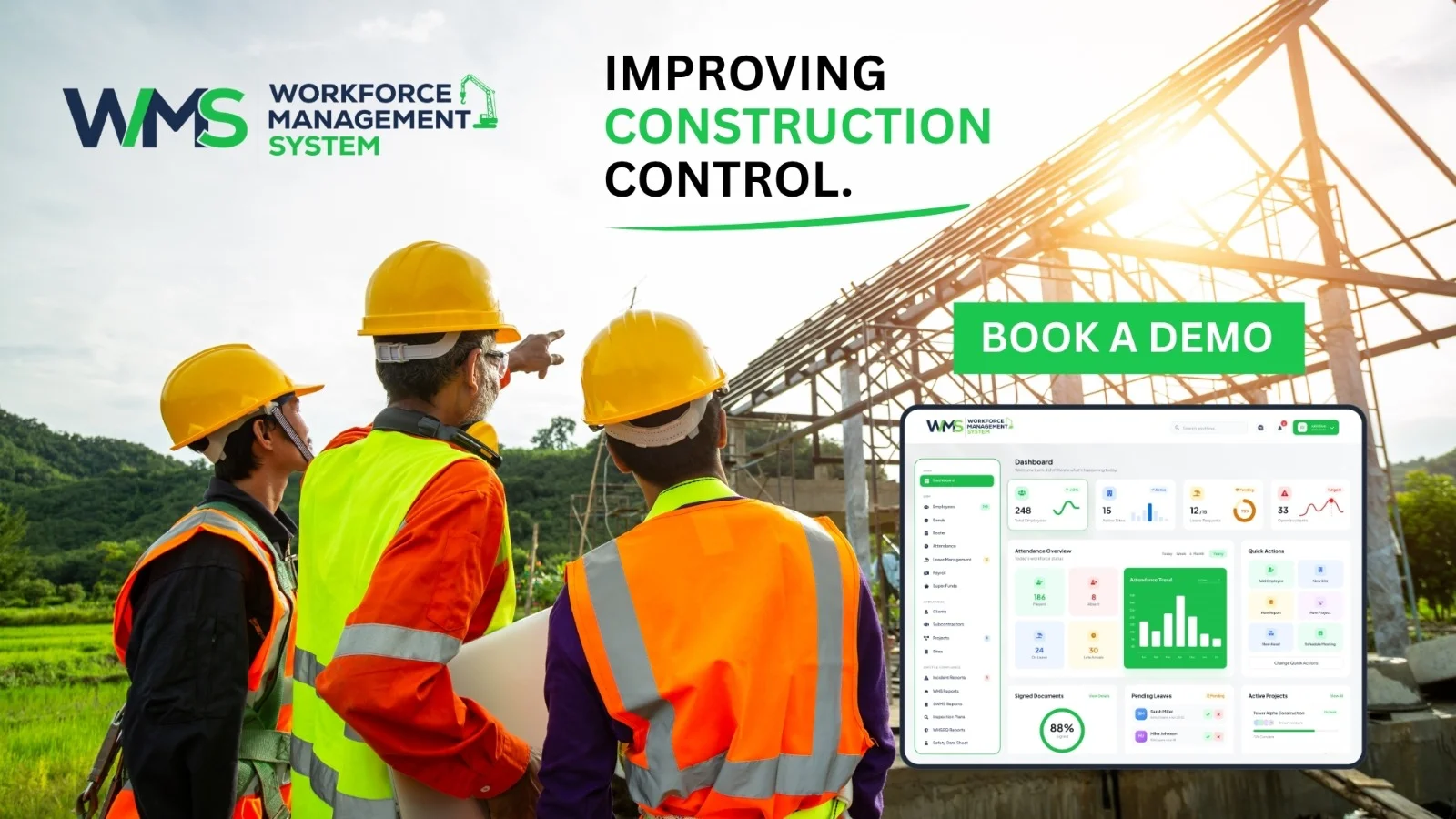
Overall project control gets much better when contractor data, workforce data and site activity are all linked in a system instead of being kept in separate, disconnected silos.
This integration supplies leadership with a clearer view of how work is really moving compared to what was promised. It also spreads naturally into asset management because equipment and materials that belong to contractor terms are tracked together with the people who use them.
Reducing Administrative Load on Site Teams
I see that site teams spend less time on manual paperwork and more time on actually managing the work. This change in focus often boosts both productivity and overall morale across the project because site teams are freed from administrative tasks that add little value on their own.
Supporting Better Budget and Resource Decisions
When contractor terms are directly tied to workforce allocation, project leads can make more informed decisions about budgets and resourcing cutting the risk of overruns that come from miscommunication or old assumptions about scope and cost. Regular reporting on contractor status and spend gives leadership a warning system, for problems before they become expensive.
Building Clearer Visibility Across Contractors and Project Teams
Projects often involve contractors working at the same time in different areas of a site, and keeping visibility across all contractors is essential for smooth, coordinated delivery.
Unified Reporting Across Multiple Contractors
Instead of reviewing separate, inconsistent reports from each contractor, project managers can see unified data covering every party involved. This makes it far easier to spot inconsistencies early before they grow into coordination problems that affect the wider schedule.
Improving Communication Between Site and Office
Clear visibility also improves communication between site staff and office-based administrators because both groups are working from accurate, real-time information instead of relying on relayed updates that can lose accuracy with each retelling.
Bringing Contractor Management and Project Control Together
When agreements, workforce planning and site activity operate as one connected system of separate steps, projects run with far greater predictability and confidence from start to finish.
A Foundation for Long-Term Project Success
This kind of integration is not about avoiding delays on a single job. This integration creates a foundation for steady, repeatable success in future work no matter how big or complex. Businesses that use this integration usually see each next project run smoother than the last.
Preparing Teams for Future Growth
When portfolios grow and demands become more complex having this structure firmly in place helps teams scale their operations while keeping control over contractor obligations and overall site performance. This structure remains strong when the volume of work grows a lot.
Conclusion
Contractor management does not have to be a source of stress on busy sites and projects. With the right structure, in place, agreements, approvals and workforce planning work together smoothly of separately. This connected approach keeps each project moving with real confidence and control.
Optimise your operations with WMS
Streamline scheduling, compliance, and workforce management in one platform.
FAQs
The five principles of the process are: draft, negotiate, execute, track and close-out. A WMS ties each stage together with all construction sites.
Untrained workers result in work delays, conflicts and construction project cost overruns. A WMS ensures that all stages are on time and on track.
It collates agreements, approvals and deadlines for one place in order to construction teams. This eliminates the need for document tracking at multiple locations.
No build is ever simple, as there's always a number of contractors, multiple deadlines and constant changes. A WMS adds structure, and ensures that key details aren't overlooked.
In a typical WMS project, project managers are typically responsible for the project, but site supervisors and admin staff can be involved. Prevent obligations from falling through gaps by having clear ownership.
It puts the contractor's responsibilities on display and on the measuring stick on all sites. This minimises any issues that may occur when responsibilities are recorded at the outset.
Related Articles
Explore more insights on workforce management, compliance, and operations.
Healthcare Strategic Planning for Changing Staff Demands
Plan rosters, leave and skills for busy and quiet seasons with WorkforceMS. Strengthen healthcare strategic planning and keep care steady all year round.

Muhammad Asim
15 Oct 2026

Trades and Field Services Job and Invoice Management
Book jobs, record on-site hours, and send accurate invoices with WorkforceMS. Simplify trades and field services job and invoice management and get paid faster.
Muhammad Asim
14 Oct 2026

Cleaning Firm Roster Management with Task Verification
Plan cleaning rosters, track attendance and prove every task is done with WorkforceMS. Simplify cleaning firm roster management and keep clients confident.
Muhammad Asim
13 Oct 2026
Ready to secure your operations?
