Healthcare Information Management for Connected Clinical Operations
Improve healthcare information management with a connected WMS. Link rosters, credentials and shift updates in one place for smoother clinical operations.

Share this article
Streamline your frontline operations
See how WMS simplifies scheduling, compliance and workforce management in one powerful platform.
Healthcare Information Management for Connected Clinical Operations
The timely delivery of the right information to the appropriate clinical team is dependent on the team performing the correct action. Healthcare information management is vital to having staff, schedules and records linked together, providing a seamless patient care experience between shifts and staff members.
This guide illustrates why connected workforce solutions can help to create safer, calmer clinical operations.
Digital Integration Across Healthcare Teams
There are many teams within a hospital/clinic. All the healthcare workers that support the nurse, from doctors to allied health, admin teams and managers, are dependent on one another, but they are often in different systems. A list can reside on one page, credentials are on another, and shift notes are on another page.
If these pieces don't fit, then lost time and missed details! Care's workforce side is brought together in a single integrated space with the use of digital integration. Rosters, staff records, credentials and shift changes are consolidated together, resulting in a view of everyone that is the same for managers and clinical leaders.
This is not intended to be a substitute for clinical records. It is beside them and provides a focus on the people aspects of care: who is working, where and what education and skills they have.
One Picture for Every Team
Everyone can view the same list and updates, and there will be a reduced number of phone calls and messages. A ward manager will be able to see who is on duty; leave can be confirmed by an admin officer, and a clinical lead will be able to see skill coverage at a glance. Shared information creates a common bond of trust between teams and assists new team members in understanding their place.
Healthcare Information Management for Clinical Operations
For clinical operations, there's a continuous flow of information. Patients go in and in the process of rotation of jobs, passing jobs from one to the other, and changes are made to plans throughout the day. Good information management relates to the following: The right information is recorded, stored safely and in a way that would allow access by those who need it.
It decreases the number of repetitions of questions and minimises the risks of errors. Information about the workforce is included in the flow. Rostered staff, credentialed staff and availability to provide additional cover aid in better clinical decision-making.
If this information is up-to-date and correct, there are adequate numbers of staff in wards and patients are cared for by staff who are ready and qualified to care for them. Good information also assists with staff planning – they work with a greater sense of confidence.
Connected Patient Data Systems
Teams can share information without having to re-enter or lose it. In health care, patients' information is stored within clinical information systems, with trained personnel handling it, and safeguarded by various regulations.
When dealing with this information, providers need to always adhere to their organisation's policies and Australian privacy law. The work tools are employed as a means of support. Not clinical notes, but they do help to ensure that the right people are in the right place to use the clinical systems and provide care.
It's also important for providers to consider how the new tool integrates with their current systems to ensure seamless information management and security. Clear boundaries ensure that each system operates in the system it's best suited for. They also facilitate training and audits for all concerned.
Real-Time Clinical Workflow Visibility
Real-time visibility is viewing real-time activity, rather than what occurred last week. A busy ward might require the ward manager to be aware of the status of staff who have arrived on duty, where a staff member is experiencing a gap and who is available to assist. If you don't have this perspective, it is easy to see how small issues can escalate into major issues until they catch your attention.
Live updates enable a prompt response from leaders. In the event of a staff member being called in sick, the manager can see who is qualified, free and around and then offer the shift in an obvious order. Staff also benefit as they are aware of what is expected of them and can make less untimely plans for the day. Early action, calm: patients and teams are protected.
Seeing Gaps Before They Grow
A gap at 6 AM is much simpler to solve than a gap at the beginning of a shift. Real-time views enable managers to identify a staffing shortage, lack of skills or double-booked staff sooner. They are then able to make arrangements for cover, send patients between wards and/or request assistance before the impact on patients occurs.
WMS for Healthcare Workforce Coordination
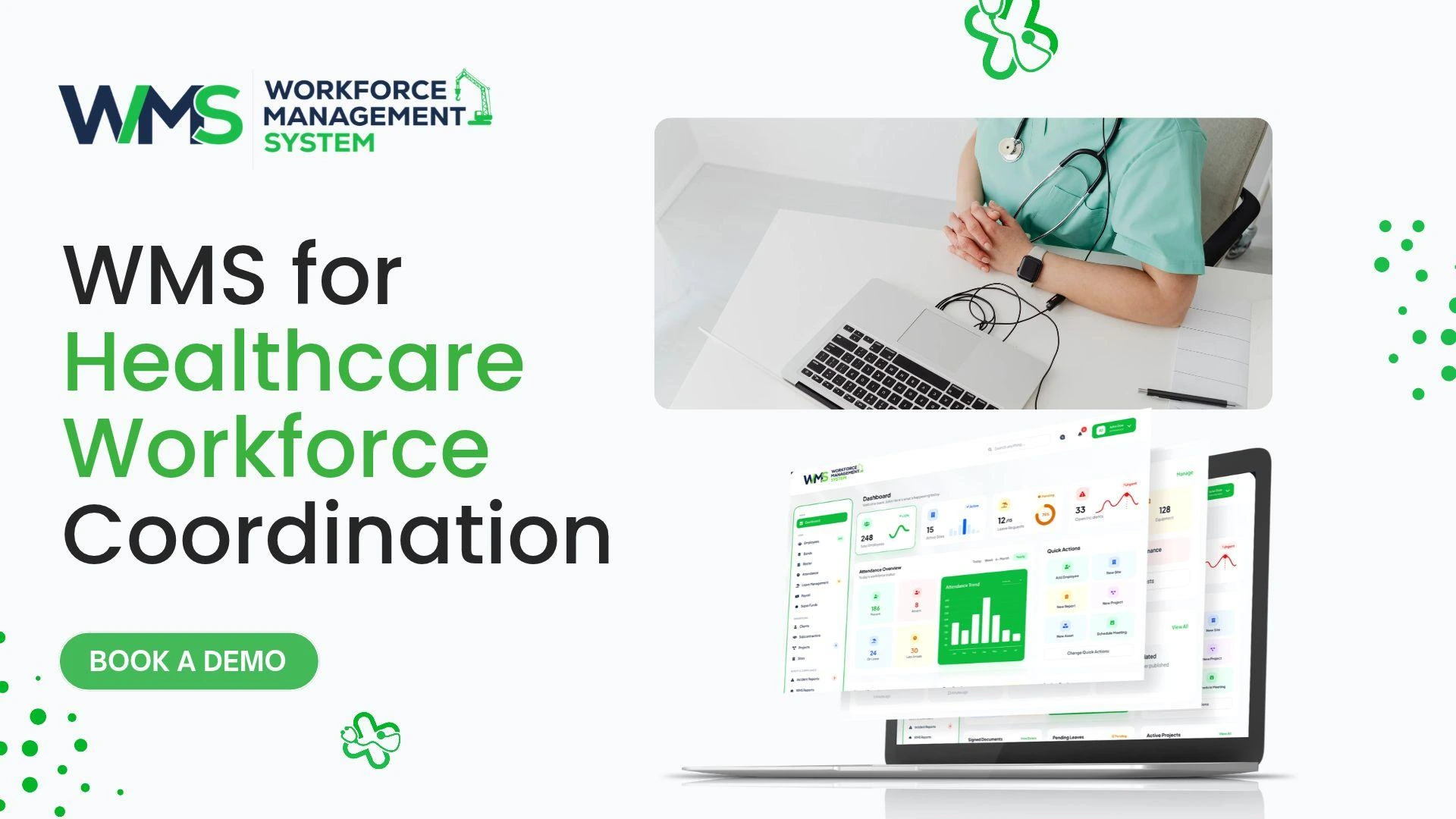
A WFM system integrates rosters, timesheets, employee info, credentials and reports. Managers work on a single record which is kept up-to-date rather than working on multiple files.
This helps minimise double entry, prevents missing out on information and provides clinical leaders with a better overview of ward, clinic and site staff levels. A WMS also helps to coordinate between teams. Managers can see rosters, availability and credentials - and match skills to need and share staff where they're needed most.
WorkforceMS started in the construction business, which sees many crews working in a multitude of sites, and accurate records are important on a day-to-day basis. This is ideal for healthcare providers that need many shifts, locations and credentials.
Healthcare Information Management and Data Exchange
Data exchange is a process of sharing information that is appropriate, timely and secure between individuals and systems. This includes handover notes, change of shift reports, staff changes, compliance records, etc. Exchanges are seamless, and less time is spent searching while more time is spent caring.
But it's not only about good intentions: good habits are a crucial part of good exchange as well. The information should be factual, brief and be given to people who need it. Having rules helps staff to understand what and how, and who to record. Here are a few things to bear in mind:
- Enter and maintain accurate information.
- Provide information to only those who would benefit from it.
- Maintain rosters, credentials and shift notes linked.
- Test compatibility of new equipment with existing equipment.
Handovers That Hold Together
Handover is one of the most significant events in clinical activities. Having a clear understanding of what happened, what is planned and what needs to be done enables the next team to get off to a good start. Handover is less rushed, and there is no loss of information between the shifts/rosters, since they are linked.
Automated Clinical Task Allocation
Task allocation is the assignment of work and the timing for doing this work. This may take the form of cover shifts, staff deployment to wards and the matching of skills to patients' needs in a clinical environment. This is time-consuming if changes occur rapidly, and is done by hand. Automation aids this with the ability to see who is available, qualified and best suited to each task.
Managers will have immediate visibility of the impact of a change on the entire roster with a WMS. Affected employees are informed of the shift's move, and gaps are apparent as soon as the shift is moved. Ultimately, it's the manager's call, which ensures people make the final decision and the system handles repeat jobs and reminders.
Secure Access to Healthcare Records
Health information is sensitive, so access must be controlled. Not everyone needs to see everything. A good approach gives each person access to what they need for their role and nothing more. This protects patients, supports privacy law and builds trust with staff and the community.
The same idea applies to workforce records, which hold personal details such as contact numbers, qualifications and hours worked. Access should be limited by role, and changes should be recorded. The table below shows a simple example of how access can be matched to role.
| Role | Typical Workforce Information Needed |
|---|---|
| Ward staff | Own roster, shift notes and assigned tasks |
| Ward manager | Team rosters, credentials and hours |
| Admin officer | Timesheets, leave and basic staff details |
| Auditor | Reports and compliance records only |
Trust Through Clear Rules
Staff are aware of who they can share information with and feel confident and safe to do this. If individuals can see the point of information being collected and how it's safeguarded, they'll be better inclined to utilise the new tool correctly.
Access to the records is regularly reviewed, errors are identified promptly, and records are maintained clearly. Small frequent tasks are much easier to do than a big clean-up later.
Data Insights for Better Care Coordination
Data helps everyday activities to be educational. Hours worked, overtime, sick leave, shift changes/ credential status may be broken down by ward and/or site. When numbers are presented in a series that may be hard to distinguish, they are easier to spot when they're lined up in a row. Leaders need not guess or remember numbers.
These insights can be used for making practical decisions.
Additional permanent staff may need to be engaged for a ward that is often under-staffed, and a more appropriate staffing roster for a ward with high overtime. Clear figures also support leaders to clearly articulate to executives and funders what the need is and provide evidence-based decision-making.
Learning From the Numbers
Every review can be an opportunity to get better. Rosters can be adjusted if there are long periods of time with sick leave increases. Review regular staffing if additional cover is needed for the ward regularly at weekends. Sharing results also fosters trust – staff will see that it is possible to make changes when they hear the results.
Conclusion
People, plans and records need to be connected to be effective at healthcare information management. WorkforceMS allows the provider to maintain their roster, credentials and reports all in one place. Try out connected tools and experience how it can help each clinical transition today.
Optimise your operations with WMS
Streamline scheduling, compliance, and workforce management in one platform.
Frequently Asked Questions
They sync their rosters, staff records and updates on shifts to ensure teams have access to the same data. Early identification of gaps and confidence in planning by clinical leaders.
Records once and communicates securely to those who need it. Teams don't search as much and can care more.
Managers can identify staff members on shift and staff gaps. They can make cover arrangements early, before patient care is impacted.
Yes, it displays who to choose from for each shift when they are available, qualified and best suited to the job. Ultimately, it is still up to the manager's decision.
Health information is dynamic and critical and must be safeguarded. Access to information is restricted to those who need it based on roles.
Yes, WorkforceMS stores all of your rosters, credentials and reports in one location. Managers have a good overview of staffing on wards and sites.
Related Articles
Explore more insights on workforce management, compliance, and operations.
Facilities Management Through Digital Operations Mapping
Map your sites, staff, shifts and tasks in one view. See how digital operations mapping helps facilities teams plan rosters, track work and cut manual admin.

Muhammad Asim
02 Nov 2026
Security Management Strategy with Smart Workforce Analytics
Build a stronger security management strategy with smart workforce analytics. Plan guard deployment, track licences and review team data in one place.
Muhammad Asim
30 Oct 2026
Smart Cleaning Roster Management with WMS
Improve cleaning roster management with a smart WMS. Match cleaners to shifts, adjust rosters fast and track hours across all your sites in one place.
Muhammad Asim
29 Oct 2026
Ready to secure your operations?
