Healthcare Strategic Planning for Changing Staff Demands
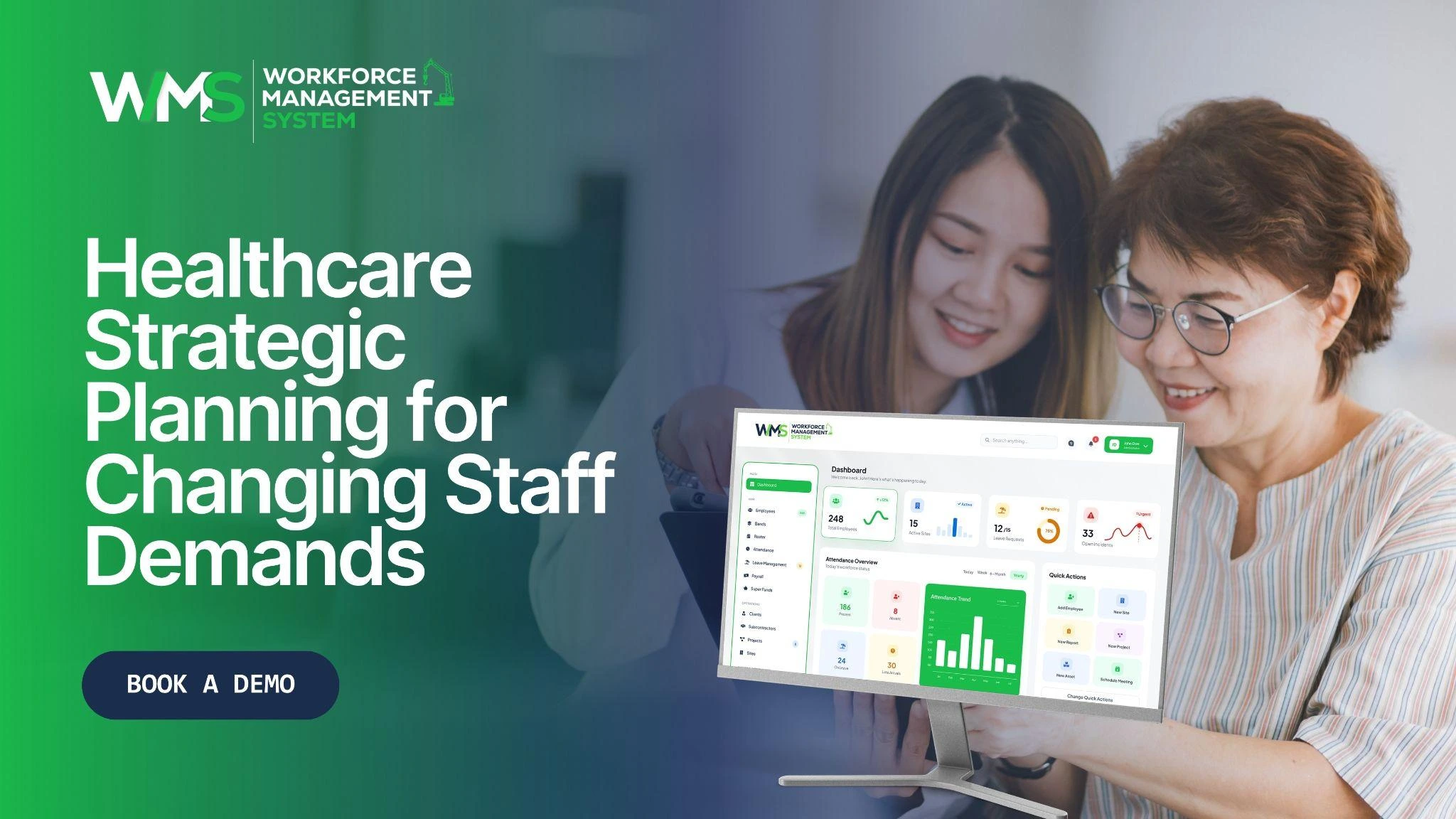
Plan rosters, leave and skills for busy and quiet seasons with WorkforceMS. Strengthen healthcare strategic planning and keep care steady all year round.

Share this article
Streamline your frontline operations
See how WMS simplifies scheduling, compliance and workforce management in one powerful platform.
Healthcare Strategic Planning for Changing Staff Demands
At times, patients need more care; at other times, they need less, and healthcare providers must be ready for both. If staff plans are based on guesswork, wards are set up, spending increases, and staff become fatigued.
WorkforceMS provides strategic planning for the healthcare sector in an easy-to-access way with rosters, leave records and staff information in one place. Here's how planning helps to ensure continuity and stability of care throughout the year.
WMS for Long-Term Healthcare Planning
Planning months in advance is the key to good care today. Hospitals, clinics and aged care homes must not only expect to know the number of staff needed for next week, but they must also know the number of staff needed for next quarter. A WMS ensures that all staff numbers, skills, leave, and hours are in one place!
Healthcare providers can also refer to Australian health workforce data to understand workforce trends and make informed decisions about future staffing requirements.
Based on past experiences, managers can determine what is likely to occur in the future and plan accordingly, rather than in a trial-and-error manner. WorkforceMS started in the construction industry, where work crews have to travel to numerous sites, and records have to be accurate. This care is now extended to healthcare teams. A long-term plan is best if managers are able to see:
- Number of staff they now have
- Any leave and/or training to come up.
- The actual hours that each team worked
Plans Built on Real Records
The past rosters and hours will indicate what actually occurred, rather than what was thought to occur. Managers can focus on areas of team stress and the team's free time. This will make next year's plan more feasible. It also assists managers in communicating their staffing requirements to senior leaders.
A Clear View of Future Needs
Well in advance, the dates of leave, training and contract end can be viewed. Managers will be able to identify deficiencies early on before they become an issue. They will have the option of hiring or training early. This will prevent hasty decisions in times of staffing shortages.
Seasonal Changes in Patient Demand
Demand for patients doesn't stay constant throughout the year. Flu and breathing issues are more common in winter; holidays lead to more emergency visits, and summer to heat-related illness as many members ask for leave. These trends have been evident in the past. If managers have planned for them in advance, the team is not taken aback.
These are typical times for a change in demand:
- This is a time of year when flu is more likely to occur during the colder months.
- School Holidays and/or Public Holidays.
- Heatwaves and storms
- Local events or outbreaks
Planning Around Peak Months
Past records indicate months that were the busiest. Managers can start making plans for additional shifts for those months early enough. Staff receive a greater degree of notice, enabling them to plan their own lives. Patients have to wait less time and wards are calmer.
Covering Holiday Leave
The holiday season is the time when there's a lot of work and lots of vacation. Leave requests are visible to managers in advance to help plan for coverage. Holiday workload is shared using fair rules. This is so that services do not tire the same individuals out.
Balancing Staff Capacity and Workload
Staff capacity is the number of hours of staff time available. Workload is the work required to care for patients. If staff workload remains consistently above their capacity for too long, fatigue sets in, and errors are likely to increase.
Healthcare strategic planning is holistic – it is looking at both sides at the same time. Additionally, some states and territories have minimum staffing requirements for specific care facilities, and providers should consult the current requirements that apply to their facility.
Spotting Overload Early
Warning signs include overtime and an increase in shifts. Teams that are working the extra hours will be reported. There is a way for managers to intervene before staff become weary. Early intervention for staff and patients.
Sharing Work Fairly
If there are some who carry more than they should, their morale will be reduced. Clear rosters indicate the person(s) working and the amount of time. Adjustments to shifts can be made to distribute the load among managers. Fair work fosters trust all around the team.
Healthcare Budget and Labour Forecasting
Overtime or agency staff is often the most expensive part of healthcare and can soon add up to a lot of money. Managers must know where money is going and where it is likely to go. The anti-fraud layer of a workforce management system maintains accurate hours in a single source, the foundation of accurate forecasting, by enabling managers to compare the plan to actual hours worked.
This way, budget discussions will be easier for everyone. It also enables leaders to identify areas where they are progressing well and areas that need attention. At times, it can be cheaper to have permanent employees than to pay for additional hours over and over again.
Tracking Overtime and Agency Use
The team(s) worked overtime and the number of hours. Managers can find out if agency usage is increasing in one area. This indicates areas that might require a permanent staffing position. Covering the hole is less expensive than covering it over and over.
Workforce Management System for Healthcare Goals

All healthcare providers have objectives – safe care, reduced wait times, reduced expenses and a more satisfied staff. A workforce management system can be used to put these goals into action. Rosters, hours and records all in one place allow managers to see if the team is on track. They need not wait till December to find out.
Turning Goals Into Numbers
With a goal like less overtime, you can go back to it to see if it was achieved the following week. Managers have a goal to set and monitor progress. Teams can see the impact that their efforts have on the outcome. Numbers that are clear make it easier to achieve goals.
Checking Progress Each Month
Each month, the results are reported, with information on what is working and what is not. The plan can be adjusted by the manager, as time permits. A little bit of a change early on is easier than a lot of a change late on. This ensures that the organisation remains on track.
Skills Coverage Across Healthcare Departments
Everyone has to have the correct combination of skills. Registered nurses, enrolled nurses and support staff are needed in a ward and doctors, allied health staff and reception staff are needed in a clinic. But don't worry if there aren't enough people to do the job, or if their skills aren't up to it.
Providers also need to be aware of the latest rules, as clinicians will need to ensure that they are registered in accordance with the latest rules, which they should verify with AHPRA. Skills that are not recorded come out of the woodwork when records are clear. A manager can then train the employees who are currently on the job or recruit new employees, so that there is no disruption to patients.
Skills Mapped to Each Department
Staff profiles list staff's roles, training and qualifications. Managers will be able to identify areas of strength and areas of weakness in their departments. They are able to design training or hire to meet needs. This ensures safety of care in all aspects.
Credentials Always Up to Date
All registrations, certificates and checks will be consolidated in one place. Reminders are sent out prior to expiration. Last-minute changes of plans are not faced by managers and staff, respectively. Records are also available for auditing at any time.
Staff Retention and Workforce Stability
When you're losing experienced staff, it comes at a price. Staffing, training and induction are time-consuming and costly, and care may suffer as the staff get to know the setting. Often employees get tired, and last-minute roster changes and jobs that are not done fairly are to blame.
Many of these issues can be corrected through improved planning, which is the most effective method for safeguarding the quality of care provision – safeguarding good people is one of the best methods for safeguarding the quality of the provision of care.
Staff value their employers by being fairly rostered, paid correctly and having clear leave rules. If someone has an idea of what shifts they will be facing ahead in their life, they can plan to adapt their lives to the changes, which helps them to feel less stressed. This creates more consistent staffing, which can be relied upon by patients.
Fair and Predictable Rosters
A staff member, if he or she knows the times for his or her shifts in advance, is able to schedule his or her life. Even rules for holding nights, weekends and holidays minimise conflicts. Pay creates trust. If pay is correct, trust is created. Attitudes that lead individuals to feel respected increase their likelihood of remaining.
Healthcare Strategic Planning and Resource Allocation
Resource allocation – staff allocation – is putting staff where they are needed the most. A department might be empty, another might be full, and with no idea in sight, managers might not realise until it's too late.
Staff data are used to inform good healthcare strategic planning decisions, including where to place staff, share staff and train staff. Changes in demand can help inform staffing decisions as indicated in the table below.
| Change in Demand | Typical Staffing Response | What Records Help Show |
|---|---|---|
| Winter flu surge | Extra shifts and added cover | Past busy months and available staff |
| School holiday peak | Planned leave and shared cover | Leave patterns and gaps |
| Heatwave or storm | Short-notice extra staff | Who is free and qualified |
| Long-term staff leave | Temporary cover or hiring | How long cover is needed |
| New service opening | New roles and training | Skills already in the team |
Moving Staff Where They Are Needed
If in one area, there is a shortage and in another area, there is room, managers can transfer the personnel who are qualified. This will help the agency to lower its coverage requirements. Moreover, it helps to retain familiar faces in the team. Patients receive consistent treatment, even if there is a change in demand.
One View Across Sites
Multiple-site providers will be able to view rosters and hours/costs in one place. It's easy to tell that there are differences between sites. There is potential for this to be good practice shared across sites. This allows for the entire organisation to be improved as a whole.
Aligning Staffing Plans with Care Priorities
A staffing plan should reflect the organisation's priorities for an issue, for example, patient safety, reduction in waiting time or provision for older users. Using the appropriate WMS, managers will be able to determine whether or not rosters correlate to these priorities and make adjustments to the plan in advance if they don't.
Priorities also evolve over time; with a new health program or outbreak of a disease in the area, a different combination of staff is required.
Putting Priorities Into Rosters
Caring for safety should be the first priority; rosters should ensure skill mix and rest breaks. Where shorter waiting times are most important, there needs to be more cover during busy times. These rules can be programmed into managers' rosters. Plans then align to actual goals of the organisation.
Reviewing and Adjusting Often
There is no one-size-fits-all approach to staffing plans; they should be reviewed and updated regularly. Regular reviews indicate the successes and failures that need to be altered. Staff comments provide additional information. Actions are made without change, but are small and steady.
Ready to Plan for Every Season of Care
The first step for good healthcare strategic planning is to be acquainted with your people, your skills and your busy times. With WorkforceMS, you have your workforce rostered, hours accurate and records up-to-date in one place. Be prepared, manage care costs, and keep care stable. Give a demo a call today and experience the ease it's able to bring.
Optimise your operations with WMS
Streamline scheduling, compliance, and workforce management in one platform.
Frequently Asked Questions
Flu season, holidays, and heatwaves bring up the number of patients. These are patterns that have been observed previously and managers can make some planning for additional cover.
Ensures staffing and skills levels are adequate to meet patient needs in advance of problems. This ensures care is not lost and workloads are levelled.
Records genuine hours, overtime and agency time. The plan can then be compared with actual expenditure by the manager, and problems can be identified early.
Yes. It is easy to identify gaps in staff profiles as they provide details of roles, training and registrations. Managers can train or recruit before the patients are impacted.
Less fatigue due to early, fair rosters and fewer changes at the last minute. It is important that staff feel supported and respected so that they are more likely to remain.
Yes. A WMS will display the availability and qualifications of staff so that managers can allocate staff to areas where they are needed the most.
Related Articles
Explore more insights on workforce management, compliance, and operations.

Trades and Field Services Job and Invoice Management
Book jobs, record on-site hours, and send accurate invoices with WorkforceMS. Simplify trades and field services job and invoice management and get paid faster.

Muhammad Asim
14 Oct 2026
Cleaning Firm Roster Management with Task Verification
Plan cleaning rosters, track attendance and prove every task is done with WorkforceMS. Simplify cleaning firm roster management and keep clients confident.
Muhammad Asim
13 Oct 2026

Security Incident and Crisis Management Solutions
Plan rosters, track attendance and keep records ready with Workfoce Management System. Strengthen security incident and crisis management with clear, up-to-date staffing.
Muhammad Asim
12 Oct 2026
Ready to secure your operations?
