HR for Small Business Australia: Construction Compliance Guide 2026
Get expert small business HR support & compliance solutions in Australia. Reduce risk, stay compliant & get 24/7 advice with no in-house team. Start a free demo
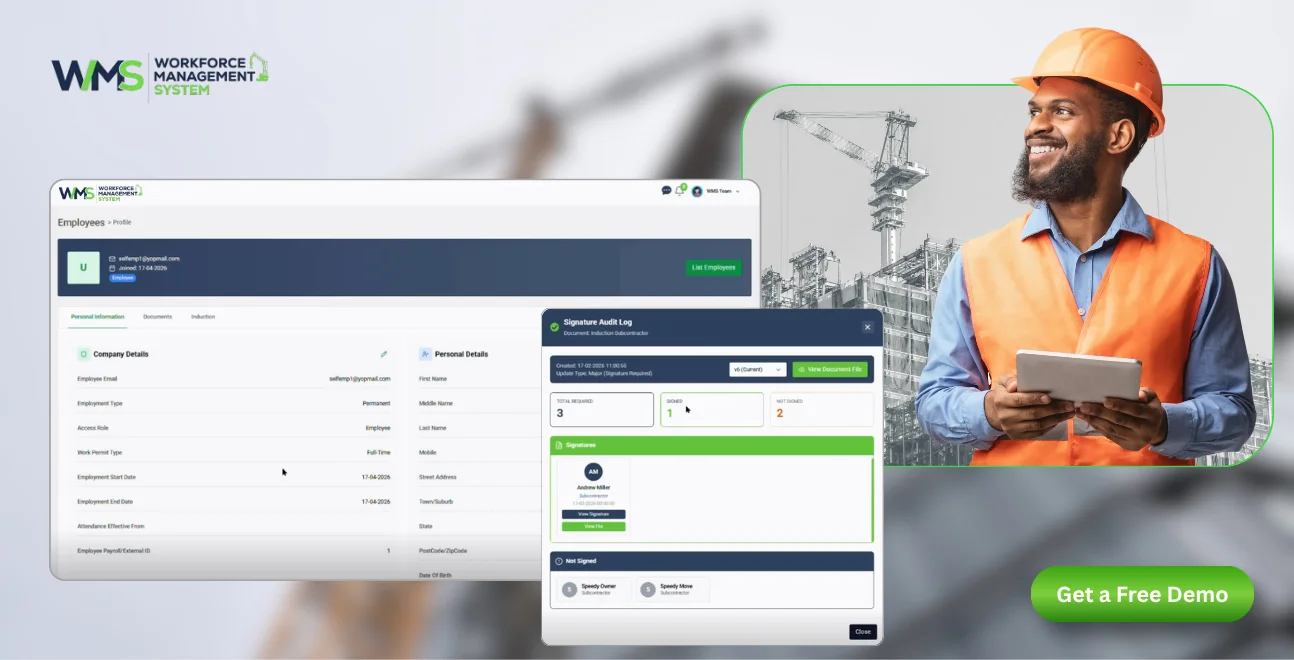
Streamline your frontline operations
HR for small business Australia is basically managing people, payroll stuff, and compliance for businesses that have fewer than 50 workers, all under Australian workplace law.
For construction firms it means more than "standard HR". It includes juggling the Building and Construction General On-site Award, keeping an eye on safety certifications, and holding onto decent records for at least seven years, sometimes even longer depending on the thing.
- Fair Work compliance is not optional. It starts from your first employee, no real wiggle room there.
- Construction awards can feel like a maze, and they change depending on the trade and role.
- Digital HR tools can cut down admin time by as much as 40% for a lot of teams.
- Getting subcontractor classification wrong can cost money fast. Penalties can reach up to $82,500 per breach.
Introduction
Running a small construction business in Australia is basically a lot of balancing site management, quote prep, and crew wrangling, all while HR is on your shoulders too. And it's not just "small" in a vague way: over 97% of Australian businesses are classified as small, and the construction sector alone employs more than 1.1 million people. So yeah, getting HR right really is not optional.
The problem is, most HR advice feels generic, like it was made for office teams that don't change locations every week. It usually does not match the reality of mixed trades, multiple awards, mobile sites, and the very real risk of sham contracting claims popping up when you least expect it.
This guide is built to deal with that mess, or at least the parts you actually control. You'll get clear on which HR requirements apply to your construction business, how to choose software that won't collapse on-site, and how to stay compliant with the 2026 law changes especially payday super, and the move toward criminalised wage theft.
So whether you're working with two apprentices, or managing twenty subcontractors, this is the only construction-specific HR guide you'll likely need.
What Is HR for Small Business Australia?
HR for small business Australia is basically the whole people stuff: recruitment, onboarding, payroll, managing leave, writing policies, plus making sure everything stays aligned with Fair Work.
For businesses with under 50 staff, it's usually handled in a lean way. And unlike those big enterprise setups, most small businesses do not have a dedicated HR manager, so you end up needing streamlined processes that actually work in real life.
For construction employers, HR goes a bit beyond the basics. You’ll also deal with safety compliance, reading the relevant trade specific awards the right way, and keeping subcontractor arrangements under control.
The Fair Work Act 2009 and the National Employment Standards (NES) apply from your first employee too, no matter the size of your business.
Why Do Construction Companies Need Special HR Support
Construction businesses have HR problems that are a bit different. Trades get jumbled with mixed work, they sit under separate awards, there is high seasonal turnover and the workforce is often moving around between sites all while safety certifications need to be managed properly. When you use generic HR advice it usually feels kind of off, because it does not really deal with the award complexity, or the site based logistics, or the fact that workers are not always in one place.
The Real and Specific Headaches of Managing Trades and Labourers
In construction, a crew might include carpenters, electricians, and labourers, and each group can be covered by different Modern Awards. Often the Building and Construction General On-site Award 2020 covers a lot of roles but electrical or plumbing tasks may slide into separate awards. If roles are classified wrong, you can end up with underpayment and then Fair Work penalties, not just paperwork issues.
Then there are the seasonal bumps, project by project hiring, and the tracking that never ends. You need to keep an eye on White Cards, high risk work licences, plus induction records. A generic HR platform can't really handle trade specific wage rates, or send expiry alerts for safety certificates. Construction needs HR built for live projects and sites not for offices, simple as that.
Essential HR Requirements for Small Construction Businesses
Every small construction employer needs compliant employment contracts, correct award classification, safety policies, seven-year record keeping, and Single Touch Payroll (STP) Phase 2 reporting. Superannuation guarantee is now 12% as of July 2025.
Understanding the Building and Construction General On-site Award
The Building Award sets minimum wages for labourers, tradespeople, and apprentices across four classification levels. Apprentice wages progress through stages based on time served and training completion. Employers must also pay allowances for tools, travel, and height work where applicable.
Annual wage reviews typically take effect from the first full pay period on or after 1 July. Failing to update rates exposes your business to back-pay claims and civil penalties.
Safety Certifications and White Card Compliance
Work Health and Safety (WHS) laws require construction workers to hold a valid White Card (General Construction Induction). HR systems must track expiry dates, store induction certificates, and alert managers before credentials lapse.
Non-compliance with WHS training requirements can trigger state-based fines and increase workers compensation premiums. Digital tracking eliminates paper-based expiry gaps.
How to Choose HR Software for Australian Construction SMEs
The best HR software for construction combines award interpretation, safety certification tracking, mobile access, and payroll integration. Avoid generic platforms that lack offline functionality or trade-specific wage engines.
Must-Have Features for Site-Based Teams
Construction HR software must include: award-aware payroll calculation, digital contract templates aligned to the Building Award, policy acknowledgement tracking, and automated compliance alerts. Certification expiry reminders and incident reporting tools are non-negotiable for WHS compliance.
Mobile Access and Offline Functionality
Site offices often lack reliable internet. Your HR platform needs mobile apps with offline data capture that syncs when connectivity returns. GPS clock-in, photo verification, and geofencing prevent buddy punching and provide audit trails for Fair Work disputes.
Fair Work Compliance for Construction Employers
Construction employers must correctly classify workers under applicable Modern Awards, pay minimum wages including penalties and allowances, maintain accurate records for seven years, and issue compliant payslips. Misclassification of subcontractors as employees is a primary enforcement target.
Modern Award Interpretation for Multiple Trades
When your team includes mixed trades, you may need to apply multiple awards simultaneously. The Fair Work Ombudsman provides award finder tools, but construction specific HR software automates rate application based on employee classification and shift patterns.
Subcontractor vs Employee Classification
The ATO and Fair Work Ombudsman use a multi-factor test to determine true employment status. If a subcontractor works exclusively for you, uses your tools, and follows your directions, they may legally be an employee. Sham contracting carries civil penalties up to $82,500 per contravention for corporations, plus back-payment of all entitlements.
HR Outsourcing vs Software: What Works for Builders?
Outsourcing suits businesses wanting hands-off compliance but costs $500 to $2,000 monthly. Software suits owners who want control at $4 to $15 per employee monthly. Hybrid approaches combine software with advisory support.
| Factor | HR Outsourcing | HR Software (DIY) | Hybrid |
|---|---|---|---|
| Monthly Cost | $500 to $2,000 | $4 to $15/employee | $8 to $20/employee |
| Award Expertise | Included | Varies by platform | Included |
| Control | Low | High | Medium |
| Setup Speed | 2 to 4 weeks | 1 to 3 days | 3 to 7 days |
| Best For | 15+ employees | 2 to 20 employees | 10 to 50 employees |
When to Outsource HR for Your Construction Business
Outsourcing makes sense when you employ 15+ staff across multiple sites and lack time to manage awards, disputes, and safety investigations. For smaller crews, construction-specific software like WorkforceMS delivers compliance without the overhead of a retainer.
5 Costly HR Mistakes Construction Businesses Must Avoid
The most expensive HR mistakes in construction are:
- Misclassifying subcontractors
- Using outdated award rates
- Failing to track safety cert expiry
- Missing STP reporting deadlines
- Neglecting written employment contracts
Misclassifying Subcontractors and Sham Contracting Risks
Intentional misclassification is now treated as wage theft under criminal law in multiple states. Beyond Fair Work penalties, you face ATO action for unpaid PAYG withholding and super guarantee, plus state workers compensation exposure. Always document the working relationship and seek classification clarity before engaging subcontractors.
Best HR Tools for Construction Companies in 2026
Leading options include Employment Hero for native payroll, Deputy for rostering, and WorkforceMS for construction specific compliance. Generic platforms often lack trade-aware award engines and site-based mobile tools.
| Feature | WorkforceMS | Generic HR Platform |
|---|---|---|
| Building Award Built-In | Yes | No |
| Safety Cert Tracking | Yes | Partial |
| Mobile Site Access | Yes (Offline) | Limited |
| Subcontractor Classification | Yes | No |
| Payroll Integration | Xero, MYOB | Varies |
WorkforceMS vs Generic HR Platforms
WorkforceMS is built specifically for Australian construction SMEs. Unlike generic platforms, it includes the Building and Construction General On-site Award pre-loaded, safety certification expiry alerts, and offline mobile access for remote sites. Plans scale from sole traders to 50 employee crews without requiring an in-house HR manager.
Real Example: How a Sydney Builder Fixed HR in 30 Days
A 25-person residential builder replaced paper records and spreadsheet payroll with WorkforceMS. The result: 40% reduction in admin time, 100% award compliance across mixed trades, and zero missed safety cert renewals within the first month.
From Paper Records to Digital Compliance
Before digitising, the owner spent six hours weekly on payroll and cert tracking. After implementing construction-specific HR software with automated award interpretation and mobile clock-in, payroll dropped to 90 minutes weekly. All employee records became audit-ready, and Fair Work compliance risk dropped significantly.
2026 HR Compliance Changes Every Construction Boss Must Know
Three major changes affect construction employers in 2026: (1) super guarantee is now 12%, (2) payday super commences 1 July 2026 requiring super paid with wages, and (3) intentional wage theft is criminalised with penalties including imprisonment.
Payday Super and Wage Theft Criminalisation
From 1 July 2026, employers must pay superannuation at the same time as wages rather than quarterly. HR software must sync super contributions with each pay run. Simultaneously, intentional underpayment is now a criminal offence carrying up to 10 years imprisonment and $7.825 million in corporate fines.
Your 90-Day HR Action Plan for Construction Businesses
- Phase 1 (Days 1 to 30): Audit existing contracts, awards, and safety certs.
- Phase 2 (Days 31 to 60): Digitise records and implement HR software.
- Phase 3 (Days 61 to 90): Train staff on new systems and run a compliance review.
Week 1-30: Audit, Digitise, and Train
Step 1: Conduct a compliance audit. Verify every employee is classified under the correct award and paid current rates. Check that all safety certifications are valid.
Step 2: Digitise employee records into a centralised HR platform with seven-year retention capability. Upload contracts, policies, and cert scans.
Step 3: Configure automated alerts for cert expiry, award rate changes, and leave accruals. Train site supervisors on mobile clock-in and incident reporting.
Conclusion: Build a Compliant Workforce with WorkforceMS
HR for small business Australia does not require an in-house manager. Construction employers need award-aware software, safety cert tracking, and subcontractor classification tools. WorkforceMS delivers all three purpose-built for Australian construction sites.
Start with a compliance audit, digitise your records within 30 days, and choose construction-specific HR software that works offline on-site. The cost of getting HR wrong Fair Work penalties, back-pay claims, and safety breaches far exceeds the investment in a platform built for your industry.
Start your free WorkforceMS trial today and build a compliant, efficient crew without hiring an HR manager.
According to the Fair Work Ombudsman, small businesses must keep employee records for at least seven years and ensure all workers are classified under the correct Modern Award from their first day of employment.
Optimise your operations with WMS
Streamline scheduling, compliance, and workforce management in one platform.
Frequently Asked Questions
Yes. The Fair Work Act kicks in from your first employee. Even small places with two staff still need compliant contracts, correct pay rates, and safe work practices.
You usually need Work Health and Safety, Bullying and Harassment, Leave, Drugs and Alcohol, and Social Media. Also, construction businesses should have site related safety induction protocols that match the actual job location, not just a generic template.
In Australia, HR software often sits around $4 to $15 per employee each month. Construction focused platforms can cost a bit more, mainly because they include award interpretation plus safety modules and compliance workflows.
Fair Work says time and wage records must be kept for seven years. That covers payslips, leave details, and superannuation contribution information too, so don't just discard it after tax season.
Yes. Outsourcing providers can manage contracts, handle disputes, and run compliance audits. But, construction related software sometimes brings faster ROI, especially for crews under 20 employees where everything needs to stay quick and coordinated.
Sham contracting happens when someone is treated as a subcontractor, but legally they should be an employee. The Fair Work Ombudsman plus the ATO investigate sham arrangements in construction quite actively.
Not always. A construction specific HR platform can manage multiple awards, like Building, Electrical, Plumbing, inside one system, based on each person's role, classification, and working pattern.
Yes. Roughly $20 to $75 each month for five employees is common, and digital HR helps stop spreadsheet slip ups, supports Fair Work compliance, and keeps track of safety certifications. So the risk reduction often outweighs the outlay.
Related Articles
Explore more insights on workforce management, compliance, and operations.

Top AI Solutions To Manage Construction Workforce
Explore the top AI solutions for managing a construction workforce, from onboarding to payroll and safety, with human review built in.
WorkforceMS Team
14 Sep 2026

Streamline Job Tracking with AI Construction Management Software
Discover how AI construction management software streamlines job tracking, project planning, risk alerts, defect reporting and safety compliance.
WorkforceMS Team
11 Sep 2026

Skills and Compliance Management for Construction Teams
Manage skills and compliance for construction teams with WorkforceMS. Track licences, SWMS, inductions and audits in one workforce management system.
WorkforceMS Team
10 Sep 2026
Ready to secure your operations?
