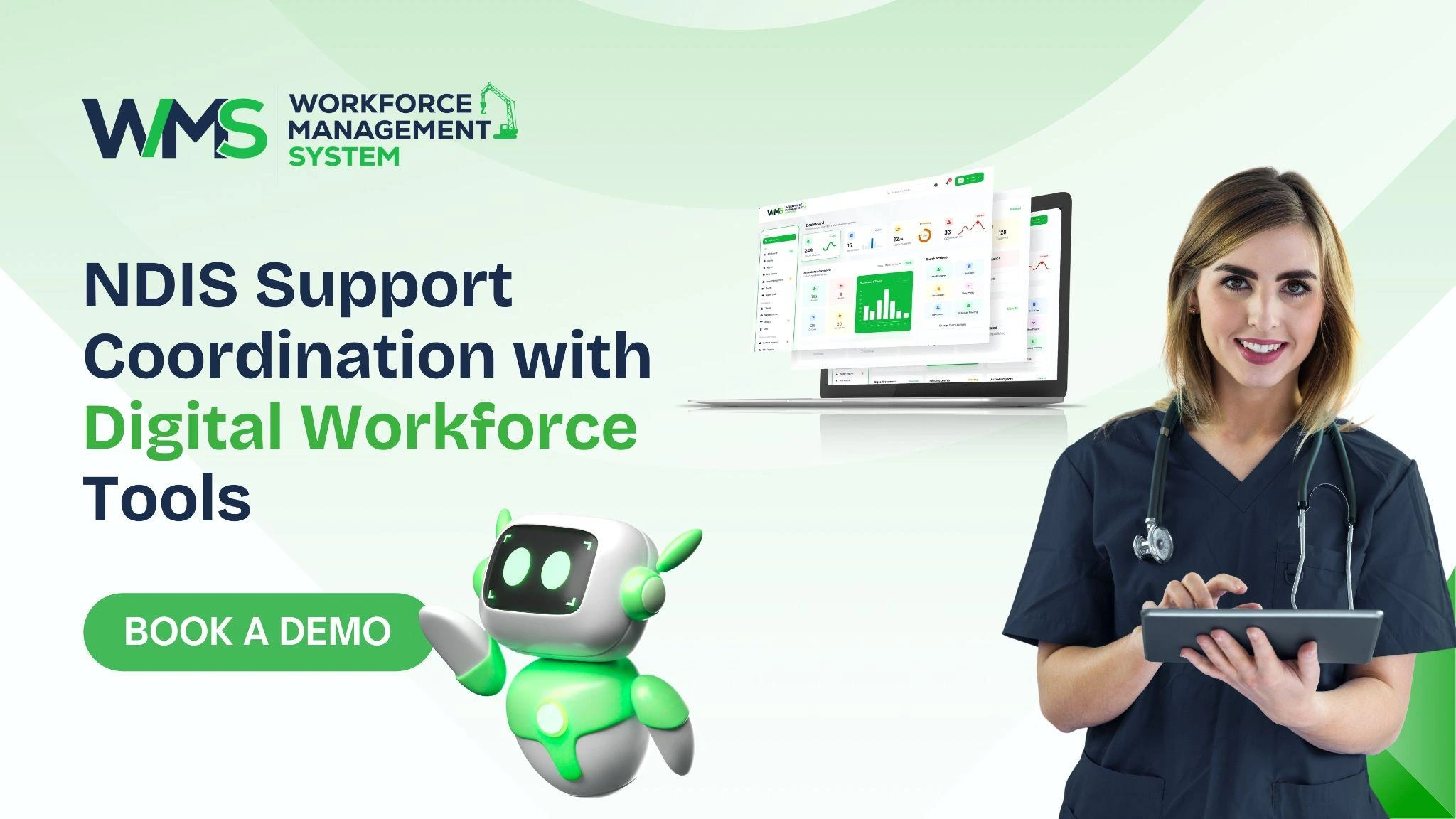
NDIS Support Coordination with Digital Workforce Tools
Improve NDIS support coordination with digital workforce tools. Match workers to participants, plan flexible rosters and track availability in one place.

Share this article
Streamline your frontline operations
See how WMS simplifies scheduling, compliance and workforce management in one powerful platform.
NDIS Support Coordination with Digital Workforce Tools
People who implement plans based on the NDIS plans are the people who support NDIS participants. Successful coordination and support from the NDIS rely on effective communication, consistent staffing and schedules. This guide demonstrates how digital workforce tools enable teams to better plan and deliver with greater confidence.
NDIS Support Coordination and Scheduling
Support coordinators can assist participants in understanding their plans and link them to the appropriate supports. Each visit must have a person to conduct the visit, a time for the visit, a location for the visit and clear directions for the visit.
If these pieces of information are not distributed, there are errors and participants lose confidence. Clearly written and easy-to-follow schedules are essential for good NDIS support coordination. Providers also must match the hours of funding to the hours that are provided.
A simple shared plan indicating what was planned, what has taken place and what is yet to be done. Then it is easier to discuss the same facts, and conversations will be calmer and quicker for the coordinator, family and manager. This way everyone is kept in the loop, and it saves the coordinator time.
Keeping Plans and Shifts in Step
Planned hours versus delivered shifts assists providers in identifying gaps early. In case a player is not getting the hours he/she is supposed to, he/she can be covered by the team before it affects goals. This is also a good practice for accurate billing and good record-keeping, appreciated by funders and families.
Matching Workers to Participant Needs
All participants are unique. A person can require assistance with some of their everyday tasks in the home, or they may wish to be assisted in participating in community activities or developing new skills. One of the most crucial aspects of good support is ensuring that each participant finds the right worker – comfort and trust play a major role in the rest of the support.
It's easier to match with digital profiles. The skills, qualifications, availability and experience of the workers are in one location, and the preferences of the participants are recorded respectfully and are shared with others only when necessary. This results in quick and equitable decisions and a positive experience for the participant.
Building Long-Term Relationships
Typically, participants respond best if the same group of workers visits on a regular basis. Known faces ease stress and aid learning the best practices for each individual.
Rosters are created based on such connections, and support is more stable and individualised. It also translates to reduced handover, less need to explain and improved progress towards objectives. Participants, over time, tend to feel more confident and more in charge of their own support.
Flexible Rostering for Support Services
Support work is not 9 to 5! Visits can be early in the morning, in the evening, at the weekend and even at short notice. A set plan goes awry easily; a flexible plan bows and continues. With digital rostering, managers can create, edit and distribute rosters in just a few minutes. Workers get shifts on their cell phones, verify and request shifts.
A WMS can present the impact of each change on the entire team immediately, which allows managers to be free from double booking and ensure that everyone is covered. Confidence is also developed among workers as they are aware of their shifts and they are accurate and up to date.
Fairness Keeps Good Workers
The disability sector is reliant on effective and caring staffing, and good staff are difficult to replace. Predictable hours and changes to hours are announced in advance, ensuring workers' respect. Balancing loads, preventing long shifts, ensuring nobody is overworked, and more can be achieved by managers.
Well-rested staff are safer, kinder, and more focused every time they come to work. More stable and happy teams offer effective support. Ensuring workers feel valued contributes to participants receiving consistent care and support.
Real-Time Worker Availability
Employees become sick, take vacation time, leave work early or work overtime. Being aware of those available to act immediately and next week is crucial for a participant who requires assistance at the last minute. There is no one visible to answer the call, and managers waste valuable time calling around. Real-time availability is an indication of who is available, qualified and near.
Information is kept up to date, as workers can update their own availability on a phone. If there is a gap, managers can provide opportunities for shifting to the right in an obvious sequence. Participants are advised at an early stage, and support is not confusing.
Handling Last-Minute Changes Calmly
Sometimes, of course, cancelling or falling ill cannot be prevented, but it can be dealt with sensitively. A gentle process can minimise stress for all. Managers will be able to identify available staff and make up staffing gaps easily and inform the participant or family immediately.
In these instances, effective communication fosters trust over the long haul. Participants & families recall how a provider responds when things are not as planned.
NDIS Support Coordination and Team Communication
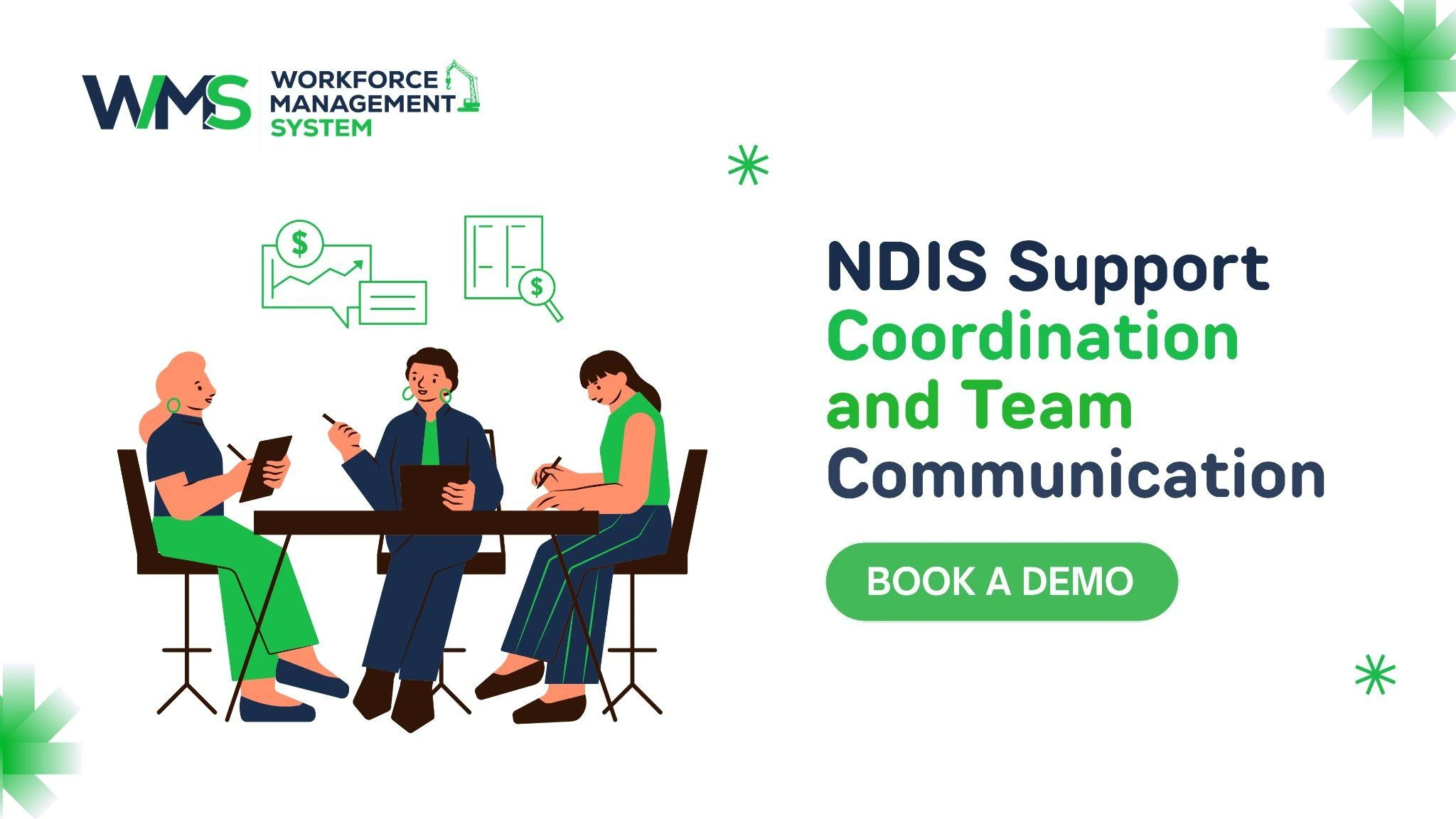
There are many people involved in support coordination - the participants, family members, coordinators, providers, workers and sometimes other professionals. Errors occur when details are lost or when there are inconsistencies between phone calls and emails. Effective communication is essential when it comes to effective NDIS support coordination.
Shift information, notes and updates are all in one place thanks to digital tools. A worker has the ability to read the last visit’s record before attending the next visit. The changes are communicated to the team in one step for managers. There are also privacy issues to consider, and sensitive information should only be accessed by those who have a need to know, consistent with Australian privacy law.
Notes That Help the Next Shift
Shift notes are good if they are short, factual and respectful. They communicate with the next worker about what they saw, what went well, what to look out for and any adjustments to the routine.
These notes illustrate progress towards goals and plan reviews over time. They also minimise asking unnecessary questions, benefiting participants' time, families and workers. It also assists new staff members to get up and running faster.
Workforce Management System for Support Providers
A workforce management system for support providers will not only integrate rosters, worker records, credentials, timesheets and reports into a unified area, but it will also automatically link them together. Managers do not have to use multiple spreadsheets for messages and files but operate in one record.
This experience translates to the disability services arena, where staff move from one home to another and from one community to another. Providers should also ensure that their workers' certificates are up to date (e.g., NDIS Worker Screening Checks) and review the latest rules with the NDIS Quality and Safeguards Commission.
What to Look For in a Platform
Keep an eye out for phone-friendly, intuitive tools that make it easy to share what to see and can sync up rostering and worker tracking. Availability of good vendor support and respect for Australian privacy expectations are also significant.
If the tool is easy to use, workers and managers will be much more likely to use it correctly on a daily basis. A clear trial period can also be used to determine if the tool is right for the team prior to finalising.
WMS for Smoother Shift Planning
Planning the shift will require some time, particularly if there are a lot of participants and workers in a provider group. Availability, qualifications and the needs of the participants can be combined within a WMS, and a draft roster can be created in a much shorter amount of time.
Good communication reduces absences and increases workers' confidence regarding location and actions. The participants enjoy consistent routines to follow.
Saving Time for What Matters
Time saved in rostering can be used for supporting staff and talking with the participants and families. New members are checked in, and feedback can be read to help plan new member training. The more that can be planned, the more peaceful and reliable the front line will be. Staff are confident and feel supported, and participants see the impact on the quality of care.
Improving Coordination Across Support Services
A high proportion of participants are supported by multiple providers. Communication between these services ensures there are no conflicts and routines remain consistent.
A workforce management system provides the leader with visibility on the entire workforce, the entire shift and every visit of a participant.
Hours delivered, changes made at short notice and credentials close to the expiration date are reported.
Reports That Guide Better Decisions
Overtime and service requests are reported regularly to identify services where there is an increase in demand and where overtime is increasing. This information can be utilised by leadership to recruit and/or train or adjust rosters early.
Clear numbers also provide the basis for open dialogue with participants, families and funders about what's working and what needs to be improved. As time goes on, more open relationships lead to greater trust and stronger relationships.
Conclusion
The factors that contribute to great NDIS support coordination are clear plans, matched workers and consistent communication. WorkforceMS allows providers to maintain easy-to-manage rosters, records, and updates all in one place. Give a demo a call today and find out how digital tools can help make support delivery smoother.
Optimise your operations with WMS
Streamline scheduling, compliance, and workforce management in one platform.
Frequently Asked Questions
They offer to consolidate rosters, worker info, availability and shift notes. Planning visits can be done more quickly, and records are easier to maintain.
Coordinators can assist participants in understanding their plans and link them with providers. Then it's time for clear schedules and matched workers to put those plans into action.
The appropriate worker instils comfort, trust and improved results for the participant. The skills, availability and preferences should all be verified before every shift.
The managers can view the availability of individuals, qualifications, and proximity. Participation gaps are filled quickly, and early notification is given to participants.
Information is shared many times with similar participants, families, providers and workers. Shared notes and updates reduce confusion and missed visits.
Yes, WorkforceMS does allow managers to create workforce rosters and monitor availability all in one place. Staff view their shifts on their phone – reducing missed visits.
Related Articles
Explore more insights on workforce management, compliance, and operations.

Construction and Civil Labour Hire Through Smart WMS
Simplify construction and civil labour hire with a smart WMS. Plan rosters, track worker tickets, and manage multi-site crews in one place with less admin.

Muhammad Asim
23 Oct 2026
Smart Construction Site Security with WMS
Strengthen construction site security with a smart WMS. Plan guard shifts, track licences, and monitor site attendance in one place with less daily admin.
Muhammad Asim
22 Oct 2026
NDIS Disability Support Through Smart WMS
Improve NDIS disability support with a smart WMS. Manage rosters, worker credentials, timesheets and participant care in one place with less daily admin.
Muhammad Asim
21 Oct 2026
Ready to secure your operations?
