Online HR Software for Australian Builders
Discover online HR software built for Australian construction. Manage compliance, payroll and subcontractors on-site with WMS. Start your free trial today.
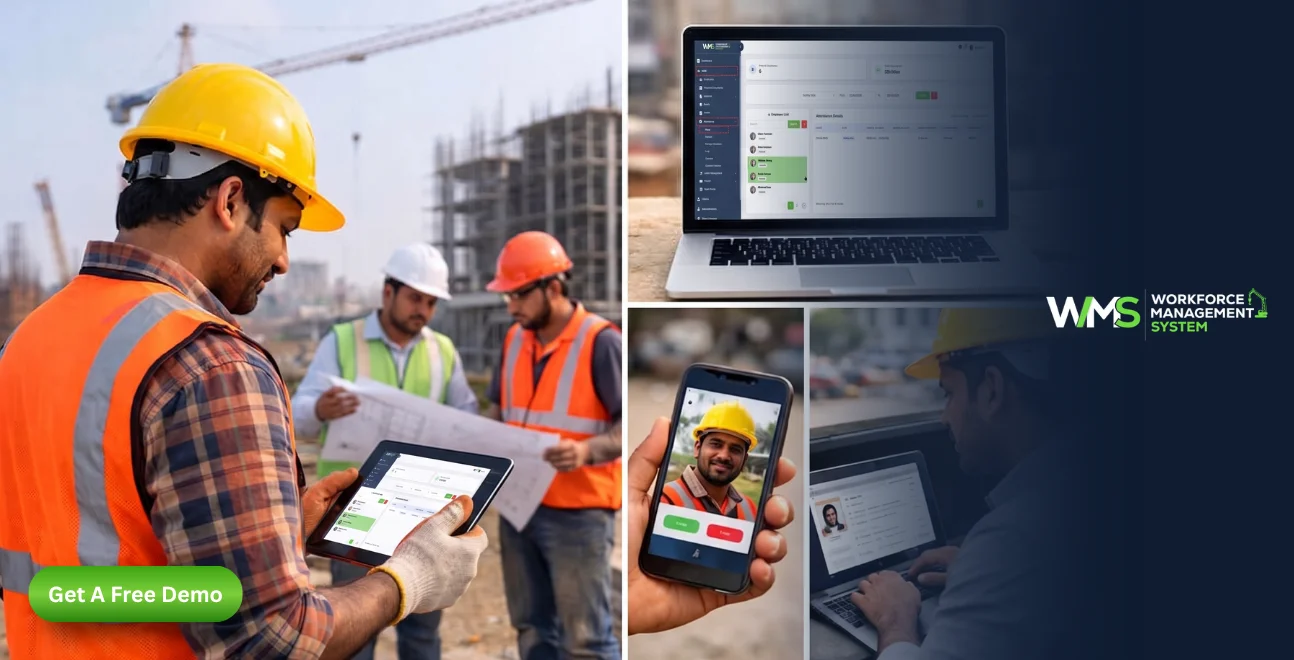
Streamline your frontline operations
Run a construction business in Australia, and you already know the real cost of paperwork. It isn't the ink or the folders. It's the labourer who can't start on Monday because his white card expired and nobody noticed, the payroll run that takes a full day because timesheets came in on scraps of paper, and the Fair Work audit that turns up a gap in your record-keeping you didn't know existed.
Online HR software exists to close exactly these gaps. The correct platform isn't just a digital filing cabinet but links the site to the office, ensures that every worker is compliant and provides the owner with an up-to-the-minute view of who is working, what is being done, and how much it costs.
Learn how online HR software can benefit your construction company in Australia, why it's better than other HR platforms such as Employment Hero or ELMO, and how to identify which software is right for you before you sign up.
The Compliance Load That Generic HR Tools Weren't Built For
Construction is one of the most heavily regulated industries in Australia, and the compliance burden sits on top of ordinary HR admin, not instead of it. A typical project involves:
- Multiple awards and enterprise agreements, often on the same site
- Safe Work Australia and state WHS obligations
- Tickets, licences and inductions that expire on a rolling basis
- Subcontractor and labour-hire compliance, not just direct employees
- Site-specific inductions for every new worker, every new project
A generic online HR software for employees platform built for offices handles leave requests and payslips well enough. It rarely tracks a white card expiry against a specific worker on a specific site or stops an uninducted subcontractor from being rostered onto a live job. That gap is where construction businesses get exposed.
Where Spreadsheets and Filing Cabinets Actually Break Down
Most builders don't set out to run HR on spreadsheets. It happens gradually one tracker for licences, another for timesheets, a shared drive for inductions, and a folder of PDFs nobody has opened in months. It works until it doesn't.
The cracks usually show up in the same three places:
- Onboarding delays. New starters wait days for paperwork instead of walking onto the site ready to work.
- Payroll errors. Manual timesheets and award interpretation lead to underpayments, overpayments, or hours in dispute.
- Compliance blind spots. No single perspective on who is qualified, inducted and legally permitted to be on a particular site exists today.
All of these are expensive, but the compliance blind spot is the one with legal repercussions. Penalties levied by the Fair Work Ombudsman for underpayment and poor record keeping have increasingly become much more severe in recent years, and the construction industry is a sector that is closely watched.
What Online HR Software Actually Automates for Builders
Strip away the marketing language, and good online HR software for construction does five things reliably:
- Digital onboarding. New workers sign off on forms, upload licences and complete signoff from their mobile devices before ever stepping onto site!
- Credential tracking. No one is rostered without a white card, high-risk licence, first aid or machinery ticket, and they are all recorded, with reminders of their expiration time.
- Time and attendance. Paperless clock-ins are replaced by GPS, ensuring that they are site- and/or project-specific and eliminating the hassle of disputes over paper dockets.
- Award interpretation. Hours worked are matched against the correct award or agreement automatically, reducing manual payroll errors.
- Reporting. Owners and site managers get a live view of headcount, labour cost and compliance status without chasing spreadsheets.
Together, these functions turn HR from a reactive, paper-chasing task into a system that runs quietly in the background until something needs attention.
Payroll, Awards and the Fair Work Minefield
Payroll is where construction HR gets genuinely complicated. The Building and Construction General On-site Award sets out allowances, penalty rates and classifications that shift depending on the type of work, the site and sometimes the weather. Add enterprise agreements, RDOs, and multiple subcontractor arrangements, and manual payroll becomes a guessing game.
Good online HR software in Australia allows businesses to trust timesheets directly to award rules, so overtime, travel allowances and site allowances calculate themselves instead of relying on a payroll officer's memory. This matters for two reasons. It protects workers from underpayment, and it protects the business from the reputational and financial fallout of a Fair Work investigation.
It's worth noting that HR software supports compliance it doesn't replace the need for a book-keeper, accountant or employment lawyer to sign off on award interpretation for complex cases. Treat the software as the system of record and the safety net, not a substitute for professional advice.
Comparing the Popular Platforms
Several platforms are commonly searched for by Australian businesses looking at online HR software. Here's how they generally compare, based on what each is actually built for:
| Platform | Built primarily for | Construction-specific features | Best suited to |
|---|---|---|---|
| Employment Hero HR | General SME HR and payroll | Limited site/project tracking | Office-based small businesses |
| ELMO HR (ELMO login / ELMO HR Core) | Mid-market HR, learning and recruitment | Not construction-specific | Corporate and government teams |
| Generic payroll-only tools | Pay runs and tax compliance | No onboarding, no compliance tracking | Businesses with simple, office-based payroll |
| WMS (WorkforceMS) | Construction workforce management | Site-based HR, subcontractor compliance, safety, payroll-ready reporting | Builders, subcontractors, civil contractors |
Employment Hero and ELMO are both capable, proven, and successful platforms that will work well for companies with office-based staff and regular work schedules. Neither was built for a mobile, subcontractor-heavy workforce common to the construction industry, where construction-specific systems come in handy.
Why Construction Businesses Need More Than a Generic HR Platform
A construction company isn't managing one workforce it's managing several. There are direct employees, subcontractors, labour-hire staff and, on larger jobs, client-side representatives who all need visibility into different parts of the same project.
The generic best online HR software platforms are built around a single employment relationship: one worker, one manager, and one pay run. Construction needs software that understands a worker can be on Site A this week and Site B next week, that a subcontractor's insurance and licences need tracking just like an employee's, and that HR data has to talk to project costing, not sit in isolation.
This is the gap purpose-built systems close. Instead of running HR software, a project management tool and a compliance spreadsheet as three separate systems, everything sits on one platform tied to the actual job.
How WMS Brings HR, Compliance and Rostering Under One Roof
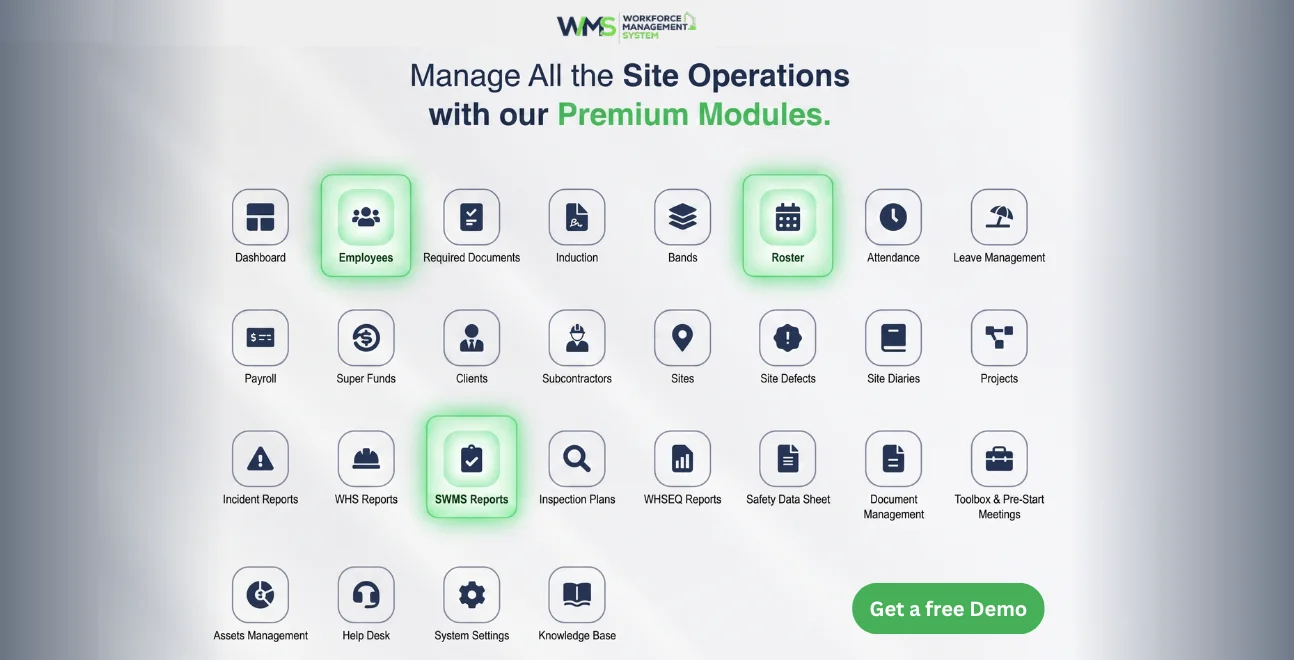
WMS was built specifically for Australian construction and workforce-heavy industries, not adapted from a generic office HR product. The HR & Employee Management module centralises the entire employee lifecycle from self-service onboarding through to payroll-ready reporting so staff profiles, roles and certifications live in one place instead of scattered across drives and inboxes.
A few areas where that shows up in practice:
- Site-aware HR. Workers, roles and certifications are tied to sites and projects, so managers know exactly who is qualified for which job, not just who is employed.
- Subcontractor compliance. The subcontractor management features extend the same credential and induction tracking to non-employee labour, which is often where compliance gaps are worst.
- Safety built in, not bolted on. Safety & compliance tools and digital toolbox talks and pre-starts keep WHS obligations tied to the same records as HR and payroll.
- Reporting that owners actually use. The reporting suite turns HR, safety and labour data into figures that feed directly into project cost decisions.
Industry figures on project performance make the case plainly: rework alone can cost a construction business between $200,000 and $300,000 per project, and productivity losses on a $5 million job have been estimated at around $150,000. A meaningful share of that waste traces back to poor workforce visibility the kind of visibility online HR software is designed to fix.
Choosing the Right Online HR Software for Your Site
Not every platform marketed as online HR software for small businesses will hold up on a live construction site. Before signing a contract, it's worth checking a system against the realities of your business rather than a features list alone.
A short checklist worth working through:
- Does it track licences, tickets and inductions with automatic expiry alerts?
- Can it manage subcontractors and labour-hire workers, not just direct employees?
- Does time and attendance work from a mobile device on-site, including offline?
- Is award interpretation built in, or will payroll still need manual checking?
- Does it integrate with your existing accounting or payroll software?
- Can site managers see compliance status without calling the office?
If a platform can't answer yes to most of these, it's likely built for an office workforce and will need workarounds to function on a construction site workarounds that tend to quietly reintroduce the spreadsheets you were trying to get rid of.
Getting Your Team Onboard Without Disrupting the Build
The biggest risk in switching systems isn't the software itself it's the rollout. Construction teams are time-poor and mobile, so a system that requires long training sessions or desktop-only access will get ignored in favour of the group chat and a paper docket.
The rollout that tends to work follows a simple order:
- Digitalise onboarding and credential tracking first, since this delivers the fastest compliance win.
- Move time and attendance to mobile clock-ins tied to site geofencing.
- Bring subcontractors into the same compliance workflow as employees.
- Switch payroll over once timesheets and award rules are verified against a few pay cycles.
Phasing the rollout this way means the office and the site adjust gradually, and nobody is asked to trust a new payroll system with a live pay run before it's been tested.
Conclusion
Construction businesses in Australia don't need HR software built for a head office they need a system that understands sites, subcontractors, awards and safety as parts of the same picture. That's the difference between software that adds another login to check and software that quietly prevents the next compliance gap, payroll error or rostering mistake before it happens.
If your business is still running HR across spreadsheets, group chats and a filing cabinet, it's worth seeing what a construction-built system looks like in practice. Explore WMS's HR & Employee Management features or get in touch to start a 14-day trial.
This article is general information for Australian construction businesses and is not legal, financial or payroll advice. For award interpretation, underpayment risk or Fair Work compliance specific to your business, consult a qualified accountant, payroll professional or employment lawyer, or refer to the Fair Work Ombudsman.
Optimise your operations with WMS
Streamline scheduling, compliance, and workforce management in one platform.
Frequently Asked Questions
Online HR software manages the full employee lifecycle onboarding, credentials, rostering, leave and compliance while payroll software focuses narrowly on calculating and processing pay. Many construction platforms, including WMS, combine both so timesheets flow directly into payroll-ready reports.
Yes. Even a business with a handful of direct staff and a few regular subcontractors benefits from automated licence tracking and digital onboarding, since a single compliance gap can trigger the same Fair Work penalties regardless of company size.
No. It reduces manual errors and automates award interpretation, but complex payroll decisions, tax obligations and enterprise agreement interpretation should still be reviewed by a qualified accountant or payroll professional.
It applies the same licence, insurance and induction tracking used for employees to subcontractors and labour-hire workers, flagging expired documents before a worker is rostered onto a site.
Site-based worker tracking, subcontractor compliance, mobile time and attendance, award-aware payroll reporting, and integration with existing accounting systems. Generic HR platforms built for office teams typically lack the first two.
Reputable providers use encrypted, cloud-hosted storage with role-based access controls, which is generally more secure than paper records or shared spreadsheets that anyone with a login can edit.
Related Articles
Explore more insights on workforce management, compliance, and operations.

Top AI Solutions To Manage Construction Workforce
Explore the top AI solutions for managing a construction workforce, from onboarding to payroll and safety, with human review built in.
WorkforceMS Team
14 Sep 2026

Streamline Job Tracking with AI Construction Management Software
Discover how AI construction management software streamlines job tracking, project planning, risk alerts, defect reporting and safety compliance.
WorkforceMS Team
11 Sep 2026

Skills and Compliance Management for Construction Teams
Manage skills and compliance for construction teams with WorkforceMS. Track licences, SWMS, inductions and audits in one workforce management system.
WorkforceMS Team
10 Sep 2026
Ready to secure your operations?
