Software Licence Management Tool Track, Manage & Comply for Every Employee
A software licence management tool helps Australian organisations track, manage and renew employee licences, certifications and software entitlements from one platform.

Share this article

Streamline your frontline operations
See how WMS simplifies scheduling, compliance and workforce management in one powerful platform.
In simple terms, a software licence management tool is a tool that assists Australian organisations to manage and track, and renew, their employee licences, certifications and software entitlements from one platform.
It automates expiry alerts, ensures compliance, lowers audit risk and saves HR and IT teams time and money with a solution designed for regulated businesses, like construction, finance and government.
What Is an Employee Licence Management System?
An employee licence management system is a unified software solution that stores all employee licenses, occupations, credentials, certifications and software permissions in one place. It collects all licence information in a single place, instead of using independent spreadsheets or calendar reminders (which are often forgotten).
HR managers, IT administrators, and compliance officers have a current and accurate picture of who has what licence, when it expires, and what is due to be renewed from one dashboard.
Regulatory authorities in Australia have clear guidelines and requirements, and the consequences of not adhering to them are significant, such as through AHPRA, SafeWork, ASIC, and state-based licensing authorities.
Failure to renew can lead to compliance issues, fines, project shutdowns, and reputational damage. An employee licence management system eliminates that risk.
How It Differs from Traditional IT Asset Management
Traditional IT Asset Management also referred to as ITAM is all about hardware and software assets like laptops, servers, software installations, etc. An employee licence management system takes things a step further by linking the licence to the individual(s) who possess it.
It manages individual credentials with job roles, departments, and locations and keeps track of regulatory requirements that differ among professions and jurisdictions. Where ITAM asks "how many software seats do we have?" a staff certification tracking tool asks "does every employee in this role have a current and verified licence?" a fundamentally different and far more people-centred question.
Why HR and IT Teams Both Need It
Licence management is a key issue in both HR compliance and IT governance and there's a stake in the ground for both parties. HR teams rely on the HRM to see all employees' professional licenses, qualifications, and required training, as these are centralised and managed in one place.
IT teams want to be monitored for software entitlements, access and procurement expenses. A unified platform cuts through these silos ensures data consistency and provides one source of truth for audits, onboarding, and workforce planning.
Why Staff Licence Tracking Fails Without the Right Tool
There are still many Australian businesses that are dealing with staff licences on their spreadsheets, shared drives or paper-based registers. These methods might work for a small number of staff members, but they soon crumble as businesses expand or move to different locations, states and countries.
If you don't have a staff certification tracking system, it's a fast track to a major compliance disaster.
The Hidden Cost of Manual Spreadsheet Tracking
Spreadsheets can't alert you when a licence expires, can't check if a licence is renewed, and are not automatically up-to-date. That manual update is not always made in time, particularly at busy workplaces in Australia. Other costs associated with the decision are:
- Manual updating/reviewing of staff time is often duplicated between departments
- More chance of human error and out-of-date information being missed
- No audit trail if compliance is challenged by a regulator
- Struggle to scale business to other departments, states or remote and FIFO teams
- Regulatory fines and risks from expired licences, which have been forgotten to renew
Common Compliance Gaps That Put Organisations at Risk
Organisations often suffer the same avoidable shortcomings without an automated workforce compliance monitoring platform. Licences expire without anyone noticing, credentials are not checked at the source, new rules and regulations are not obeyed, and staff members are continuing to perform jobs they are not qualified for.
The Safety & Compliance directly tackles these gaps by automating WHS tracking, incident reporting, and regulatory documentation to ensure that nothing falls through the cracks. These gaps have legal, financial and safety implications for organisations that are not something they can afford to overlook, especially in aged care, construction and financial services.
Key Features of a Workforce Compliance Monitoring Platform
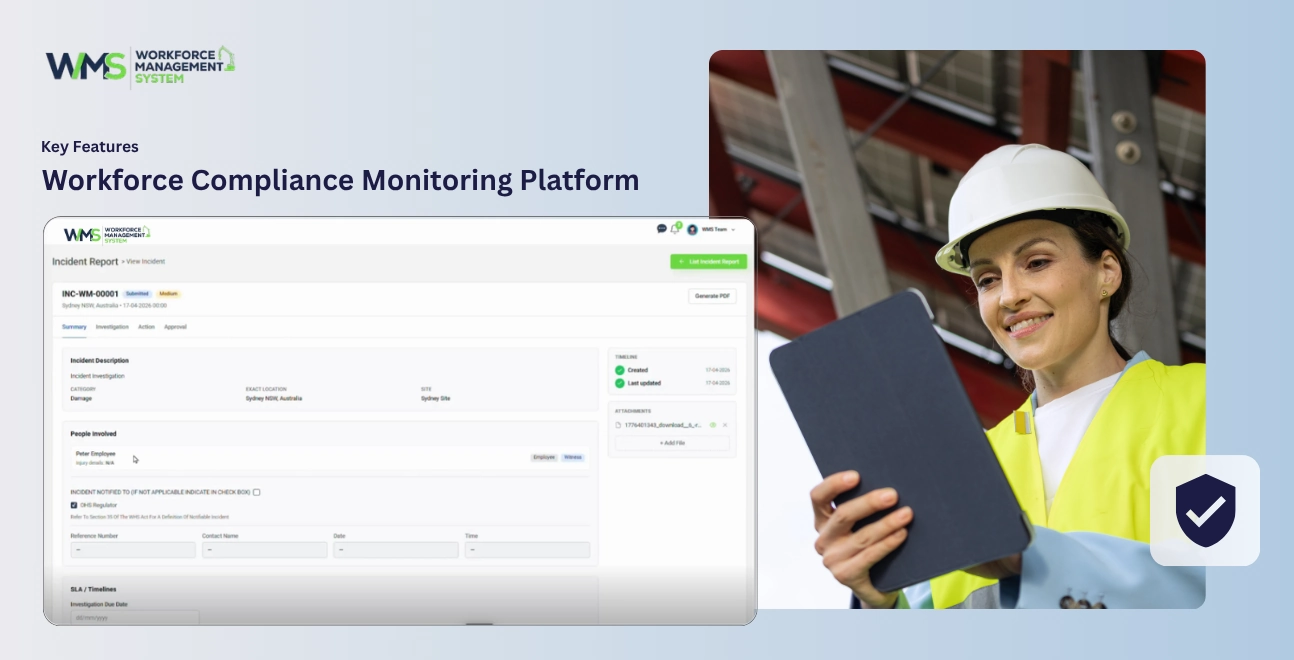
An effective workforce compliance monitoring system can do so much more than hold onto data. It enables the active management of the compliance lifecycle identifying risks before they can emerge, automating renewal workflows and creating reports that meet the most stringent regulatory standards, all in one place.
Centralised Dashboard for All Employee Licences & Credentials
The team credentialing compliance dashboard provides managers and administrators with a live view of all employees' compliance status by department at a glance.
You can view which are fully compliant, which are expiring in the next 30, 60 or 90 days and which have critical gaps already. This saves hours of manual checking and provides just one always current always accurate view.
Role-Based Licence Assignment Across Departments
The platform is aware of the different licensing requirements of the roles. Current AHPRA Registration is required for an RN. The operator of a forklift must have a High Risk Work Licence. A financial adviser must be ASIC authorised.
With a personnel qualification management solution, you can set the requirements for each role, and automatically check if those requirements are met by every employee, identifying any gaps before they turn into incidents or liabilities.
Jurisdiction-Specific Compliance Rules and Requirements
There is a great difference in the regulatory framework across each of the states and territories in Australia, and the manual handling of this complexity is a compliance danger on its own.
An HR regulatory requirement tracker that is designed for the Australian market ensures that licences are correctly mapped to the specific rules that apply in each of the jurisdictions, whether that's WorkSafe Victoria, SafeWork NSW or a regulatory rule from the Commonwealth.
All requirements are managed in one system by organisations operating nationally, not having to keep separate registers in each state.
Automated Permit Expiration Notifications That Keep You Ahead
An extremely useful feature of any modern licence management platform is the automated notification when permits expire. The system sends staged alerts, instead of staff or managers having to manually check expiry dates, which can be easily missed or be subject to human error nothing slips through the cracks.
How Automated Renewal Alerts Eliminate Last-Minute Scrambles
Professional licence expiry alerts are sent well before the expiry date, usually 90, 60 and 30 days out, and a final reminder 7 days prior to expiration. This step-by-step process allows staff to have sufficient time to compile the paperwork, attend the training, submit the renewal applications and get the credentials verified before their expiration. Enough last-minute scrambling to cause workplace disruption and compliance gaps is gone.
Setting Custom Alert Timelines by Role, Team, or Location
Not all licenses are created equal and that's reflected in the platform. Some renewals can take a couple of days others, such as renewal of AHPRA registration or a construction white card, may require a lot of time and go through a third party.
The Sites & Projects enables administrators to set the timelines of alerts based on geographic location and active project making it relevant and on time for the specific needs of the project at hand.
Professional Licence Expiry Alerts Never Miss a Renewal Again
Professional licence expiry alerts are the initial line of defence against compliance issues and when set up properly, they will keep all relevant parties up-to-date on the upcoming licence renewal before they become an issue. The employee knows, their manager knows, and the HR team knows, at the same time.
Multi-Level Notifications for Managers, HR, and Employees
Notifying people about permit expiration is a multi-layered process. A personal reminder to the employee to action their renewal. Their direct manager is informed so they can follow up if their employee doesn't reply.
HR/Compliance teams have a single source of truth to track all future and missed renewals throughout the company. This is done in a layered fashion to make sure there is accountability at every level, but not too much burden on one team.
Audit-Ready Renewal History and Documentation Trails
All notifications are automatically recorded and securely stored, all acknowledgements are recorded, and all documents are submitted and stored securely. A fully documented history of your licence management practices is ready to provide in just minutes, when a regulatory body or internal audit team requests it.
This audit-ready documentation trail is one of the most important differences between spreadsheet-based systems (which have no verifiable documentation at all).
Personnel Qualification Management Across the Full Employee Lifecycle
Licence management is not a one-off process; it encompasses the whole working relationship. A powerful personnel qualification management solution manages credentials throughout the recruitment process, during role change, site transfer and promotion and to the very end of the employment.
Tracking Licences From Onboarding to Offboarding
Onboarding the system checks new employees for all the necessary licences for their role before they start working. It tracks renewals, identifies when a new regulation might require an adjustment, and notes when employees get new qualifications throughout their employment.
It ensures that access to systems is terminated as required during an employee's offboarding and that records are kept as required by the Australian Privacy Act 1988 and state laws.
Managing Licence Transfers When Employees Change Roles or Sites
An employee's license requirements can change completely when changing jobs or shifting positions across sites or states. The sophisticated employee licence management system identifies these changes and automatically recalculates requirements for compliance in the new position and/or location, alerting the employee and the HR team to any missing elements to complete before the change. There is no need to cross-reference from one manual to another.
Team Credentialing Compliance Dashboard One View, Full Control
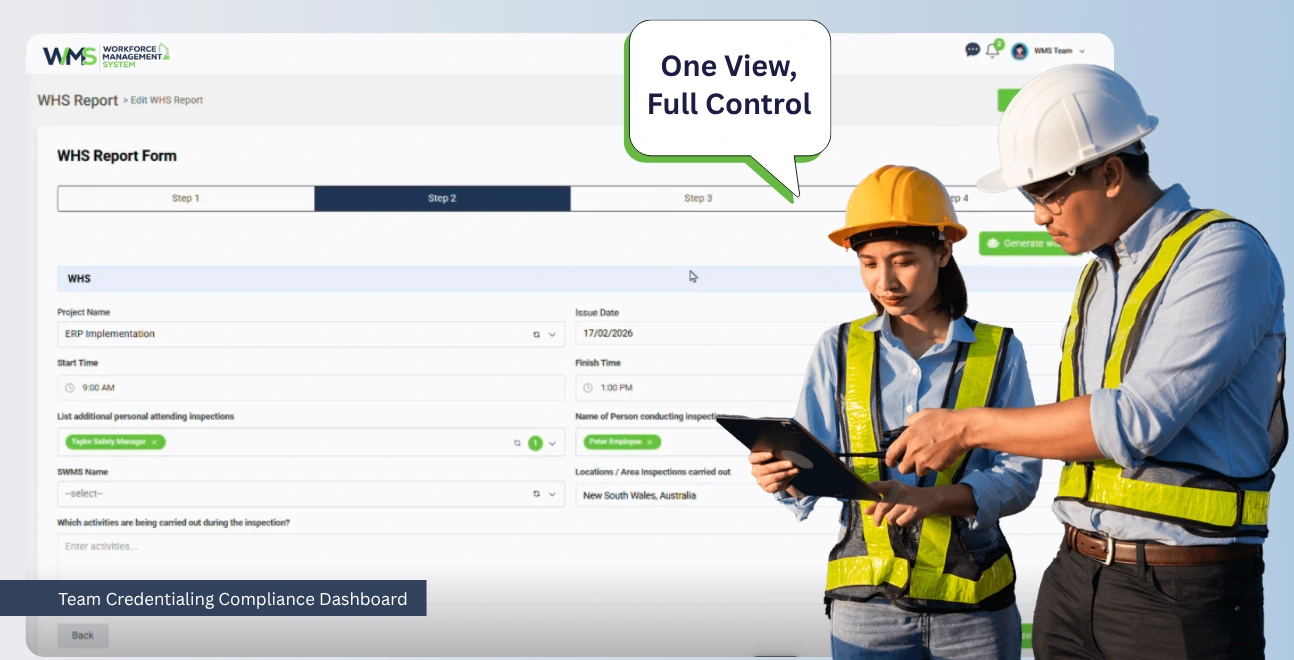
The team credentialing compliance dashboard is the lifeblood of any licence management system, turning data into actionable insights and empowering managers to take proactive steps rather than reactive ones.
Real-Time Compliance Status Across All Teams
A live dashboard presents compliance rates by team, department, location and licence type all in one place. Colour-coded indicators immediately alert the user to fully compliant teams, those with impending licence expiry dates and those that have lapsed licences that need to be renewed or renewed immediately.
This visibility in real time makes licence management, a periodic administrative activity, into a continuous operational discipline that is part of everyday management.
Identifying At-Risk Employees Before Audits Happen
Real value is added with the dashboard's predictive feature. When employees' licenses are coming up for renewal, or when their license renewal history shows that they are at risk, managers can take action in a timely and effective manner.
Use in combination with the Reporting to produce audit-ready compliance reports as and when they are required, providing the leadership team with a complete overview of workforce risk at all sites and departments.
Occupational Credential Renewal Software for Regulated Industries
The most heavily regulated industries in Australia require more specialised occupational credential renewal software than any other: construction, finance and legal services. In such areas, the loss of a license is not just a paperwork hassle, but it can pose a serious threat to public safety, financial security, or legal requirements, and lead to severe consequences.
Legal, Finance & Construction Industry-Specific Needs
- Construction: All work sites in Australia require construction cards, high-risk work licences, electrical licences and crane operator tickets and these are required to be current at all times.
- Finance: ASIC authorisations, AML/CTF compliance training, and professional indemnity requirements should be consistent with the latest regulatory requirements and are subject to regular changes.
- Legal: At the heart of licence management in all states and territories is the legal aspect, including practising certificates, CPD requirements and trust account compliance.
Primary Source Verification Built Into the Workflow
PSV is the process of verifying the credentials directly from the issuing authority, rather than by taking a copy of the certificate submitted by the employee. Purpose-built occupational credential renewal software incorporates PSV into the credential renewal workflow, checking for credentials against appropriate regulatory databases, if available, and notifying human re-issuers of discrepancies before granting access or deployment.
HR Regulatory Requirement Tracker Built for Modern Workforces
Regulatory requirements evolve and sometimes quickly. New licences are mandatory, renewal periods are reduced, continuing professional development requirements are refreshed and completely new frameworks are created.
An HR regulatory requirement tracker that keeps up to date with the latest Australian regulations means you will always be compliant.
Mapping Licences to Job Roles and Local Regulations
At the heart of good compliance is having a full and accurate picture of what licences are needed for every role, in every place and keeping it up-to-date as roles and regulations change.
When a new employee is assigned a role, a well-configured HR regulatory requirement tracker automatically knows what credentials are required, when they need to be renewed, what is required to verify them, etc.
How to Stay Compliant Across Multi-State or Global Teams
Businesses that operate in two or more states in Australia or have teams working at various project locations have a more complicated compliance situation than those with one project location. A valid Queensland electrician's licence may not necessarily be recognised as a valid licence in Western Australia.
The Subcontractor is designed to take compliance to the next level by applying it to your subcontractors and external workers on site, filling one of the biggest compliance gaps in Australian construction, mining and infrastructure projects and the compliance gap that your own workers are often unaware of.
Enterprise Workforce Certification Portal Scalable for Any Size Organisation
You can have 20 employees or 20,000; whatever your enterprise size is, the workforce portal certification system needs to be scalable, secure, and easy to use for all of your employees. The ideal platforms are great for both frontline workers and senior administrators, and don't require any IT expertise to use day-to-day.
Centralised Portal for Employee Self-Service Credential Uploads
Staff have their own pathway directly within the self-service portal to upload their renewals, certifications, and supporting documents, anytime, from any device.
Then submissions are automatically routed for review and verification, cutting the administrative burden of HR teams and making employees personally responsible for their own compliance.
A mobile-accessible portal is a necessity for the mobile workforce, including remote, regional and fly-in fly-out workers, for Australians.
Admin Controls, Role-Based Access, and Secure Document Storage
Administrators can specify exactly who can get access to what and exactly what kind of access. A department manager may only view the compliance status of his/her own team. An HR business partner may be located in several regions.
The national compliance officer has full access to the system and has comprehensive reporting ability. Sensitive credential documents are kept encryption compliant to the Australian Privacy Act 1988 and all Australian state privacy legislation, using enterprise-grade encryption.
Cut IT and HR Costs With the Right Licence Management Solution
InsureMyLife.com is a strong personnel qualification management solution that offers measurable, tangible, financial returns, beyond compliance. Time and time again, organisations discover the expense of the platform is recouped many times over with more efficient licence management, as well as fines and penalties avoided.
Eliminating Redundant, Unused, and Over-Allocated Licences
One of the most common inefficiencies, and most costly, that Australian organisations suffer from is software licence over-provisioning. Employees frequently lose roles to new hires, employees move on to new applications or employees just leave, and their licences are rarely reclaimed without a systematic process.
Automated platform detects unused allocations and automatically reclaims them (no manual effort required to save software costs). For large companies this can be tens of thousands of dollars a year in recovered costs.
ROI Calculator What Poor Licence Tracking Actually Costs You
Let's take a medium-sized Australian company that has 500 people in three states. Not only are they losing 200 hours of professional time every year for compliance, but they are also losing 10 per cent of their professional licences every year, and for every compliance incident, it takes an average of four hours to resolve, before adding in any fines, project delays or reputational damage. That expense can be virtually eliminated and recouped in months by investing in an automated staff certification tracking tool.
How Our Tool Compares to Top Competitors (Flexera, Zluri, ServiceNow)
The comprehensive IT asset management offered by global platforms like Flexera, Zluri and ServiceNow SAM are mostly geared towards enterprises with software entitlements to oversee, rather than towards Australian HR and compliance teams overseeing employee professional licences and occupational credentials. This distinction is very significant in terms of its impact on practice.
Feature-by-Feature Breakdown for IT and HR Teams
| Platform | Overview |
|---|---|
| Flexera | Strong for software vendor licence compliance and large-scale ITAM but limited native support for employee credentialing, AHPRA integration, or Australian jurisdiction-specific requirements |
| Zluri | Solid SaaS management and identity governance capabilities and while the focus was on HR compliance or occupational licensing workflows, it wasn't on IT and finance teams. |
| ServiceNow SAM | Cost-prohibitive for most mid-market Australian organisations and the investment in implementation is significant for ServiceNow SAM but it's powerful within the ServiceNow ecosystem. |
| WMS | Quicker to implement, easier to use and fits the budget of organisations of all sizes. |
Why Mid-Market and Enterprise Companies Are Switching
The move towards purpose-built occupational credential renewal software signifies a broader and rightly so understanding that IT-focused software is not well suited for HR and compliance applications.
Mid-market Australian companies need to use tools that are quick to set up, easy to manage and work around the actual rules they are subject to not tools that they have to spend months configuring to achieve the desired functionality, at high cost.
Implementation Guide Getting Your Team Up and Running Fast
There is no question that one of the biggest issues when implementing a new workforce compliance monitoring solution is the fact that it can be quite complex. The downside is that WMS can be deployed in days (not months), with minimal impact to your existing workflows and no need to hire a dedicated IT implementation team.
Integration With Your Existing HRIS, ITSM, and Directory Systems
A modern enterprise workforce certification portal integrates with your organisation's existing systems, including HRIS solutions like Workday, SAP SuccessFactors, and Employment Hero; ITSM solutions such as ServiceNow and Jira Service Management; and identity directories, like Microsoft Azure AD and Okta.
Pre-built integrations save time and eliminate duplicate data entry by having employee data synchronised automatically, and maintaining licence records up to date without manual involvement.
Average Setup Time and What to Expect in Week One
For the majority of Australian organisations, initial setup only takes three simple steps: mapping all existing HR data sources, configuring role-based licence needs, and configuring automated alert flow.
Fully operational with most customers within 5-10 business days. You'll get a comprehensive and accurate picture of your current compliance situation even what your old system was out of sync with in Week 1.
Optimise your operations with WMS
Streamline scheduling, compliance, and workforce management in one platform.
Frequently Asked Questions About Licence Management Software
A software licence management tool is a software solution that can monitor, manage and automate the software licence lifecycle and employee professional credentials; effectively using software licences, renewing them on time and ensuring they are compliant with the relevant Australian regulations at all times.
Yes cloud-based platforms are scalable and have pricing options for businesses of all sizes, from 20 employees to enterprise companies with thousands of employees in multiple states and territories.
The platform constantly checks licence status and automatically notifies employees and managers about licence expiration, which cuts out the time and human error associated with getting licensees to update their status at the right time. All licences are monitored, all renewals are marked and all actions are logged with audit trails that are time-stamped.
Yes, a purpose-built Australian platform is pre-configured with jurisdiction-specific rules for construction (SafeWork), finance (ASIC) and legal services, meaning the correct rules are applied automatically for the correct roles, and not manually for each role.
Records kept in line with the Australian Privacy Act 1988 and the Employment Law. Retention periods can be set by document type and records can be exported for archival purposes whenever they are required, which means complete compliance with the Australian data governance requirements.
A reminder system is a system that sends alerts and that's it. A workforce compliance monitoring platform streamlines the entire compliance process, from primary source verification to role-based requirement mapping, to audit trail creation, to cost optimisation and even cross-jurisdictional rule management in one. It's as if they're not the same thing as a fire suppression system, but a smoke alarm.
Related Articles
Explore more insights on workforce management, compliance, and operations.

Security Operations and Monitoring Workforce Planning
Plan guard rosters, track live attendance and cover every shift with WorkforceMS. Strengthen security operations and monitoring with smarter workforce planning.

Muhammad Asim
09 Oct 2026

Telehealth and Digital Healthcare Scheduling WMS
Simplify telehealth and digital healthcare scheduling with WorkforceMS. Manage rosters, remote clock-ins and compliance records in one easy-to-use platform.
Muhammad Asim
08 Oct 2026

Healthcare Workforce Management for Aged Care
Simplify rostering, credential tracking and payroll for aged care healthcare teams. Discover how WorkforceMS gives your carers more time with residents.
Muhammad Asim
05 Oct 2026
Ready to secure your operations?
