Specialist Facility Cleaning Through Equipment and Staff Coordination
Learn how specialist facility cleaning improves with task planning, suitable equipment, staff allocation, supply control, maintenance and quality reviews.

Share this article
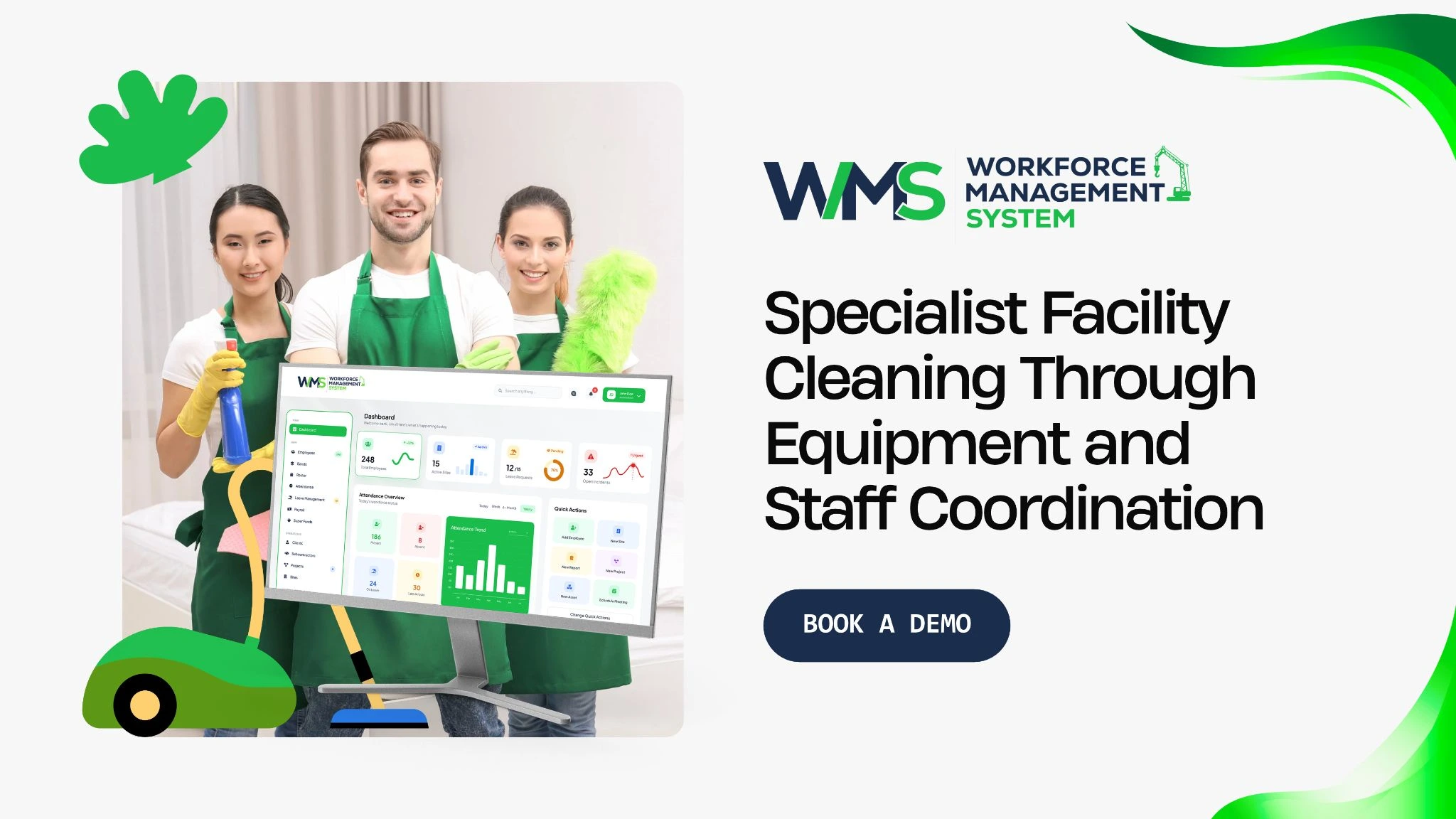
Streamline your frontline operations
See how WMS simplifies scheduling, compliance and workforce management in one powerful platform.
Specialist Facility Cleaning Through Equipment and Staff Coordination
Good intentions aren't enough to create clean and safe facilities. Requires the correct staff, equipment and coordination of staff to best meet the needs of specialist facility cleaning. This article will help cleaning teams understand how to ensure the consistent results they provide are safe, efficient and dependable at each location through planning and scheduling, as well as regular reviews.
Planning Daily Facility Tasks
Each of the sites has its own pace, be it early in the morning for offices, full clinics and late at night for warehouses. Planning for daily cleaning is correlated with the use of the building. Having a plan in place minimises missed spaces, time and displeased clients. When the game gets hectic, a good plan will keep teams cool as well.
Build a Practical Task Plan
First of all, get all areas, tasks and frequencies down on paper, including daily bathrooms, weekly floors, and monthly deep cleans. Make note of the time of peak traffic and extra attention areas. A basic site checklist provides clarification for workers and a convenient method for supervisors to ensure the work is done. Always update the site layout if there is any change in the layout.
Ensure the order of work to ensure that staff are moving from 'clean' areas to 'dirty' areas and that no corridors are blocked by the staff. Plan for travelling time, setup and handover time. Realistic timing helps to avoid hurried jobs, ensure the quality of work and keep the client updated on the time it will take to complete. On-time and prepared teams are valued by clients.
Specialist Cleaning Standards for Different Staff Roles
Standards will vary from region to region. There are various hygiene risks associated with a healthcare room, commercial kitchen or office meeting room. Clear expectations for each role ensure that members of staff have a clear idea of what clean is and how to ensure it is achieved safely. Standards also help to make it easier to train new staff.
Match Standards to Roles
Each cleaner, team leader, and supervisor has different responsibilities. Cleaners follow predetermined procedures, leaders monitor quality, and supervisors manage training and records. Clearly defined written standards of procedures, chemicals, PPE and inspection points ensure everyone understands what is expected of them. Clarity of roles helps to eliminate confusion and repetition of work for every shift.
Specific tasks (e.g infection control cleaning, high level dusting or floor restoration) require additional training. Maintain records of completed courses and dates of 'refresher' courses. Check with your state work health and safety regulator for chemical and safety information; adhere to safety data sheets. Staff are well trained to protect themselves, their clients and those in the building.
Selecting Suitable Equipment
The correct equipment will enhance speed, quality and worker safety. Surface damage, loss of chemicals, strain injuries, and the use of the wrong tool are all potential hazards that could occur.
The selection of equipment for the floor types, building sizes and the type of cleaning will mean teams can work more effectively and cost-efficiently. Savings are made by wise decisions here, and now that will lead to lower repair expenses and replacements down the road.
Quick Equipment Guide
Think about surfaces, soil heights and access before acquiring or leasing machines. Please request trials and training from suppliers. Consider noise, battery life and ease of clean-up, which will impact daily usage. An ergonomic design brings fatigue to a minimum and contributes to maintaining and improving standards for staff. Try out the new machines in a small area before using them in the rest of the area.
| Equipment | Best Use | Key Check |
|---|---|---|
| Floor scrubber | Large hard floors | Battery and pad condition |
| HEPA vacuum | Dust and allergens | Filter replacement |
| Microfibre cloths | Surface cleaning | Colour coding |
| Pressure washer | Outdoor areas | Safe water use |
Cloths and mops are given a colour code to prevent any cross-contamination between toilets, kitchens and the general area. Ensure equipment is stored clean, dry and labelled for ease of access for the next shift. Routine activities help prevent equipment and keep them properly clean. Colour coding is regularly checked to ensure that all are adhering to the correct colour coding.
Assigning Employees to Specific Duties
The right man for the right job is the first step towards good co-ordination. All of the above factors are important: skills, licences, experience and availability. Clarity of responsibilities leads to confidence in employees, monitoring of progress by supervisors and more dependable services by the clients. It will also make handovers between shifts much smoother as everyone knows what they are supposed to do.
Skills Before Schedules
Ensure staff are matched with the tasks they are required to perform based on proven competency, skills, and training (e.g. chemical handling, machine operation or infection control training). Take into account previous site experience and security clearances required.
When an unexpected change in jobs comes up, a record of capabilities is simple to discover the best individual. Accurate records also facilitate client audits and tenders. Ensure workload is fairly distributed among members of the team. Avoid heavy and repetitive work; rotate heavy/repetitive work to minimise strain; provide written instructions.
Equitable allocation ensures good wellbeing, reduces absenteeism and helps to keep good cleaners in the job, as they may leave to find a cushier gig. Well-supported teams are happy and perform well for clients.
WMS for Staff and Equipment Scheduling
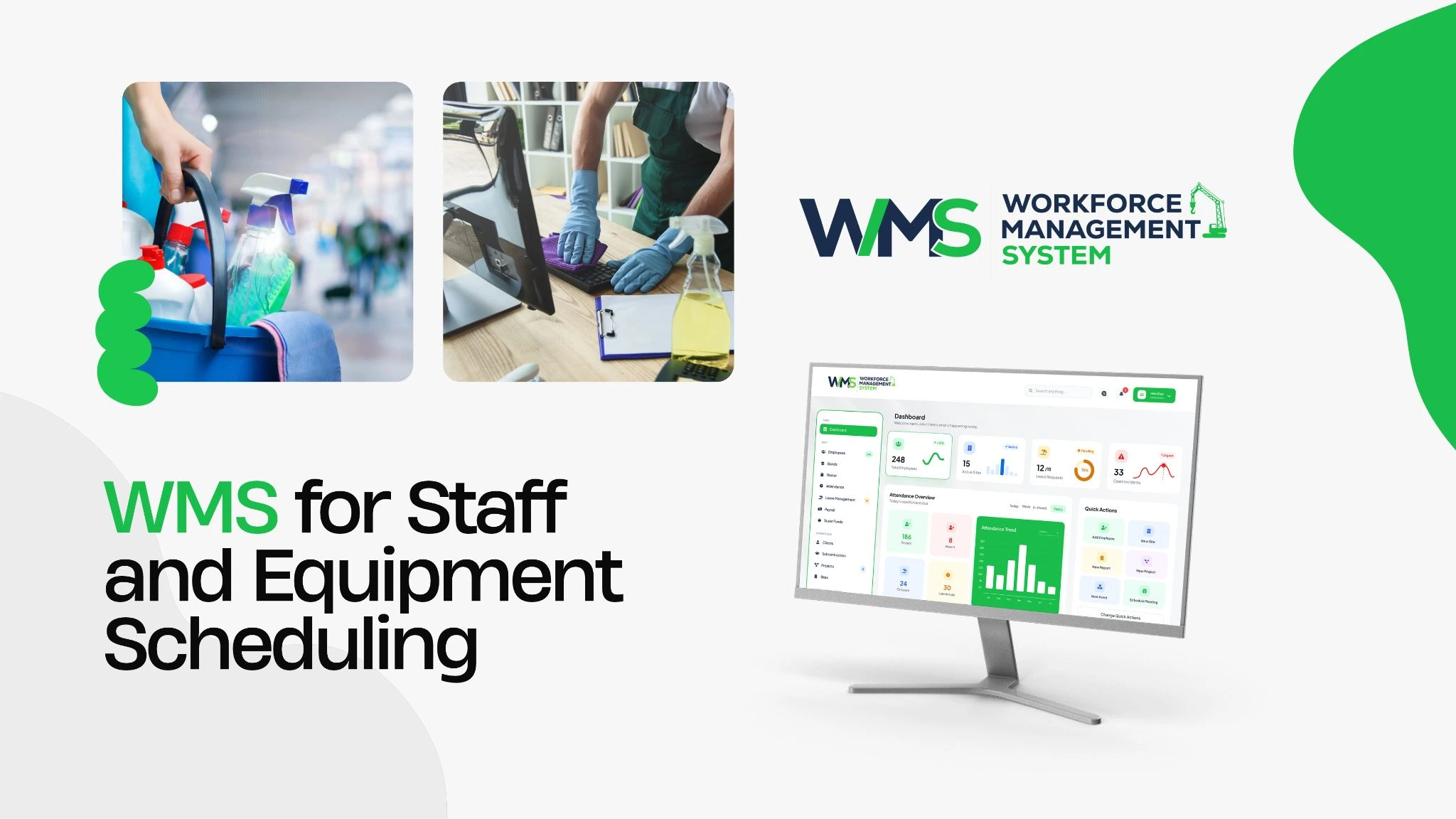
Each day, cleaning crews will have multiple jobs for which they bring several people, machines and cleaning supplies. You can maintain all the information in one location with digital scheduling. Managers can view who is working, equipment location and what tasks are yet to be completed. This visibility will save time and avoid expensive double handling.
Built on Construction Experience
WorkforceMS originated in the construction industry where work crews, tools and equipment are moving between jobs each day. This experience led to the development of tools for rostering, attendance and compliance, and these are now used by cleaning companies which have to schedule staff and machines at numerous locations. It helps to maintain a consistent, well-documented service.
Scheduling Staff and Machines
A WMS consolidates rosters, timesheets, qualifications and task lists into one. A workforce management system also allows managers to pair cleaners with jobs, prevent double bookings and quickly view the availability of all cleaners. Teams are always updated when plans change with mobile access. Less conflict equals more cleans and more satisfied clients!
Managing Supplies Across Multiple Sites
Lack of chemicals, cloths and consumables can halt work and can be a nuisance to the client. Simple systems, clear systems and regular checks are important for managing supplies across multiple sites. Good control also helps to ensure that there is no waste and budgets for cleaning remain predictable. Shortages are uncommon and easily rectified when it is simple to do so.
Keep Stock Under Control
Determine and maintain minimum stocking standards for each site and keep weekly records of usage. Have a central order list to ensure that supplies are ordered when needed. Keep chemicals in a safe place, label containers and have safety data sheets nearby.
The regular counting process is useful in detecting loss and use of unusual amounts at an early stage. Use standardised products to the greatest extent possible to prevent confusion and bulk purchasing costs for products. Educate personnel to ensure that they are using the correct dilution rates; using too much wastes money and can damage surfaces.
Analyse consumption patterns to identify consumption waste at an early stage and to negotiate better prices with suppliers. Consistent products also facilitate quality checks to be more easily completed.
Equipment Maintenance and Availability
Draft a plan to avoid downtime of machines that disrupt shift operations. Performing routine maintenance ensures equipment safety, reliability and availability. This helps to prevent lost time and unnecessary replacement, as it helps to track the location of each machine and who is using it. The servicing costs are lower for planned service than for emergency service.
Prevent Breakdowns Early
Develop a basic Maintenance program (clean, inspect and service). Make a note of any faults, repairs and electrical safety tests and get rid of any damaged equipment as soon as it's broken. Operators conduct a daily inspection of the equipment for minor problems like worn cords, clogged filters and low batteries. Operators are to be aware of any problems and report them immediately without fear.
Maintain backup machines and parts in critical locations. Mark all machines and record where the machine is and record the last user of the machine. Clear records will aid in the warranty claim, the auditing process and aid the manager in determining when it will be more cost-effective to replace than repair. Good records help to ensure that you make informed decisions, instead of educated guesses.
Key points to remember:
- Draw up plans by area, frequency and traffic.
- Properly match personnel to proven skills and training.
- Select equipment for various surfaces.
- Monitor supplies and equipment at various locations.
- Avoid equipment failures by keeping it in good repair.
- Regularly review quality and share out results.
Reviewing Service Quality and Standards
Quality can only be defined as being demonstrated by results and not as promises. The frequency of the reviews can be decided, and they will indicate gaps in cleaning standards and support required. A fair, consistent procedure is a way to help managers continually enhance service and to keep staff motivated and customers happy. Feedback is important to strengthen teams.
Measure and Improve
Measure Quality using an inspection checklist, client feedback, complaint trends and rework rates. Regularly check the same areas and make note of the findings. Discuss results with staff in a positive manner, ensuring that they are aware of how to help improve.
Attendance, task completion and equipment use are just a few examples of the many tasks that can be completed faster and more accurately with a WMS report. Make clear actions following every review (additional training, roster changes, etc.) and follow up to ensure that the changes are maintained. It's a cumulative effect at each of the sites.
Conclusion
Careful coordination of people, equipment and supplies yields great cleaning results. Having clear job descriptions, frequent quality checks, and well-maintained tools can make specialist facility cleaning effective. Improve one process, e.g., equipment tracking or scheduling, as a starting point.
Optimise your operations with WMS
Streamline scheduling, compliance, and workforce management in one platform.
Frequently Asked Questions
Task lists indicate which areas to clean, when and how often; no area is overlooked. They also assist supervisors in verifying that work is being done to standard.
Cleanup requires additional training, methods and/or equipment, such as for a healthcare facility, commercial kitchen, or industrial floor. It is more hygienic and safe than regular cleaning.
One colour is assigned to each zone, e.g. kitchens, toilets. This prevents the spread of germs and maintains the same level of hygiene throughout all shifts.
Service machines as recommended by the manufacturer. Regular maintenance helps to avoid breakdowns, keep personnel safe and helps to extend the life of costly equipment.
It is commonly required in hospitals, aged care facilities, schools, food facilities and industrial facilities, as the hygiene risks and safety requirements are greater in these locations.
WorkforceMS unifies the workforce to manage rosters, timesheets, staff qualifications and task lists in one place for managers to match cleaners to jobs and prevent double booking.
Related Articles
Explore more insights on workforce management, compliance, and operations.
Facilities Emergency Management for Service Continuity During Emergencies
Learn how facilities emergency management protects people and keeps services running, from critical building services and staff duties to recovery and reviews.

Muhammad Asim
20 Nov 2026
Field Management Solution for Managing Distributed Teams
Discover how a field management solution helps distributed teams with multi-site planning, skill-based jobs, attendance tracking and mobile scheduling.
Muhammad Asim
19 Nov 2026
NDIS Eligibility and Access Through Evidence-Based Applications
Learn how NDIS eligibility and access work, from evidence standards and medical records to functional limitations, reviews and preparing a strong application.
Muhammad Asim
18 Nov 2026
Ready to secure your operations?
