Staff Scheduling Software Australia: 8 Best Picks Compared for 2026
Compare eight staff scheduling tools for Australia in 2026 from WorkforceMS and Deputy to Connecteam with Fair Work Award automation, Xero/MYOB sync, and honest notes on free tiers.

Share this article
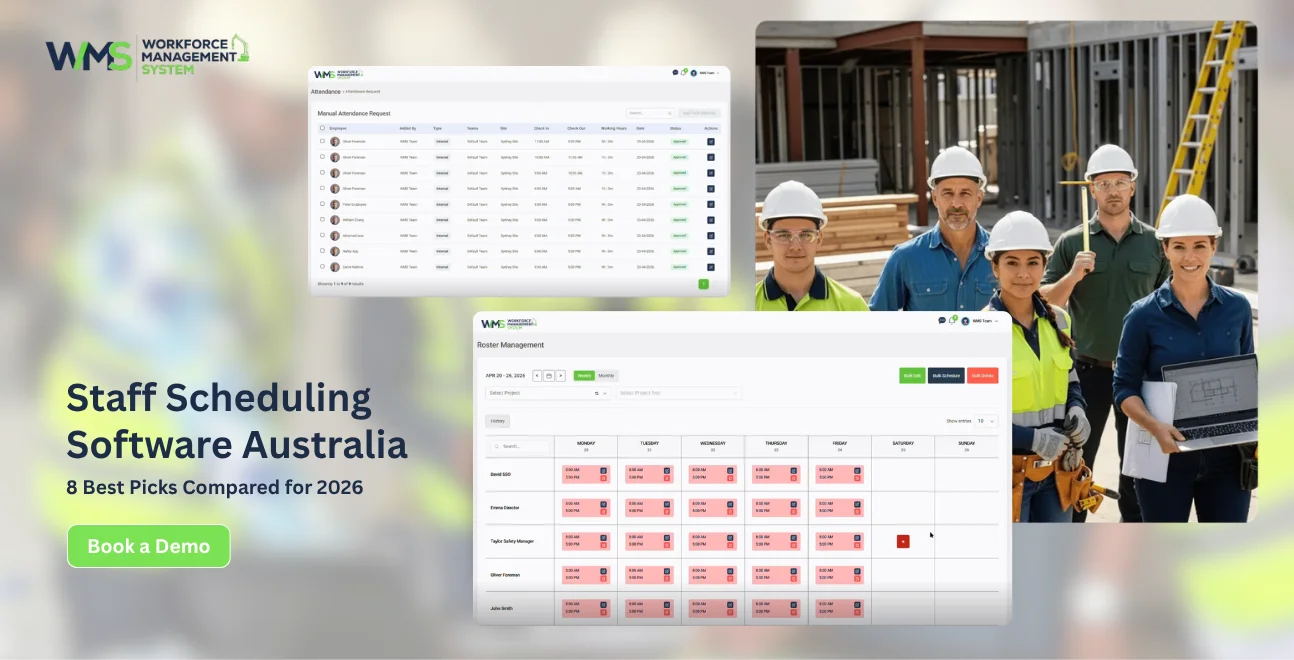
Streamline your frontline operations
See how WMS simplifies scheduling, compliance and workforce management in one powerful platform.
WorkforceMS, Deputy, and Connecteam are the top-rated staff scheduling software options for Australian businesses in 2026, based on Fair Work Award compliance, ease of use, and integration with Xero/MYOB. Here's why:
- WorkforceMS best for automated Award interpretation
- Deputy best for multi-site teams
- Connecteam best all-in-one workforce app
- RosterElf best for simple rostering
- Homebase best value for money
Introduction
Manually building rosters in Excel is slow, error-prone, and risky. A single Award misclassification can trigger a wage underpayment claim, a growing enforcement priority under Australian Fair Work law. Staff scheduling software automates shift creation, tracks availability, and applies correct Award rates automatically, cutting rostering time and compliance risk at once.
This guide compares eight leading staff scheduling software platforms available in Australia, with a focus on what most reviews skip: genuine free-tier limits, real Award-interpretation depth, and industry-specific fit. WorkforceMS is included as a Fair Work-focused option built specifically for Australian Award complexity and, unlike most rostering-only tools, it sits inside a broader platform covering HRM Client and Subcontractor management, Sites & Projects, Tender Management Project Task Management, Safety & Compliance, Toolbox & Pre-start, Asset Management, Invoices, and Reporting.
What Is Staff Scheduling Software?
Staff scheduling software is a digital tool that automates shift creation, tracks employee availability, and manages time and attendance replacing manual spreadsheets or paper rosters. Most Australian platforms also apply Fair Work Award rates automatically and sync with payroll systems like Xero and MYOB.
How It Differs From a Paper or Excel Roster
Spreadsheets require manual entry for every shift, availability change, and Award rate increasing the chance of human error. Scheduling software automates these calculations, flags conflicts (like double-booked staff), and updates in real time across web and mobile.
Who Uses It
Rostering software is used across hospitality, retail, healthcare, NDIS/aged care, and any shift-based business with more than a handful of staff. Multi-site businesses and franchises particularly benefit from centralised roster visibility.
How We Chose the Best Scheduling Software for Australian Businesses
Software was assessed on Fair Work Award compliance accuracy, ease of use, mobile app quality, payroll integration (Xero/MYOB), pricing transparency, and industry-specific features like NDIS compliance tools.
Must-Have Features We Tested
Every platform was evaluated for drag-and-drop rostering, mobile shift swaps, real-time notifications, and labour cost forecasting. Platforms lacking mobile access for frontline staff were scored down, since most rostering disputes happen on-shift, not at a desk.
Compliance and Localisation Checks
We specifically checked whether each platform applies Fair Work Modern Award rates automatically, rather than requiring manual rule configuration, a major differentiator for Australian businesses versus US-built tools retrofitted for local use.
The 8 Best Staff Scheduling Software Options in Australia (2026)
WorkforceMS Best for Fair Work Award Automation
WorkforceMS automatically applies Modern Award rates and overtime rules as rosters are built, reducing wage-error risk without manual configuration. It includes industry templates for hospitality, aged care/NDIS, and retail, plus native Xero and MYOB sync for same-day payroll reconciliation.
Because scheduling sits alongside HRM, Sites & Projects and Client /Subcontractor modules, staff, sites, and contractor details stay linked rather than living in separate systems, a genuine point of difference from single-purpose rostering apps.
Deputy Best for Large Multi-Site Teams
Deputy offers strong multi-location roster visibility, labour cost tracking, and a widely-used mobile app. It suits businesses managing dozens of sites but can require more setup time for Award configuration than purpose-built local tools.
Connecteam Best All-in-One Workforce App
Connecteam combines scheduling with task checklists, digital forms, and internal communication in one app. It's a strong fit for businesses wanting a single tool beyond just rostering, though its compliance features are less Australia-specific.
RosterElf Best for Simplified Rostering
RosterElf focuses on straightforward drag-and-drop rostering with built-in cost control and payroll integration, making it a solid choice for smaller teams that don't need extensive extra features.
Homebase Best Value for Money
Homebase offers accurate time and attendance tracking with an accessible price point, making it popular with small hospitality and retail teams prioritising budget over advanced features.
ShiftCare Best for Ease of Use
ShiftCare's drag-and-drop interface and mobile access make it easy for non-technical managers to adopt quickly, particularly in care-sector rostering.
Square Shifts Best for POS-Integrated Retail/Hospitality
Square Shifts integrates directly with Square POS, making it a natural fit for retail and hospitality businesses already using Square for payments.
Tanda Best for Enterprise Compliance
Tanda is built for larger Australian enterprises needing detailed Award interpretation and compliance reporting at scale.
Feature Comparison Table
| Software | Fair Work Award Automation | Xero/MYOB Sync | Free Tier | Best For |
|---|---|---|---|---|
| WorkforceMS | Automated | Native | Trial only | Award compliance |
| Deputy | Partial | Yes | Limited | Multi-site teams |
| Connecteam | Partial | Yes | Yes (small teams) | All-in-one workforce app |
| RosterElf | Yes | Yes | Trial only | Simple rostering |
| Homebase | Partial | Yes | Yes (limited) | Budget-conscious teams |
| ShiftCare | Yes | Yes | Trial only | Care-sector ease of use |
| Square Shifts | Partial | Via Square only | Yes (Square users) | POS-integrated retail |
| Tanda | Advanced | Yes | Trial only | Enterprise compliance |
Beyond Rostering: The Full WorkforceMS Platform
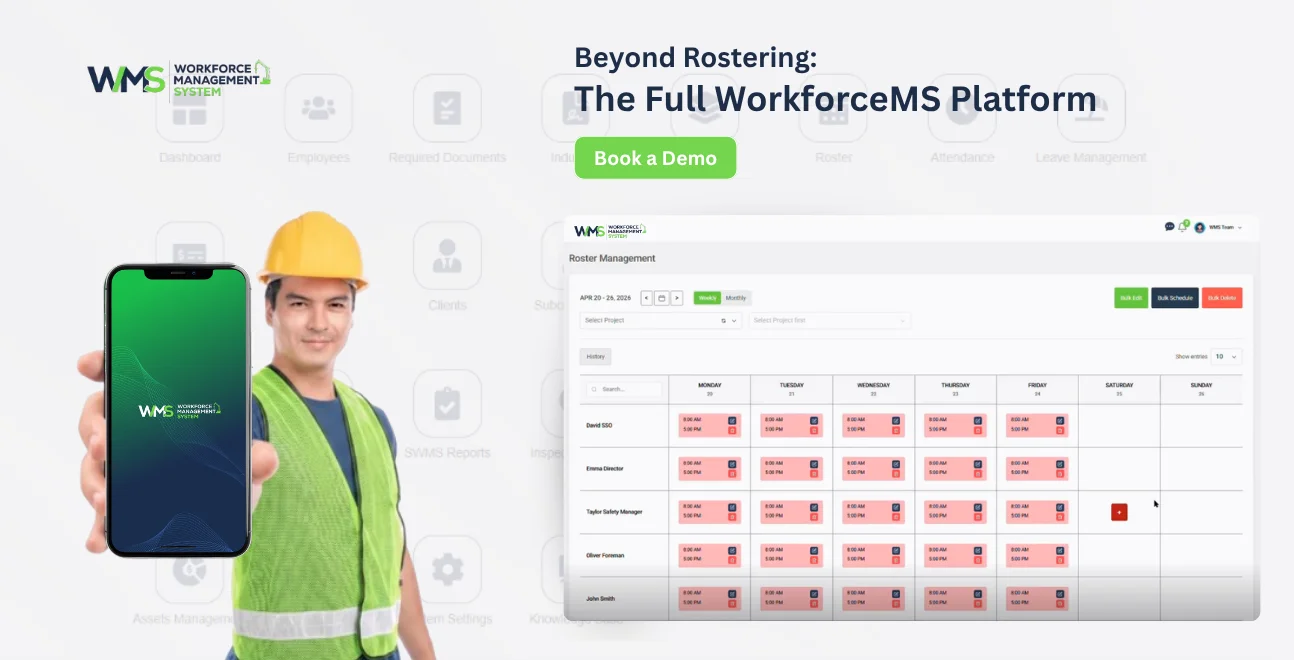
WorkforceMS extends beyond staff scheduling into a full operations platform, giving Australian businesses HRM, project, compliance, and finance tools in one place rather than several disconnected apps.
Many Australian businesses particularly in construction, trades, and field services need more than a roster. WorkforceMS's HRM module centralises staff records, onboarding, and Award classifications, so scheduling always pulls from accurate employee data rather than a separate spreadsheet.
The Client and Subcontractor modules keep customer details and subcontractor compliance documents (licences, insurances, inductions) in one searchable place, which matters when rosters need to reflect who's actually approved to work on a given job.
Sites & Projects ties rosters directly to the physical locations or jobs staff are working on, giving managers real-time visibility of who's where. This connects naturally into Tender Management, which tracks jobs from quote through to award, and Project Task Management, which breaks awarded work into trackable tasks assigned to the same staff already rostered on-site.
Safety & Compliance and Toolbox & Pre-start modules handle the pre-shift checks, safety inductions, and toolbox talks that many Australian workplaces are legally required to document recorded against the same roster entry, rather than on paper. Asset Management tracks the equipment, vehicles, or tools allocated to each job or team, reducing the admin of chasing down gear across multiple sites.
Finally, Invoices and Reporting close the loop: approved timesheets and completed project tasks flow through to client invoicing, while reporting gives owners and managers a single view of labour cost, site performance, and compliance status across the whole business.
Free Rostering Software in Australia: What to Actually Expect
True "free forever" rostering software in Australia is rare and usually limited to very small teams (under 5-10 staff) or basic scheduling without Award automation. Most platforms advertised as free are actually free trials of paid plans.
Genuinely free tiers (like Connecteam's or Homebase's small-team plans) typically cap user numbers and strip out Fair Work Award automation meaning you may still calculate Award rates manually. For any business with compliance exposure, budgeting for a paid tier is usually the safer choice.
Fair Work Compliance & Award Interpretation Explained
Fair Work compliance means your rosters and pay rates correctly follow the relevant Modern Award, including penalty rates, overtime, and minimum engagement periods. Software with automated Award interpretation reduces the risk of underpayment claims significantly compared to manual rostering.
What Happens If You Get Award Rates Wrong
Underpayment, even unintentional, can result in back-pay obligations, Fair Work Ombudsman investigations, and reputational damage. Wage theft has become an active enforcement focus in Australia, raising the stakes for manual rostering errors.
How Software Prevents Wage Theft Claims
Automated Award interpretation applies the correct penalty and overtime rates as shifts are scheduled, rather than relying on managers to remember rule changes reducing the most common source of underpayment error.
Xero & MYOB Integration: What to Check Before You Buy
Look for native Xero or MYOB integration (not a third-party workaround), which syncs approved timesheets directly to payroll without manual re-entry, reducing double-handling and payroll errors.
How Much Does Scheduling Software Cost in Australia?
Most staff scheduling software in Australia costs between $2-$8 per employee per month, with enterprise compliance features pushing costs higher. Free tiers exist but usually cap team size or strip out Award automation.
Common Mistakes When Choosing Rostering Software
- Choosing based on price alone and ignoring Award automation
- Assuming "integrates with Xero" means native, real-time sync
- Not testing the mobile app from a frontline employee's perspective
- Overlooking whether the platform supports your specific industry (e.g., NDIS ratios)
- Skipping a compliance-specific trial before committing to an annual plan
Final Verdict: Best Staff Scheduling Software in Australia
For most Australian businesses, the right choice depends on priorities: WorkforceMS for automated Fair Work Award compliance, Deputy for multi-site scale, or Connecteam for an all-in-one workforce app. Businesses with tight compliance exposure particularly in hospitality, retail, and NDIS/aged care benefit most from software with built-in Award automation rather than manual configuration.
If reducing wage-error risk and admin time is your priority, try WorkforceMS free for 14 days to see automated Award interpretation in action and explore how HRM, Sites & Projects, Safety & Compliance, and Reporting work together in one platform rather than several disconnected tools.
Optimise your operations with WMS
Streamline scheduling, compliance, and workforce management in one platform.
Frequently Asked Questions
WorkforceMS, Deputy, and Connecteam rank highest overall, with the best fit depending on whether Award automation, multi-site scale, or all-in-one features matter most to your business.
Yes, but genuinely free tiers usually limit team size and often lack automated Fair Work Award interpretation, so they suit only very small teams.
Purpose-built Australian platforms like WorkforceMS and Tanda automate Modern Award rate applications, while some global tools require manual configuration.
Most leading platforms offer Xero integration, and several support MYOB, though the depth of native sync varies by provider.
Yes several platforms, including WorkforceMS and ShiftCare, offer NDIS-specific compliance and ratio-tracking features.
Pricing typically ranges from $2-$8 per employee per month depending on features like Award automation and payroll sync.
The terms are largely used interchangeably in Australia, though "rostering" often implies stronger compliance and Award-rate features.
Some platforms support contractor scheduling, but you should confirm the software separates contractor rules from employee Award obligations before relying on it for compliance.
Most switches take 1-2 weeks, including staff data migration and a short parallel-run period to verify Award rate accuracy.
Yes, all platforms compared here, including WorkforceMS, Deputy, and Connecteam, offer native iOS and Android apps.
Related Articles
Explore more insights on workforce management, compliance, and operations.

AI-Powered Employee Management for Modern Businesses
Discover how AI-powered employee management helps businesses simplify scheduling, attendance, payroll, and compliance across shift-based teams.

Muhammad Asim
01 Oct 2026

Top AI Solutions To Manage Construction Workforce
Explore the top AI solutions for managing a construction workforce, from onboarding to payroll and safety, with human review built in.
Muhammad Asim
14 Sep 2026

Streamline Job Tracking with AI Construction Management Software
Discover how AI construction management software streamlines job tracking, project planning, risk alerts, defect reporting and safety compliance.
Muhammad Asim
11 Sep 2026
Ready to secure your operations?
