Tender Management Software Australia: Stop Losing Tenders to Admin, Not Price
Most Australian builders don't lose bids on price. They lose them on missed deadlines and messy paperwork. The right tender management software fixes that.

Share this article
Streamline your frontline operations
See how WMS simplifies scheduling, compliance and workforce management in one powerful platform.
Running around to chase tenders in spreadsheets, shared drives, and groups? You're not alone. Most Australian builders don't lose bids on price. They lose them on missed deadlines and messy paperwork.
The right tender management software fixes that. This guide shows you exactly how.
What Is Tender Management Software?
Tender management software is a digital system for construction businesses. It assists you in locating, monitoring, producing, and sending out tenders. All of this is in one platform, rather than having to juggle emails, PDFs, and Excel trackers.
This for Australian builders translates to a process of tracking a tender from the time of its advertisement. It continues through document collection and pricing, right up to submission and award. Good construction tendering software also keeps a record of past bids. Your team can see what wins and what doesn't.
It's a core part of any modern construction management software Australia stack. It sits alongside scheduling, HR, and site management tools.
Why Australian Construction Companies Need Tender Management Software
The construction industry runs on tight margins and tighter deadlines. A single missed submission window can cost a company a six or seven-figure contract. And the risks go further than lost work.
The picture that is painted by the industry is bleak. Over the past 12 years, the construction industry in Australia has experienced over 2,300 firm failures. The majority of the failures can be attributed to poor cost control and administrative failures.
The productivity losses, on a typical $5 million project, can cost about $150,000. When the documentation is not clear or communication is poor, the rework due to this can cost an additional $200,000 to $300,000 per project.
Many of these wastes begin at the tendering stage. Pricing gets rushed, scope gets misread, or a subcontractor quote arrives too late to include. A structured bid management software platform reduces these risks. It standardises how your team prepares every submission.
The Real Cost of Manual Tendering
- Missed deadlines because reminders live in someone's inbox
- Inconsistent pricing between estimators
- Lost version control on drawings and addenda
- No visibility for management on win rates or pipeline value
- Subcontractor quotes chased manually, again and again
Each of these is a solvable problem. Solving it is exactly what tender management platforms are built for.
Key Features to Look For in Construction Tendering Software
Not all tools are built the same. Here's what to check for when comparing options.
- Centralised tender tracking. Every opportunity should sit in one searchable pipeline. From advertisement to award, the whole team can see it.
- Document and addenda control. Drawings, specs, and addenda change constantly during a tender period. The system should version-control every file automatically.
- Deadline and task reminders. Automated alerts stop submissions from slipping through the cracks. This matters most on multi-stage government tenders.
- Subcontractor and supplier coordination. The best platforms let you send RFQs and collect quotes in one place. No more chasing pricing across email threads.
- Reporting and win-rate analysis. Knowing which tender types you win helps you bid smarter, not just harder.
- Integration with project and workforce tools. Once a tender is won, it should convert straight into a live project. No re-entering data from scratch.
Tender Management Software Comparison: Australia
Below are some general examples of the different approaches and types of solutions to tendering in the Australian market. Please note that prices and features do vary, and please always verify on each of the provider's websites.
| Solution Type | Best For | Tendering Focus | Workforce & Project Tools Included |
|---|---|---|---|
| Free spreadsheet templates | Very small builders, one-off use | Basic tracking only | No |
| Estimating-focused platforms (e.g. EstimateOne) | Finding and quoting tenders | Strong tender discovery network | Limited |
| Bid-only platforms (e.g. BidContender) | Larger contractors with dedicated bid teams | Deep bid document management | Limited |
| All-in-one construction platforms (e.g., WMS) | Builders who want tendering, workforce, and site management together | Full tender pipeline, linked to projects | Yes |
Searching for free tender management software Australia? Spreadsheet templates and basic trial accounts can work for very low bid volumes. But once you're chasing multiple tenders a month, manual re-entry becomes costly. The lack of reporting quickly outweighs any savings from going free.
How WMS's Tender Management Hub Works
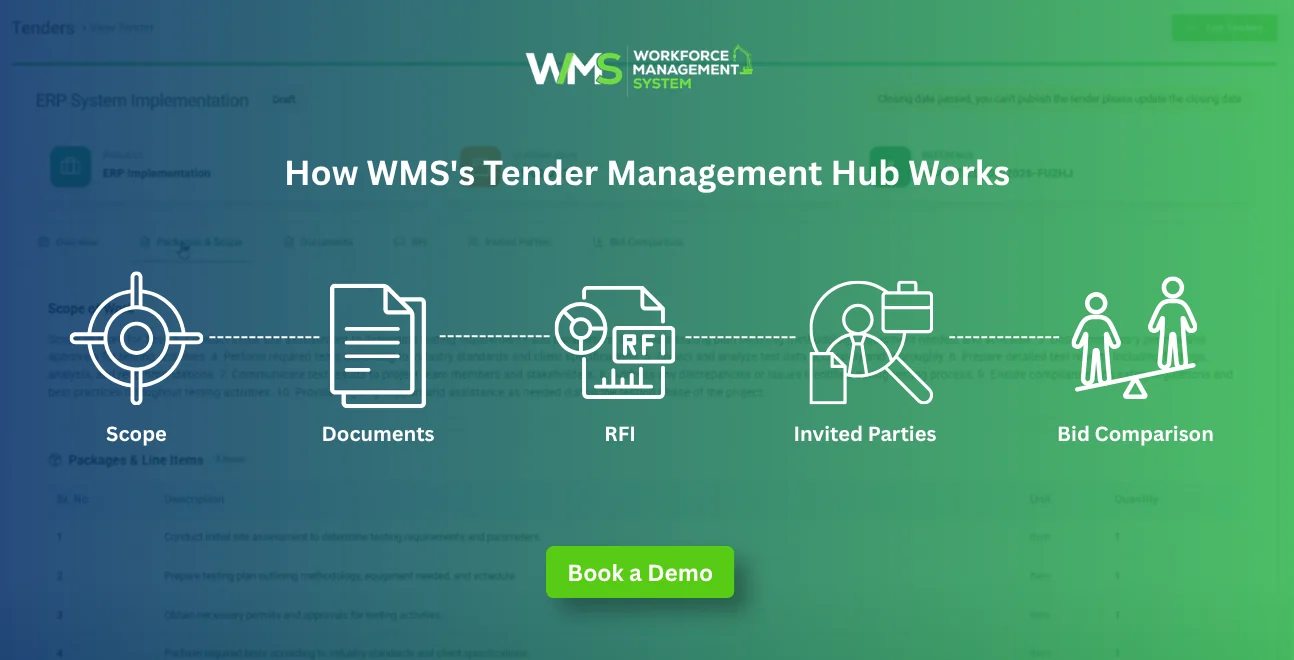
WMS was built for Australian construction companies. It's for teams that need more than a bid tracker. They need a system that connects tendering to everything that happens after the win.
The Tender Management module tracks every tender from opportunity to award in one dashboard. See submission deadlines, assigned owners, and current status at a glance. No more digging through email threads.
Because WMS is an all-in-one platform, a won tender doesn't sit in isolation. It flows directly into Sites & Projects, where scheduling and site tracking begin immediately.
Subcontractor quotes gathered during the tender stage connect to the Subcontractor module. You won't need to re-chase pricing once the job starts.
Team capacity and compliance checks pull from the HRM module. You can see whether you have the licensed, available workforce to deliver a job before you commit to bidding.
Once work is underway, Reporting shows how estimated costs compare to actuals. This closes the loop between what you bid and what you delivered.
This connected approach is what separates a genuine construction platform from a standalone tendering tool. It's also why builders searching for construction management software Australia increasingly want tendering, HR, and site operations under one login. Three separate subscriptions is three too many.
A Typical Tender Workflow: Before and After
It helps to see the difference in practice. Here's how a mid-sized builder might handle a $2 million commercial tender, with and without dedicated software.
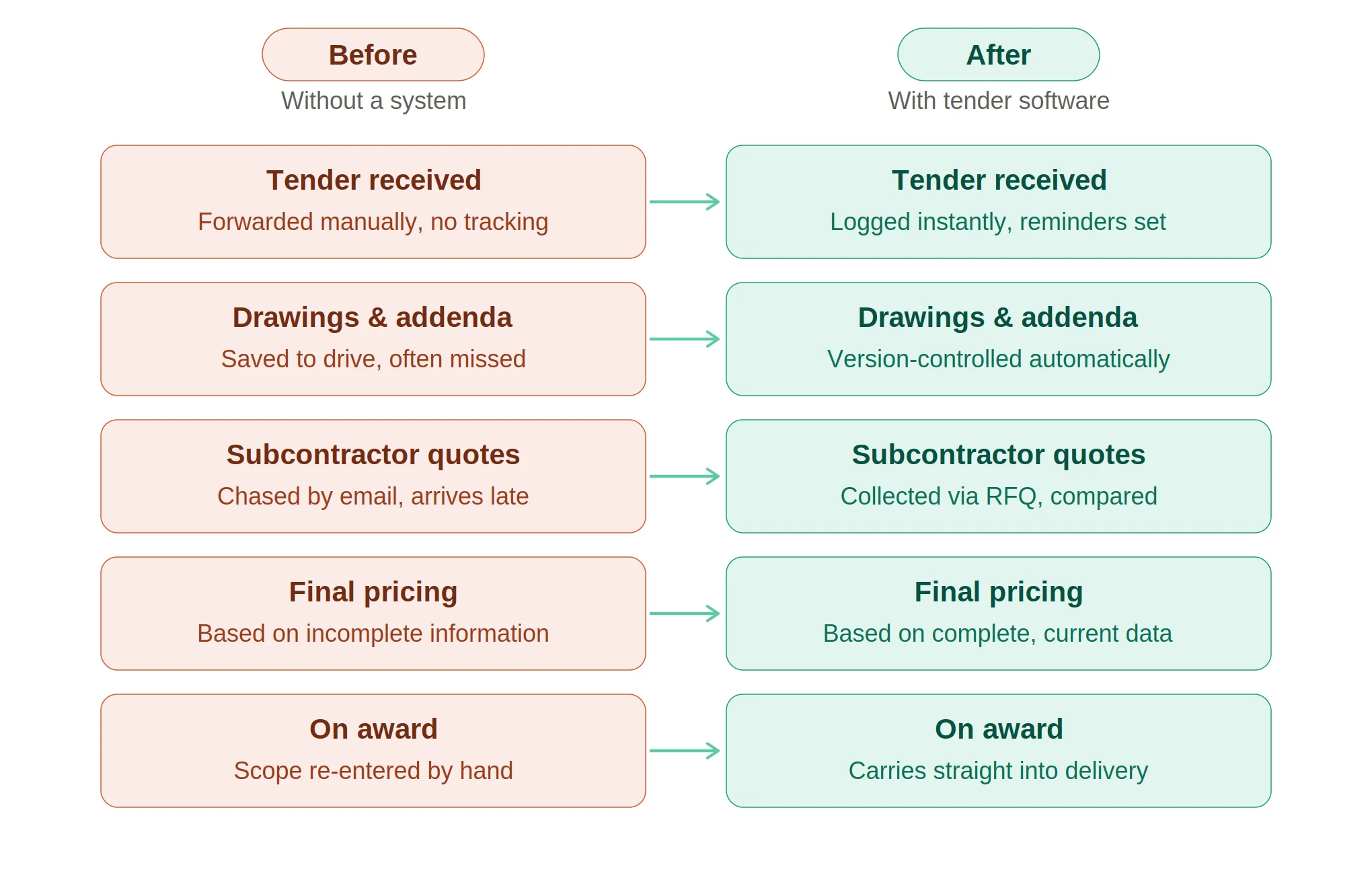
The difference isn't just convenience. It's the gap between a bid built on accurate information and one built on whatever landed in an inbox that week.
Who Should Be Using Construction Tendering Software?
Tender management platforms aren't only for large contractors chasing government infrastructure work. They're worth considering for:
- Small to mid-sized builders submitting multiple private and commercial tenders each month, where admin time competes directly with billable work
- Subcontractors and trades tracking invitations to quote from multiple head contractors, without losing track of deadlines
- Growing businesses scaling from a handful of jobs a year into a genuine pipeline, where informal tracking starts to break down
- Companies bidding on government or council tenders, which often involve strict, multi-stage submission requirements
If your process relies on one person's memory or a spreadsheet only they understand, that's a clear sign it's time to switch.
Benefits of Using Bid Management Software
Switching from spreadsheets to a dedicated platform delivers gains across the whole business, not just the estimating team.
- Fewer missed opportunities. Automated deadline tracking means fewer tenders fall through because no one saw the closing date in time.
- Faster, more consistent pricing. Standard templates and centralised subcontractor quotes speed up estimating and cut pricing errors.
- Better decision-making. Win-rate reporting shows management which project types, clients, or regions are worth pursuing.
- Smoother handover to delivery. When a tender converts straight into a live project, site teams start with accurate scope and pricing from day one.
- Stronger compliance record. A documented, auditable trail of every submission protects your business if a tender outcome is ever disputed.
Free vs Paid Tender Management Software: What's Right for You?
This is one of the most common questions Australian builders ask. It's worth answering directly.
| Free Tools | Paid Tender Management Software | |
|---|---|---|
| Best for | Sole traders, very small teams, occasional bids | Businesses submitting multiple tenders a month |
| Automation | Little to none | Deadline reminders, addenda tracking, RFQs |
| Subcontractor coordination | Manual, via email/text | Built-in RFQ and quote comparison |
| Reporting | Limited or none | Win-rate and pipeline reporting included |
| Risk | Low cost, but higher admin time and error risk | Subscription cost, but lower time and error risk |
| Best next step | Fine for testing the waters | Start with a free trial, not a permanently free tool |
A less-risky solution: Use a free trial with a full platform instead of an always free but limited tool. This will help to determine if the automation saves time or not before committing.
WMS offers a 14-day trial, so you can try the full tender-to-project workflow first.
Tender Management Software vs Procurement Software
These two categories overlap. That's why builders searching for procurement tender management software Australia often get confused.
| Tender Management Software | Procurement Software | |
|---|---|---|
| Who it's for | Contractors responding to tenders | Organisations issuing tenders and managing suppliers |
| Core focus | Finding opportunities, preparing and submitting bids | Purchasing, supplier management, contract administration |
| Typical user | Builders, subcontractors, estimators | Buyers, government bodies, large developers |
| Where WMS fits | Tender Management module covers this directly | Subcontractor module adds procurement-style coordination |
Many construction companies need both functions but approach them differently. As a contractor, your priority is usually a strong tendering and bid management workflow. Procurement-style supplier coordination for subcontractor quotes should sit alongside it. That's exactly how WMS structures its Tender Management and Subcontractor modules together.
Data Security and Compliance Considerations
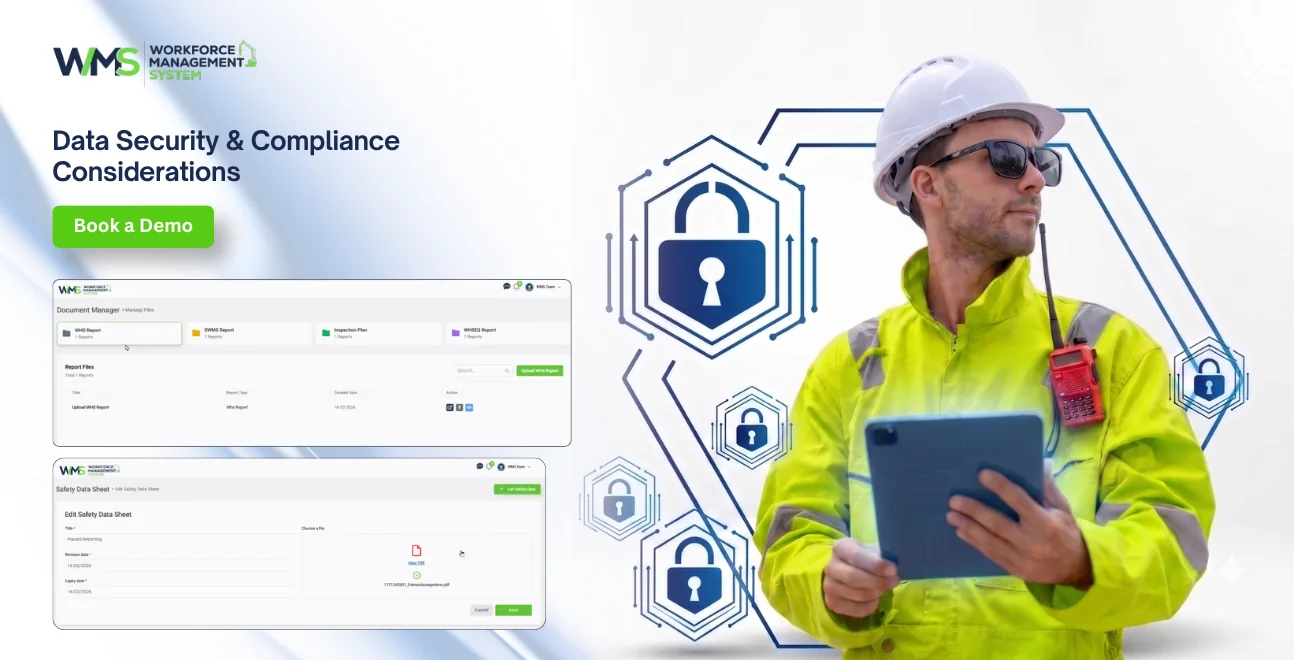
Tender documents often contain sensitive pricing, client information, and sometimes personal data from compliance documentation. Consider this, therefore, not simply a productivity choice, but rather a data handling choice.
Search for platforms that are situated on reputable Australian based infrastructure. Look for explicit data ownership statements and access restrictions based on roles, ensuring that only appropriate individuals have access to pricing information deemed sensitive.
Ask any provider directly how tender and subcontractor data is stored, and who can access it. A transparent answer is a good sign. A vague one is worth following up on before you commit.
How to Choose the Best Tender Management Software in Australia
This checklist is a checklist you should go through on a platform before you commit.
- Does it match your bid volume? A tool built for a handful of tenders a year won't scale to weekly submissions, and vice versa.
- Does it connect to project delivery? A won tender should flow into scheduling and site management without manual re-entry.
- Can subcontractors submit quotes easily? Look for a simple RFQ and quote-comparison process.
- Is reporting built in? You should see win rates and pipeline value without exporting to another tool.
- Is it built for Australian construction? Local compliance, award structures, and terminology matter more than generic global tools.
- Is there a free trial? Test the real workflow, not just a demo video, before signing up.
Final Thoughts
Tendering is where construction projects are won or lost. This happens long before the first shovel hits the ground. Manual processes might work when you're bidding occasionally. But they become a real business risk as your pipeline grows.
A connected platform takes a tender from opportunity to award, then straight into project delivery. It removes the guesswork and the double handling. That's the gap WMS was built to close for Australian construction businesses.
Looking forward to seeing it in action? Start your 14-day trial and monitor your next tender in one place.
Optimise your operations with WMS
Streamline scheduling, compliance, and workforce management in one platform.
Frequently Asked Questions About Tender Management Software Australia
It depends on your business size and needs. Small teams bidding occasionally may manage with free tools. Growing builders generally benefit more from an all-in-one platform like WMS, which links tendering directly to project and workforce management.
Yes. Basic spreadsheet templates and limited free tiers exist. They suit very low bid volumes but lack the automation, subcontractor coordination, and reporting found in paid platforms.
Tender management software focuses on preparing and submitting bids as a contractor. Procurement software is broader, covering purchasing and supplier management, often from the perspective of the organisation issuing tenders.
Good platforms should. WMS, for example, moves a won tender directly into its Sites & Projects and Subcontractor modules. There's no duplicate data entry once a job is awarded.
The cost depends on features and team size and varies between providers. Be sure to verify the price of the service directly on their website and try out a free trial to ensure value before purchasing.
When you're placing a greater number of tenders per month, or coordinating subcontractor quotes frequently, dedicated software typically saves more time and reduces more errors than it costs.
Related Articles
Explore more insights on workforce management, compliance, and operations.

Security Operations and Monitoring Workforce Planning
Plan guard rosters, track live attendance and cover every shift with WorkforceMS. Strengthen security operations and monitoring with smarter workforce planning.

Muhammad Asim
09 Oct 2026

Telehealth and Digital Healthcare Scheduling WMS
Simplify telehealth and digital healthcare scheduling with WorkforceMS. Manage rosters, remote clock-ins and compliance records in one easy-to-use platform.
Muhammad Asim
08 Oct 2026

Healthcare Workforce Management for Aged Care
Simplify rostering, credential tracking and payroll for aged care healthcare teams. Discover how WorkforceMS gives your carers more time with residents.
Muhammad Asim
05 Oct 2026
Ready to secure your operations?
