Asset Management Australia: The 2026 Guide for Construction Companies
Asset management in Australia is that systematic tracking, upkeep, and betterment of physical and digital assets across their full lifecycle. For construction companies, it basically means you're aware of where each item of equipment sits, who's handling it, when it's due next for service, and if it lines up with Australian standards all in one place, a single platform.

Share this article
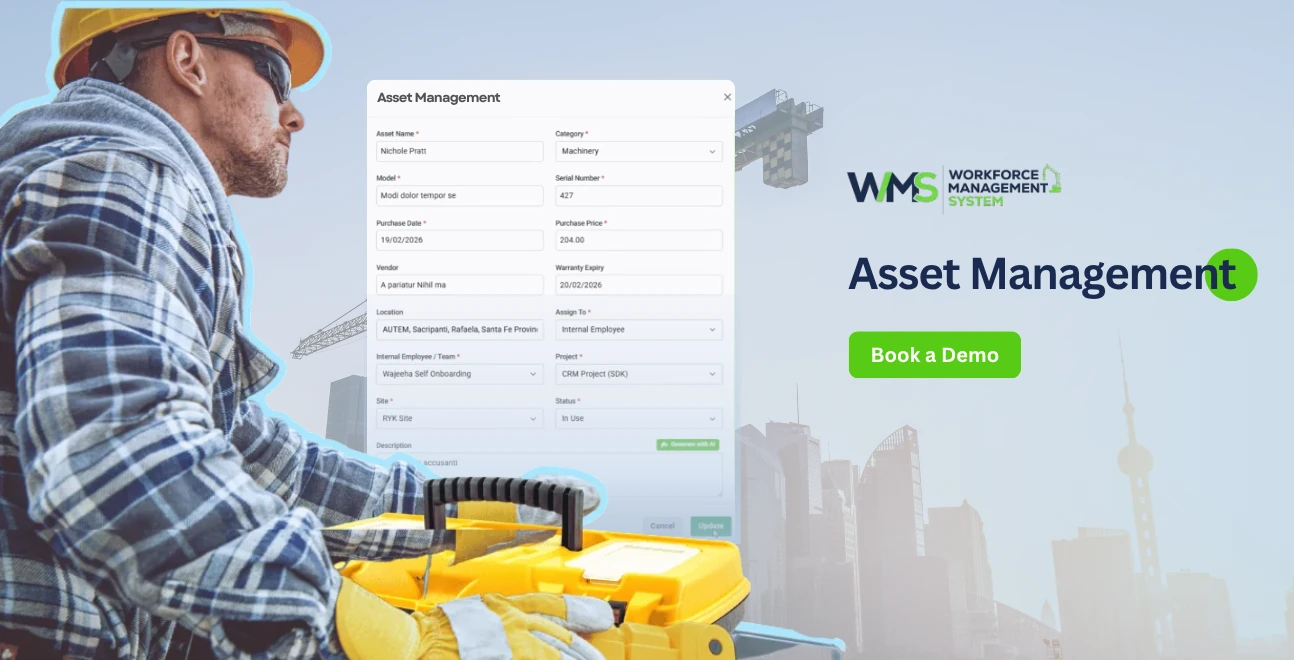
Streamline your frontline operations
See how WMS simplifies scheduling, compliance and workforce management in one powerful platform.
Asset management in Australia is that systematic tracking, upkeep, and betterment of physical and digital assets across their full lifecycle. For construction companies, it basically means you're aware of where each item of equipment sits, who's handling it, when it's due next for service, and if it lines up with Australian standards all in one place, a single platform.
- Asset tracking removes that spreadsheet mess and helps stop equipment from going missing across multiple job sites, you know.
- Preventive maintenance planning cuts down those sudden failures and can stretch the usable life of the equipment.
- Compliance paperwork keeps AS/NZS expectations in order, so audits and insurance don't turn into a hassle.
- Workforce alignment links asset usage to real worker rosters, and it ties more cleanly into project expenses, too.
Introduction
A bunch of construction companies across Australia lose thousands of dollars every year because of messy asset management. Equipment goes missing, warranties expire without anyone noticing, and maintenance turns into a last minute scramble instead of a planned cadence. On top of that, field teams end up spending hours each week chasing tools that really should be traceable in seconds, not "somewhere around here"
Usually the problem is not plain old negligence. It's more like disconnected systems that just don't sync up. You get spreadsheets that go out of date, paper checklists that never quite reach the office, and separate software for scheduling, time tracking, and asset registers that simply refuse to speak to each other.
This guide aims to cut through the noise. Whether you're looking at asset management software australia for the first time, or replacing a setup that never really fits, you'll find a straightforward framework for picking the right solution. We'll also walk through some of the best asset management software australia options for construction, explain when enterprise asset management software australia is actually worth it, and show how a connected workforce plus asset management approach can deliver measurable cost savings, not just "better visibility"
WorkforceMS has been supporting Australian construction businesses to streamline how they operate since 2019. Our platform blends Asset Management with employee scheduling, time tracking, and compliance, because assets don't run by themselves. They need people, projects, and repeatable processes working together, in sync.
What Is Asset Management in Australia?
Asset management in Australia is basically the coordinated stuff organisations do so they can realise value from their assets, not just keep them "somewhere". For construction businesses it includes keeping track of where equipment is, planning maintenance, making sure everything stays compliant, and squeezing better performance from assets across different job sites while still aligning with Australian standards like AS/NZS ISO 55000.
Defining Asset Management for Australian Construction Businesses
In construction, asset management covers every tangible item your company owns or runs: excavators, scaffolding, power tools, vehicles, safety gear, and even temporary site infrastructure. So it is not the same as generic asset management Australia style. Your system needs to cope with assets that get moved fast between sites, operating conditions that are a bit rough, and strict safety obligations, all at once.
A modern asset register does more than a simple list of what you own. It should capture real-time placement using GPS or barcode scanning, plus maintenance history, operator assignments, and depreciation information. If a site manager needs a specific excavator for tomorrow's pour, they should find out quickly if it is available, where it's located, and who last used it.
How Australian Regulations Shape Asset Management Requirements
Construction in Australia comes with layered regulatory expectations. Work health and safety (WHS) laws push regular inspections of equipment. The Australian Taxation Office expects depreciation records to be accurate for fixed assets. On top of that, major clients often ask for evidence of asset upkeep, because it affects contract compliance.
Cloud based asset management systems that support Australian data residency can help businesses meet these duties without drowning in manual forms. Digital inspection records, automatic maintenance notifications, and audit-ready reporting replace filing cabinets and those "I think it was done" memory moments.
Best Asset Management Software Australia: Top Picks for 2026
The best asset management software australia for construction depends on your team size and primary pain point. WorkforceMS leads for integrated workforce + asset management. MapTrack excels for per-asset pricing across multiple sites. MaintainX suits maintenance-heavy operations. For enterprise-scale reliability engineering, IBM Maximo remains the reference standard.
WorkforceMS: Purpose-Built for Australian Construction
WorkforceMS was built specifically for Australian construction companies managing assets alongside their workforce. Unlike generic platforms, our Asset Management module connects directly to Sites & Projects, Project Task Management and Safety & Compliance so when you assign a worker to a task, the system knows which equipment they need, whether it's available, and if their certifications cover its operation.
Key differentiators include:
- Integrated scheduling: Asset availability visible during rostering
- Subcontractor equipment tracking: Monitor hired plant alongside owned assets
MapTrack: Per-Asset Pricing for Field-Heavy Operations
MapTrack offers per-asset pricing (from A$1 per asset monthly) with unlimited users, making it cost-effective for teams with many field workers. Its AS/NZS-aware compliance templates and QR/barcode scanning suit construction operators needing straightforward tracking without workforce integration.
MaintainX: CMMS-First for Maintenance-Led Teams
MaintainX prioritises preventive maintenance and work order management. Its mobile-first interface guides technicians through standard operating procedures. However, asset tracking is functional rather than central best for teams where breakdown prevention matters more than location visibility.
Enterprise Asset Management Software Australia: When to Scale Up
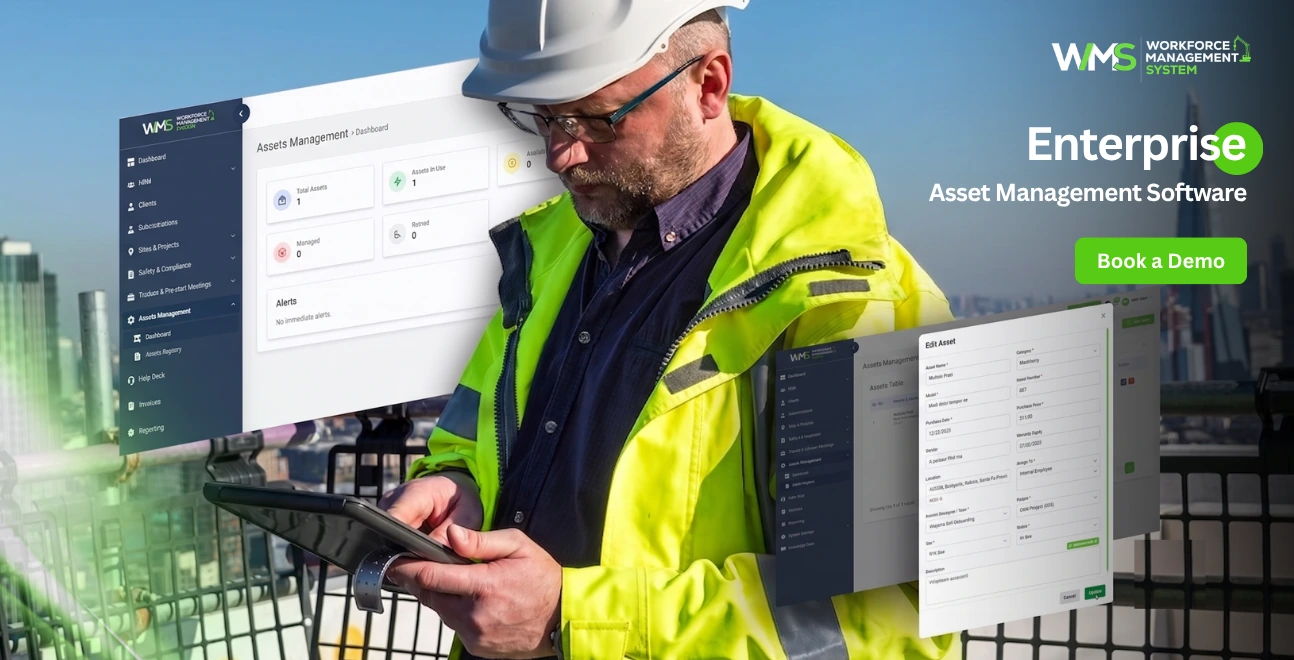
Enterprise asset management software australia becomes necessary when you operate hundreds of complex assets across multiple regions, require predictive maintenance using IoT sensors, or need deep integration with ERP systems like SAP or Oracle. For most construction SMBs and mid-market firms, integrated workforce-asset platforms deliver better value.
IBM Maximo vs. Mid-Market Alternatives
IBM Maximo Application Suite represents the gold standard for enterprise asset management. It offers reliability-centred maintenance, AI-driven predictive analytics, and condition monitoring for assets where downtime costs exceed six figures hourly.
Implementations typically span 6–18 months with significant systems integrator involvement. For construction companies without billion-dollar infrastructure portfolios, mid-market platforms provide 80% of functionality at 20% of the cost and implementation time.
Fixed Asset Tracking for Large Construction Fleets
Fixed asset management software australia focuses on long-lived, high-value items: cranes, batch plants, major earthmoving equipment. These assets require depreciation tracking, warranty management, and capital replacement planning. Integration with accounting systems (Xero, MYOB) ensures financial records match operational reality.
Business Asset Management Software Australia for SMBs
Business asset management software australia for SMBs should prioritise rapid deployment, intuitive mobile interfaces, and pricing that scales with asset count rather than user seats. Construction SMBs specifically need multi-site visibility and compliance features without enterprise complexity.
Why Per-User Pricing Punishes Growing Field Teams
Most construction software charges per user monthly. A crew of 25 field workers plus 5 office staff equals 30 licences even if only 10 people regularly interact with the asset system. For business asset management system australia buyers, this creates a painful choice: restrict access (hurting adoption) or absorb escalating costs.
WorkforceMS offers flexible pricing that doesn't penalise field team growth. Every worker gets asset tracking access through the mobile app without per-seat anxiety.
Integrated Workforce + Asset Management: The WorkforceMS Approach
WorkforceMS unifies functions competitors keep separate. HRM records link to equipment operator licences. Sites & Projects assignments automatically reserve needed assets. Project Task Management tracks which tasks consumed which equipment hours.
And Safety & Compliance flags when an asset's inspection expires before it's assigned to a job. This integration eliminates the "swivel chair" problem of logging into three systems to answer one question: "Can we start this job tomorrow?"
Digital Asset Management Australia: Beyond Physical Equipment
Digital asset management Australia extends beyond physical equipment to include compliance documents, training certificates, warranty files, and project photos. Construction companies generate massive digital records that must be organised, searchable, and linked to physical assets for audit purposes.
Tracking Digital Assets, Documents, and Compliance Records
Every physical asset carries a digital paper trail: purchase invoices, service reports, inspection certificates, operator manuals. A digital asset management system australia construction businesses can rely on stores these centrally, tags them to equipment records, and surfaces them instantly during audits or incident investigations.
Connecting Asset Data to Project Financials
When asset usage data flows directly to project cost reports, profitability becomes transparent. WorkforceMS connects Asset Management time logs to Invoices and Reporting so you know exactly which project consumed which equipment hours no manual reconciliation required.
Asset Management System Australia evaluation what to really look at
When you do an asset management system australia check for construction, you should really prioritise the practical bits like mobile barcode/QR scanning. Also offline access, preventive maintenance scheduling , AS/NZS compliance forms, multi site visibility, and some sort of integration with payroll or accounting systems. Otherwise the whole thing feels kind of clunky, even if the dashboards look nice.
Maintenance scheduling and those preventive maintenance workflows
Good maintenance scheduling stops that annoying reactive loop, like "fix it when it breaks" , and yeah that habit can push budgets up plus create delays on site. A solid platform should kick off work orders based on run hours or calendar dates, or sometimes condition monitoring data, whatever you're using. With preventive maintenance you typically cut emergency repairs by up to 70% compared with a purely reactive method , which is kind of a big deal when projects are already tight.
WorkforceMS makes it easier to create maintenance templates by asset category, then assign them to technically qualified technicians, and monitor progress right through the mobile app. It's not just records , it's actually follow-through.
Mobile inspections and compliance documentation that doesn't fall apart
In Australia construction isn't casual about inspections. You've got pre-start checks, periodic test-and-tag, height safety equipment certification, and more. A decent mobile inspection app should support photo capture, signature collection, and automatic date stamping. That replaces paper forms that degrade, go missing, or come back unreadable , which… happens more often than people admit.
WorkforceMS Toolbox & the Pre start modules connect asset inspections with daily safety briefings , so compliance shows up as part of the routine instead of being a separate admin thing someone has to chase later.
Australia Asset Management Trends Shaping 2026
Australia asset management in 2026 is being reshaped by AI-driven predictive analytics, mandatory data sovereignty requirements, tighter ESG reporting, and integration between asset systems and workforce platforms. Construction companies adopting these trends gain competitive advantage through lower downtime and faster audit response.
AI-Driven Asset Performance Monitoring
Predictive maintenance using machine learning is moving from enterprise to mid-market. By analysing utilisation patterns, vibration data, and service history, AI systems predict failures before they occur. For construction, this means scheduling crane maintenance during planned downtime rather than mid-project.
Data Sovereignty and Australian Cloud Hosting Requirements
Post-2025, Australian businesses face heightened scrutiny on where data resides. The Privacy Act 1988, Notifiable Data Breaches scheme, and industry-specific requirements mean cloud-based asset management must use Australian-hosted infrastructure. WorkforceMS stores data locally, ensuring compliance without operational compromise.
Asset Management Services Australia vs. Software-First Approaches
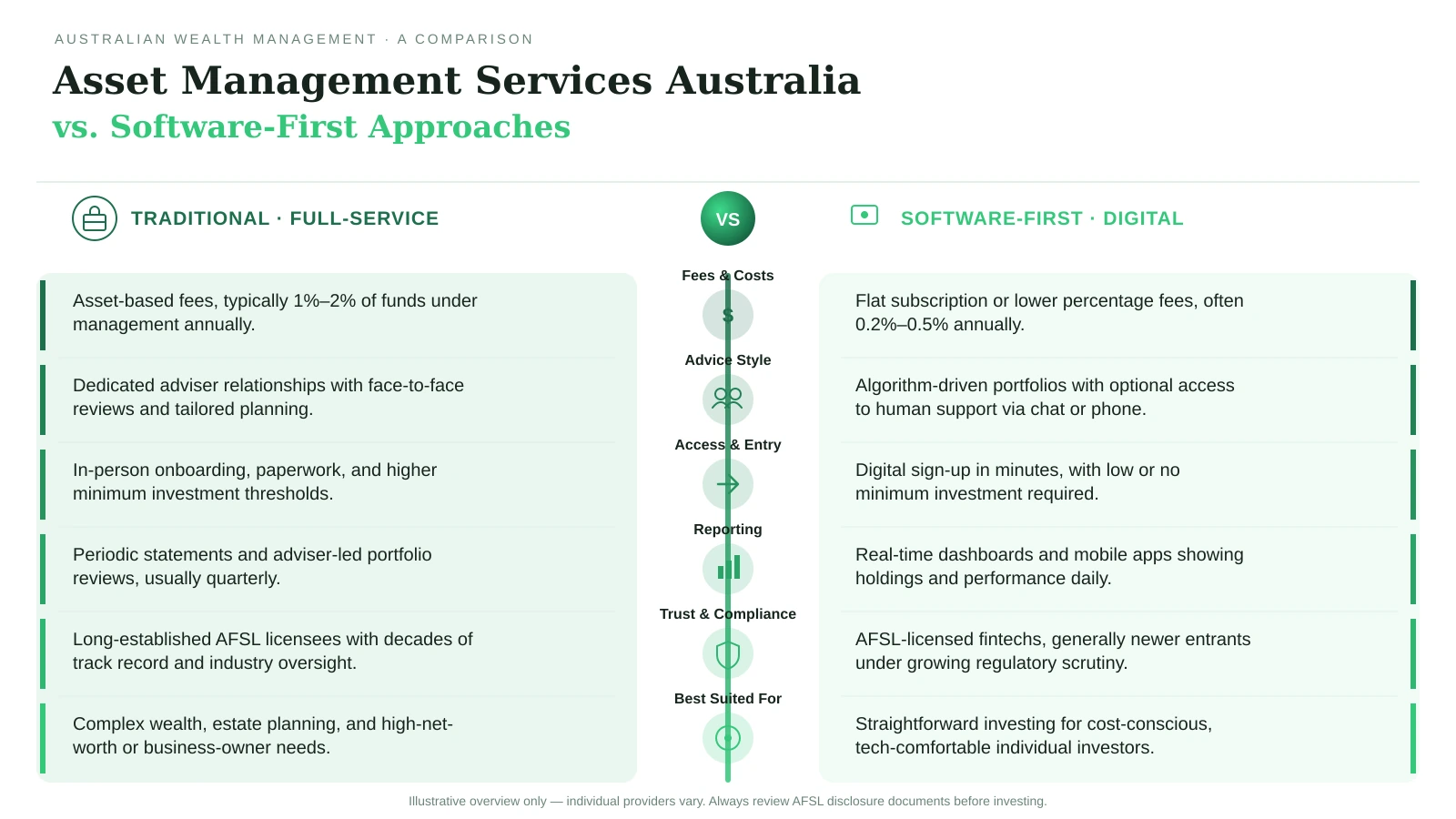
Asset management services australia provide expert guidance for complex implementations, ISO 55000 certification, or interim management during transitions. However, most construction companies achieve faster ROI with software-first approaches that embed best practices through workflow automation.
When to Hire an Asset Management Consultant
Consider asset management consulting services australia when:
- Implementing enterprise EAM across multiple business units
- Preparing for ISO 55000 or industry-specific certification
- Navigating major asset divestment or acquisition
- Your internal team lacks change management expertise
Combining Software with Ongoing Consulting Support
The most effective engagements pair asset management consultant australia expertise with purpose-built software. The consultant designs strategy; the software enforces execution. WorkforceMS supports this hybrid model through configurable workflows that reflect consultant recommendations without requiring custom development.
Digital Asset Management System Australia: Implementation Guide
Rolling out a digital asset management system Australia successfully requires: auditing existing assets, cleansing data, configuring workflows, training field teams, and running a pilot at one site before expanding. Typical construction implementations take 2–6 weeks depending on asset count and integration complexity.
Step-by-Step Rollout for Construction Companies
Asset audit: Tag and photograph every item. Barcode or QR labels cost cents but save hours.
Data import: Upload asset registers, maintenance history, and warranty data.
Workflow configuration: Define check-out/check-in rules, maintenance triggers, and inspection schedules.
Integration setup: Connect accounting, payroll, and project management systems.
Pilot testing: Run one site for 2–4 weeks, refine, then expand.
Training Field Teams on New Asset Workflows
Construction workers adopt technology when it saves time, not when it adds bureaucracy. WorkforceMS mobile training focuses on scan-and-go simplicity: scan the asset tag, confirm condition, submit. Subcontractor crews get streamlined access with role-based permissions, so they can report issues without seeing sensitive cost data.
Business Asset Management Systems Australia, Integration Essentials
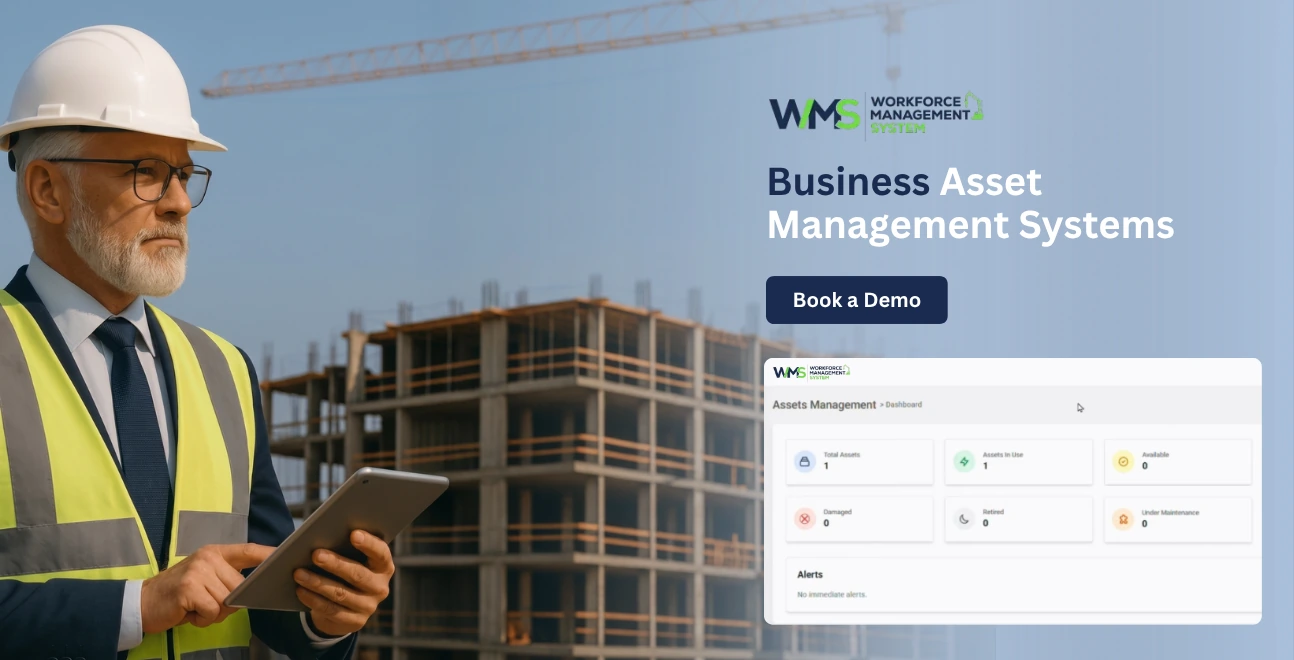
In business asset management systems Australia you really want integration with what you already have in place, otherwise you end up with those new data silos that nobody likes. The key priorities here are the usual suspects, like accounting integrations (Xero, MYOB), payroll, project management, and then telematics for vehicle fleets. It sounds simple but you know, it tends to get messy if it's not planned early.
Linking asset information to payroll and billing
Say a worker operates an excavator for eight hours, then that cost needs to show up in project reporting and, yes, client invoices too, mostly automatically. WorkforceMS Reporting module, tracks asset utilisation per project and Invoices pulls the checked hours and rates in a way that avoids extra manual re entry.
API access and third party software connection
These days most solid platforms provide REST APIs so you can build custom connections without too many hoops. WorkforceMS ties in with major Australian accounting products, GPS fleet tracking, and BI tooling so your business asset management systems australia investment helps your stack work together, instead of breaking it into separate fragments.
Infrastructure Asset Management Australia for Civil Projects
Infrastructure asset management australia deals with the very particular stuff that civil work brings, you know, long life cycles, government compliance rules, heavy plant and those long depreciation periods… plus the whole multi-contractor juggling. Basically the systems have to cope with assets that just stay put for years, not the usual day to day movement.
Managing Heavy Plant and Equipment Across Multiple Sites
For civil contractors the logistics get messy fast: cranes that are shared across three projects, batch plants feeding more than one site, and certain specialist tools that are sub-hired only for specific stages. Physical asset management australia for infrastructure usually needs a layered asset structure, component tracking so the engine hours are kept separate from the frame, and geofencing for the higher-risk items, the ones that tend to disappear.
Tender Management and Asset Allocation for New Projects
Winning a tender is not only about price and schedules, it's also about showing you have (or can access) the correct equipment. WorkforceMS Tender Management ties asset availability directly into bid prep, so the assessors can see which plant is already committed, what's actually available, and what can be sourced without drama, with historical utilisation data helping back up your statement.
Digital Asset Management Platform Australia: Mobile-First Priorities
Any digital asset management platform australia for construction must work flawlessly on mobile devices with intermittent connectivity. Field teams need instant asset lookup, scan-to-update functionality, and offline data capture that syncs automatically when signal returns.
Offline Access for Remote Construction Sites
Australian construction sites frequently lack reliable mobile coverage. Mobile-first asset platforms must store data locally, queue updates, and sync intelligently when connectivity returns. The WorkforceMS field app works fully offline for asset scanning, condition updates, and inspection completion.
Real-Time Asset Visibility from the Site Office
Site managers need dashboards showing: which assets are on-site, which are due for service, which operators hold current certifications, and what equipment is scheduled to arrive tomorrow. WorkforceMS Sites & Projects view delivers this snapshot without requiring reports to be run manually.
Asset Management Consultancy Australia: Expert Guidance
Asset management consultancy australia helps organisations design asset strategies, achieve ISO 55000 alignment, and optimise total cost of ownership. For construction companies without internal asset expertise, consultants accelerate maturity from reactive to predictive approaches.
ISO 55000 Certification Support
ISO 55000 provides the global framework for asset management services australia providers to benchmark against. Certification demonstrates a systematic approach to risk, value, and performance increasingly required for government and tier-one contractor engagements.
Building an Internal Asset Management Function
Consultants help transition from outsourced expertise to internal capability. This includes defining roles, establishing KPIs (mean time between failures, maintenance cost ratios), and configuring software to enforce processes without constant oversight.
Asset Management Consultants Australia: Choosing the Right Partner
Selecting asset management consultants australia requires evaluating construction industry experience, technology familiarity, and change management capability. The best consultants understand that software implementation succeeds only when field teams actually use the system daily.
Evaluating Consultant Track Records in Construction
Request case studies from similar-sized construction businesses. Verify consultants have delivered projects involving mobile field deployment, not just boardroom strategy. Check references specifically for post-implementation support quality.
Software-Enabled Consulting vs. Traditional Advisory
Traditional consultants deliver reports. Software-enabled consultants deliver working systems. WorkforceMS partners with asset management consultants australia who embed their methodology directly into configured workflows, so recommendations become daily practice rather than shelfware.
Conclusion
Choosing the right asset management australia approach means matching software capability to your actual operational pain points. Construction companies don't need generic tools, they need systems that understand assets move constantly, compliance is non-negotiable, and field teams won't tolerate slow, complex interfaces.
WorkforceMS delivers asset management software australia construction businesses can actually use. From asset tracking and maintenance scheduling to compliance documentation and project cost allocation, every feature connects to the workflows that run your sites daily.
Ready to see how integrated asset and workforce management works for your business? Book a WorkforceMS demo today and discover why Australian construction companies are replacing disconnected systems with unified platforms.
Optimise your operations with WMS
Streamline scheduling, compliance, and workforce management in one platform.
FAQs
For SMBs, prioritise rapid deployment and mobile-first design. WorkforceMS offers construction-specific features without enterprise complexity, while MapTrack provides straightforward per-asset pricing for pure tracking needs.
Pricing varies by model. Per-asset plans start around A$1/asset/month. Per-user plans range US$21–$28/user/month. Enterprise EAM requires custom quotes typically starting at five figures annually. Calculate costs at 2x current scale before deciding.
Reputable platforms offer AS/NZS-aware templates and Australian data residency. Verify compliance with the Privacy Act 1988, and confirm the vendor hosts data on Australian servers (AWS Sydney, for example).
Asset management centres on the register tracking location, condition, and ownership. CMMS (Computerised Maintenance Management System) focuses on maintenance work orders and scheduling. Modern platforms like WorkforceMS combine both.
Yes. Leading systems track owned, leased, and subcontractor equipment in one register. This prevents double-booking and ensures hired plants are returned on schedule.
Simple tracking rollouts: 2–4 weeks. Integrated workforce-asset implementations: 4–8 weeks. Enterprise EAM deployments: 6–18 months. Pilot at one site before expanding.
Barcode/QR scanning, offline access, photo capture, GPS location logging, and digital signature collection. The app must work with gloves on and in bright sunlight.
When systems connect, scheduling an excavator operator automatically reserves the excavator. WorkforceMS links asset availability to rostering, preventing conflicts where a worker is assigned but the equipment is elsewhere.
Utilisation rates by project, maintenance cost trends, compliance status dashboards, depreciation schedules, and operator efficiency metrics. These inform bidding, replacement planning, and resource allocation.
Yes. Most platforms offer CSV import tools. Clean your data first deduplicate assets, standardise naming conventions, and verify location codes. Some vendors provide AI-assisted data import to accelerate migration.
Related Articles
Explore more insights on workforce management, compliance, and operations.

Security Operations and Monitoring Workforce Planning
Plan guard rosters, track live attendance and cover every shift with WorkforceMS. Strengthen security operations and monitoring with smarter workforce planning.

Muhammad Asim
09 Oct 2026

Telehealth and Digital Healthcare Scheduling WMS
Simplify telehealth and digital healthcare scheduling with WorkforceMS. Manage rosters, remote clock-ins and compliance records in one easy-to-use platform.
Muhammad Asim
08 Oct 2026

Healthcare Workforce Management for Aged Care
Simplify rostering, credential tracking and payroll for aged care healthcare teams. Discover how WorkforceMS gives your carers more time with residents.
Muhammad Asim
05 Oct 2026
Ready to secure your operations?
