Best Automated Scheduling Software for Construction
Discover how automated scheduling software helps Australian construction businesses assign shifts, prevent double-bookings, stay compliant and keep every site staffed on time.

Share this article
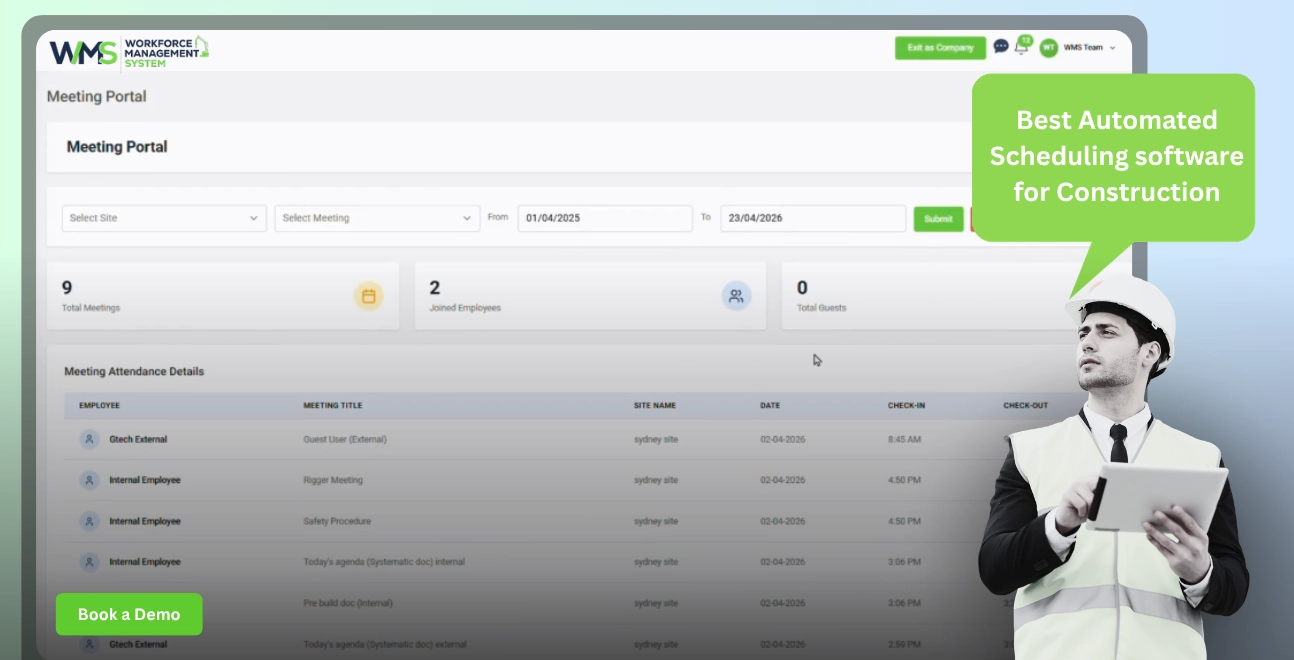
Streamline your frontline operations
See how WMS simplifies scheduling, compliance and workforce management in one powerful platform.
Introduction
Running a construction business in Australia is really tough. You have job sites, different teams and subcontractors coming and going all the time. There are project deadlines to meet and compliance requirements to follow. They just keep piling up. Managing your workforce schedule by hand can cause problems.
You use spreadsheets, make phone calls and send WhatsApp messages. It is not easy. That is where automated scheduling software comes in. This software helps you manage who works where and when. It assigns shifts, checks who is available, prevents double-bookings and keeps your whole team on the same page.
For construction companies in Australia, automated scheduling software is essential. It makes managing your workforce much easier. In this article, we will cover what automated scheduling software is, why construction businesses need it, the key features to look for, and how to choose the right platform for your team.
What Is Automated Scheduling Software?
Automated scheduling software is sort of a tool that helps businesses plan and manage worker schedules. It lets companies handle and tweak shifts without having to do everything entirely by hand. Like, you don't have to keep manually calling workers or re-updating spreadsheets every time there is a change.
The system just deals with it in the background, automatically, as stuff happens. For construction companies, automated scheduling software basically means you can match the workers to the right job sites, based on their availability and skills.
The automated scheduling software manages all of it, kind of quietly in the background, so you can focus on what really matters, delivering your projects on time and within budget. For construction businesses in Australia, automated scheduling software is very helpful. Labour costs are high, and compliance obligations are strict in Australia.
Skilled workers are also in supply in Australia. Having control over your workforce scheduling with automated scheduling software is a competitive advantage for construction businesses in Australia. Automated scheduling software gives construction businesses in Australia an advantage.
Why Construction Businesses in Australia Need It
Construction is a tricky business when it comes to managing people. You are not just running one office with the team every day. You have to deal with multiple sites, different crews, subcontractors and a lot of rules to follow, and the deadlines are always changing.
Here is why it does not make sense to schedule people by hand anymore:
If you do not have a crane operator, it can delay the project and cost a lot of money. You can stop that from happening if you have the right system in place. The construction business in Australia is also having a hard time finding enough workers. Since it is hard to find and keep workers, it is very important to make the most of the workers you already have.
Special software can help you do that by making sure everyone is working in the right place, nobody is wasting their time on the wrong site, and your team is not getting too tired from bad planning. With this software, you can stop guessing and start planning with information. You know exactly who is available, who has the skills and who is already working somewhere else.
The managers can see what is going on at all the sites in a timely manner. You spend less time on paperwork and more time running your construction business. The result is that there are delays, lower costs for workers, stronger compliance with the rules and a workforce that actually shows up where they are needed when they are needed.
Key Features of Automated Scheduling Software for Construction
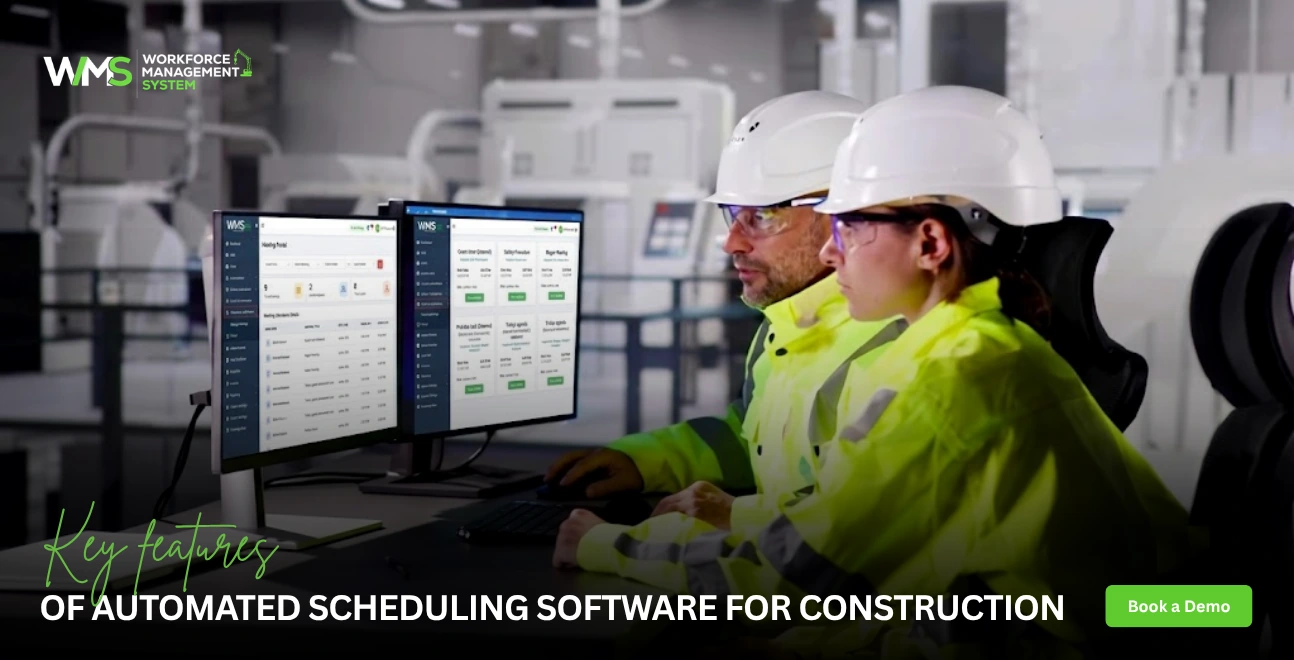
Not all scheduling software is created equal. For construction companies like yours, you need scheduling software that has features that actually work the way your industry does. Here are the important features to look for in scheduling software.
Automated Shift Assignments
The main feature of any scheduling software is that it can automatically assign shifts to workers based on when they're available, what they are qualified to do and how much work they already have. This means you do not have to go through a list of workers and call them one by one.
The system does this for you. It suggests the worker for the right job and flags any problems before you confirm the schedule. This can save your managers a lot of time every week.
Real-Time Schedule Updates
Construction sites are always changing, as they never stay the same. There can be a delay because of the weather, or a problem with materials, or one worker can call in sick, and boom, the whole thing gets thrown off a bit. It really can throw off the plan
That's why good scheduling software should let you adjust the schedule whenever you need, and then send those updates to your team's devices right away. You don't have to chase people down with phone calls or just hope they saw your message. When the plan changes, everyone knows about it right away, no confusion.
Conflict Detection and Alerts
One of the problems with manual scheduling is double-booking. This is when you assign the worker to two different sites on the same day. Automated scheduling software catches these mistakes before they happen.
It alerts you if a worker is already scheduled, not available or does not have the certification for a task. This stops mistakes from happening in the first place.
Mobile Access for Field Workers
Your crew is not sitting at some desk somewhere. They are on job sites, in places with limited internet access. Good scheduling software works on real devices, so workers can check their schedule, clock in and out, and grab updates from anywhere they are.
This keeps your whole team in sync, whether they are in the office or out in the field. Workers should be able to see shifts, submit availability, and get notifications without having to bother anyone to ask.
Skills and Certification Matching
In construction, not every worker can do every job. Some tasks kind of need trade licenses, safety certifications, or a bit of experience. Automated scheduling software keeps track of each worker's qualifications, and it only suggests them for roles they are certified to do.
This helps protect your company, and it makes sure the right person is always doing the right task. It also gives you a heads-up when certifications are about to expire, so you can renew them before they turn into a real problem on-site.
Leave and Availability Management
Workers request time off, have commitments or are simply not available on certain days. Scheduling software stores all of this information and automatically takes it into account when building schedules.
Managers can approve requests for time off in one place, and the system adjusts the available workers accordingly. This removes the back-and-forth of managing leave and ensures your schedule always shows who is actually available.
Integration with Payroll and Time Tracking
Scheduling does not exist on its own. When workers are assigned shifts, those hours need to be added to their payroll. Good software works with time tracking and payroll systems, so there is no data entry, no errors and no disputes over hours worked. This connection between scheduling and payroll is one of the time-savers for construction businesses with large teams.
Analytics
Every construction manager kind of wants to see where their labour costs are going. Scheduling software with built-in reporting lets you spot labour trends, overtime patterns, project staffing levels, and productivity details. That way, you can make better choices for future projects and avoid drifting over budget. Over time, this information becomes a valuable instrument for planning and forecasting.
Benefits of Using Automated Scheduling Software
Switching to automated scheduling software really works for construction businesses. Here is what you can expect.
Save Time on Admin Work
Manual scheduling takes a lot of time every week. You make calls, update spreadsheets and fix errors. Automated software reduces all of that significantly. Managers say they save hours per week on scheduling tasks. Now they can use that time to run projects and manage their construction teams.
Reduce Costly Scheduling Errors
A scheduling mistake in construction is kinda a problem, like it tends to mess things up. Usually, it can end up costing a lot of money, and then you're left wondering where it all went. For example, sending a worker to the site too early, or booking someone for back-to-back shifts with no breaks at all. In that kind of mess, automated software kind of steps in. It helps block these hiccups before they really spiral. The system spots the issues early, so they never turn into full-blown trouble.
Improve Team Communication
Construction workers get frustrated when they do not know their schedule. Automated scheduling software sends schedule information directly to workers' phones. So everyone knows where they need to be and when. This reduces confusion and complaints.
Stay Compliant with Labour Laws
Australia has laws around working hours and safety certifications. Automated scheduling software helps you follow these laws. It flags schedule breaches before they happen. If a worker is approaching overtime limits, the system alerts you immediately. This protects both your workers and your construction business.
Keep Construction Projects on Track
Delays caused by workforce issues are a reason construction projects run over time and over budget. When your scheduling is accurate, the right people show up at the sites on time. Projects move faster. Clients are happier with the results.
Lower Labour Costs
Unnecessary overtime costs a lot of money. With automated scheduling software, you can see your workforce clearly. Allocate labour more efficiently. You staff sites correctly. Avoid paying for workers who are not required. Over time, these savings add up.
Higher Employee Satisfaction
When workers get steady schedules, they seem more satisfied with their jobs. They believe the process is clear, transparent, and that they are being treated fairly, not just randomly slotted. Scheduling software that gives workers real visibility into their shifts supports engagement and often means less turnover overall.
What a Day Looks Like With and Without Automated Scheduling
Without Automated Scheduling
It's 6:30 a.m. Your site starts at 7:00, so in that half hour, you're still getting a bit ready. You know, coffee brewing, a checklist maybe, and then suddenly it's go time.
A worker calls in sick. You have to call a lot of people to see if they can come in and if they have the skills for the job. You waste thirty minutes doing this. By the time your site opens, you do not have enough people. This means work gets delayed.
Two workers were supposed to be at two places, but nobody updated the list, so one place has too many people and another place does not have enough. By the middle of the day, you have spent more time fixing problems with your worker list than actually managing your project. For Australian construction businesses, this is just a normal day.
With Automated Scheduling Software
The same thing happens, but it is much easier. A worker calls in sick. The system finds someone who can replace them and who has the right skills. You can confirm this in under two minutes. Every site has all the workers it needs by 7:00. If there are any changes to the schedule, they go to the workers' phones.
The system also keeps track of hours worked, so you do not have to enter them manually. You get to spend your day managing your project, not your worker list.
The Difference Is Clear
Automated scheduling software makes things a lot easier. It stops mistakes from happening and gives you back the time you need to run your business. For construction companies in Australia that have to manage a lot of sites, workers and rules, this makes a real difference.
Who Should Use Automated Scheduling Software?
If you have a construction business in Australia, no matter how big or small it is, you should think about using automated scheduling software. This is really helpful when you have a lot of workers at multiple sites.
If you are still using spreadsheets or WhatsApp to make work schedules, you are wasting a lot of time on paperwork. You are also taking a risk of making mistakes, not following the rules, or having workers go to the wrong site or not show up at all.
Automated scheduling software is great for construction companies with a lot of workers at sites, companies that have their own employees and also hire subcontractors, companies that need to keep track of safety rules and certifications when they make schedules, and project managers who want to know what their workers are doing in real time.
Even small construction businesses can benefit from having an automated system. This helps them get ready to grow without adding much extra work. Construction businesses like yours can really use automated scheduling software to make things easier.
What to Look for When Choosing Scheduling Software
When you're trying to find something that helps your business, there are a whole bunch of options out there. It can get really hard to tell which one is the right fit for you at the moment. Here are a few things to keep in mind while you're looking through the different tools and trying to see what actually matches.
The first thing is that it should be easy to use. If the people who are going to be using it, like your managers and workers, find it confusing, they just will not use it. You want something simple and easy to understand, so look for a system that has a clean and intuitive interface.
There are a lot of scheduling tools out there, but they do not have the features that construction companies like yours need. You need something that can handle things like certification tracking, managing sites and dealing with subcontractors.
It should be able to integrate with the other systems you are already using. Scheduling works best when it is connected to your time tracking, payroll and project management tools. You do not want to have to manage data across a bunch of platforms, so look for software that can work well with what you already have.
It Should Support Compliance from Day One
In Australia, there are a lot of labour laws and safety regulations that affect how you schedule your workforce. Your software should not just let you build rosters; it should actually help you stay compliant. Look for something that has built-in alerts for things like overtime breaches, certification expiries and rest period violations.
A system that can flag compliance risks before you even publish the schedule is really valuable. It is a lot better than one that just shows you a calendar.
It Should Grow with Your Business
The software you choose should be the kind of thing that actually works for you right now and also later, down the road. You want a setup that can manage more workers, more sites, and extra complexity without having to jump to a different system later on. Basically, you need room to grow, and that kind of scale is really important.
A strong workforce scheduling platform should handle it all for you, whether you've got twenty workers or maybe two hundred. WorkforceMS checks all of these boxes and more. It is designed for Australian construction businesses, and it can handle everything from HR and scheduling to compliance and reporting.
Conclusion
Managing a construction workforce without automated scheduling software is like trying to run a project without a plan. You might be able to get through it, but it is going to cost you a lot of time and money, and it is going to cause you a lot of unnecessary stress.
Automated scheduling software is very helpful because it removes the guesswork. The software tells you who is available to work, who has the skills for the job and who needs to be at a certain place. It also updates your team in time and catches problems before they escalate.
WorkforceMS builds scheduling directly into a full workforce management platform that is designed for the Australian construction industry. If your construction business is still using spreadsheets and phone calls to manage your workforce, now is the time to make a change.
The right automated scheduling software will save you hours of time every week, reduce mistakes that can be very costly and give you the visibility you need to keep your projects on track and your construction business moving forward.
Optimise your operations with WMS
Streamline scheduling, compliance, and workforce management in one platform.
Frequently Asked Questions
Automated scheduling software is a tool that helps with scheduling. It assigns shifts and tracks when workers are available. This software also manages rosters without anyone having to do it by hand. Automated scheduling software saves time, reduces mistakes and keeps the team updated at the same time.
The best automated scheduling software for construction is software that is made for construction, like WorkforceMS. This software handles assigning shifts, tracking certifications and making sure everything is compliant. It also helps manage workers at sites all in one place.
Yes, they can. Automated scheduling software is good for construction businesses of all sizes. Even small teams benefit from having a system that removes manual work and helps the business grow without scheduling problems.
Some basic scheduling tools are free. They do not have many features and are not made for construction. For a construction business with sites, workers and rules to follow, a paid platform that is made for construction is better.
Yes, it can. Good automated scheduling software alerts managers if a schedule is not following labour laws. This includes rules about overtime, rest periods and certifications. Automated scheduling software helps fix issues before they become problems at the construction site.
Automated scheduling software helps managers see the workforce clearly. This means they can avoid overstaffing, unnecessary overtime and wasted hours. Automated scheduling software helps construction businesses control labour costs better on every project.
Related Articles
Explore more insights on workforce management, compliance, and operations.

Security Operations and Monitoring Workforce Planning
Plan guard rosters, track live attendance and cover every shift with WorkforceMS. Strengthen security operations and monitoring with smarter workforce planning.

Muhammad Asim
09 Oct 2026

Telehealth and Digital Healthcare Scheduling WMS
Simplify telehealth and digital healthcare scheduling with WorkforceMS. Manage rosters, remote clock-ins and compliance records in one easy-to-use platform.
Muhammad Asim
08 Oct 2026

Healthcare Workforce Management for Aged Care
Simplify rostering, credential tracking and payroll for aged care healthcare teams. Discover how WorkforceMS gives your carers more time with residents.
Muhammad Asim
05 Oct 2026
Ready to secure your operations?
