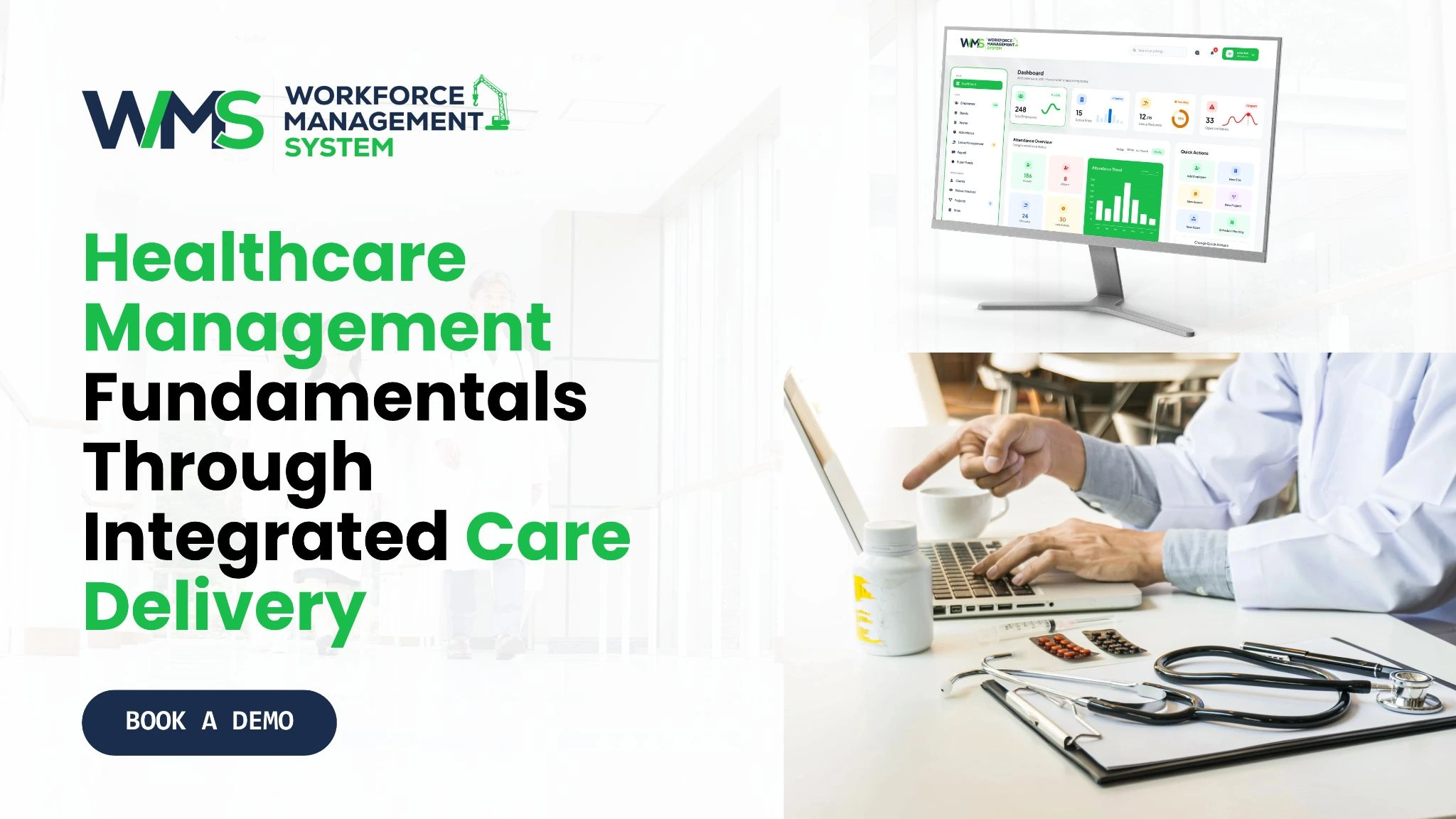
Healthcare Management Fundamentals Through Integrated Care Delivery
Healthcare management fundamentals help teams coordinate care, plan staff, and manage patient transitions. See how WorkforceMS supports connected healthcare.

Share this article
Streamline your frontline operations
See how WMS simplifies scheduling, compliance and workforce management in one powerful platform.
Healthcare Management Fundamentals Through Integrated Care Delivery
Patients move from clinics to wards to allied health services and home visits; the right people are needed at each transition. Healthcare management principles enable leaders to link these services to make care smooth and safe. This guide discusses how care delivery systems can be integrated to improve coordination, staffing, and patient experience.
The Foundations of Integrated Care Delivery
An integrated care team involves doctors, nurses, allied health professionals (health workers who assist a patient other than a doctor or nurse), support workers and administrators as a single team. All have the same view of the patients' needs. If this connection is not made, patients have to tell their story over again, appointments conflict and important information is lost between visits.
Technology is not the only thing that comes into the world of integration. It's also about practices, common aims and mutual respect among professions, along with easy systems to keep everyone up-to-date. Leaders are significant in this. They establish shared goals and expectations, thus creating trust and focus amongst teams from various services on the common outcomes for the patient.
Why Connection Matters
Carers seldom provide all their care to a single individual. In a single week, an individual's GP, physiotherapist, nurse and support worker will each be provided with clear, current information.
These individuals do not operate as a whole, and there are gaps. The patient receives continuous, coordinated support without unexpected events when they cooperate.
Healthcare Management Fundamentals in Care Coordination
Four questions need to be answered when coordinating: who is involved, what needs to happen, when should it happen, and who is responsible. These responses are given to the managers to plan shifts, services and handovers. Clear roles are necessary for coordination to take place.
If a nurse, coordinator or manager knows what they have, duplicate tasks won't occur or be forgotten. The coordinator serves as a link between the services. They make sure that referrals are followed up and that appointments are confirmed and each team has what they need.
| Care Coordination Step | Key Question |
|---|---|
| Referral | Who needs to see the patient? |
| Scheduling | When can services happen? |
| Delivery | Who is providing care? |
| Follow-up | What happens next? |
Simple Habits That Help
Teams stay in tune with each other by having a short daily huddle, and having shared task lists and clear handover notes. These are easy to do and will avoid a lot of mistakes. They also support the new and temporary staff. They are provided with the context they need to work safely from their first shift, through a quick briefing.
Linking Clinical Teams and Patient Services
Care is provided by clinical teams, and patient services are responsible for booking, enquiries, patient records and communication. It will take two people to be in sync if the patient is to feel supported. Patients can be informed early of a clinician's lateness if the receptionist knows this information.
A visit can be well planned if a clinician has an idea that a patient might have special needs. This two-way traffic helps to avoid delays, frustration and lost time. It also makes the patients feel that the service is familiar with them.
Sharing Information Safely
Health information is confidential. Access should be restricted, consistent with Australian privacy law and organisational policy, to those needing access.
Clear rules on who can see what safeguard patients and promote staff trust.
Staff also have to be informed of what is being recorded and why. This is open communication and not surveillance of people.
Planning Resources Across Healthcare Departments
Resources are staff, rooms, equipment and time, and all should be available when the patient arrives. This can be quite different depending on the day, with a very busy ED needing more cover than a very quiet outpatient clinic. Resource planning considers the needs, capability and capacity.
Managers look at trends to forecast busy times and position the appropriate staff in the appropriate areas. Numbers are important, but so too are the skills. While they may have all the staff listed on paper, they may not have anyone trained to complete a complicated job.
Avoiding Overload and Idle Time
Fewer than the optimum number of staff leads to stress and delay, and more than optimum costs money. Review is a tool that helps the leaders to move people where they are needed most. Departmental collaboration is also a big help. Staff can be reallocated without disruption and fair rules if one unit is quiet and the other is stretched.
Planning should also take into consideration leave, training and unexpected absences; teams shouldn't be put at a disadvantage at the last minute.
When "floats" or "casual" help becomes necessary in a short time, a few qualified members of the pool will suffice. They can immediately be placed when they have information about their skills on their records.
WMS for Healthcare Staff Coordination
A WMS consolidates rosters, timesheets, worker records and credentials into one. No longer having to switch between spreadsheets, emails and paper forms to view who is working. Another feature of a workforce management system is that it displays qualifications, availability and hours worked already.
This assists managers to assign staff safely and fairly. Registration and training dates can be recorded, and reminders of the expiration dates can be set up. Requirements vary from role to role, and managers should ensure that they are aligned with the relevant regulator.
Built on Construction Experience
WorkforceMS was originally started in the construction industry, where crews need to move from site to site, and each shift requires a record to be kept. That's ideal for teams in the healthcare industry, as they work across locations and require a reliable documentation system.
Staffing tools aid the care staff. They are not clinical records, but they help the appropriate person get to the appropriate place at the appropriate time. If there is a shift change, employees who are impacted are immediately notified.
Managers know who is covering and no one's left in the dark when a new time or place is needed. Time spent can be recorded on timesheets, too. This ensures correct hours are being paid for and provides a manager with a good record of employees on duty.
Healthcare Management Fundamentals and Continuity of Care
Continuity is the continuity of care and its flow through time regardless of staff change, location or service change. Patients are more comfortable around familiar faces, and they don't have to start all over again. Managers foster continuity by ensuring teams are stable as far as possible and provide a good handover record.
A consistent staff presence also helps to identify the subtle changes in the patient's condition. There are other aspects of continuity, such as information. Notes, plans and preferences should be passed on to the patient with each new carer, so they know the patient's history the first time they care for them.
Handover That Works
An effective handover should be concise. It includes the patient's current needs, changes occurring recently, potential risks and what the next person needs to do. It is useful to have written notes to assist staff at the end of a shift. They eliminate the need to remember and maintain care throughout the day and night.
Managing Patient Transitions Between Services
Transitions are times of potential danger. Transitions can happen between or within hospital, ward and home/rehabilitation services, or from one provider of services to another. The vast majority of issues occur at these handover moments.
The delay in information or visiting, and unclear roles, can contribute to confusion and unnecessary returns to care. This is minimised with a clear transition plan. It identifies the receiving team, first visit date and who to reach out to if concerns arise.
Planning Before the Move
Teams need to think about the next step prior to the patient leaving the setting. This includes what will be visited, when to begin the services and how to get hold of the care team. Patients/families should be a part of the planning.
They feel confident about what's next, as the instructions are clear and simple. An immediate telephone call and/or visit after the move can detect problems early. If they go to the hospital, it can be avoided if they can be moved quickly.
Key points to remember:
- Provide well-defined communication among all care teams.
- Determine the ownership of each care task.
- Staffing Planned Based on Actual Needs.
- Carefully document handovers/transitions.
- Regularly review the quality and outcomes.
Measuring Care Quality and Service Outcomes
That which is measured can be improved! Leaders monitor wait times, missed appointments, repeat visits, incident reports and patient feedback to find out how the care is going. But the importance of staff data isn't overlooked. Overtime, turnover and absences can occasionally be indicators of staff stress, which can impact the quality of the care provided over time.
These figures are translated into action through regular reviews. Some wards may require additional cover for overtime, and some may require improved scheduling for their clinic because of waiting times. Often the smallest changes that you make can yield the greatest results.
Using Data With Care
Reports must not contain blame, but be supportive of learning. If teams can see the numbers and comprehend them, they can propose some feasible solutions.
There's also a perspective from patients. The numbers do not tell the whole story, and comments on waiting, communicating and comforting help to indicate where to start making improvements.
Staffing records are kept alongside rosters and hours worked, with a WMS. The manager can relate staffing patterns with service outcomes and make better staffing plans for staff cover.
Conclusion
Some elements contribute to a strong care team and to ensuring that the appropriate staff are at the right time and place for handovers. An information system that allows information to flow through all services simplifies healthcare management fundamentals. Schedule a demo of WorkforceMS and discover how connected rosters help to enable safer, more stable care.
Optimise your operations with WMS
Streamline scheduling, compliance, and workforce management in one platform.
Frequently Asked Questions
It brings together doctors, nurses, allied health professionals and support staff working together on a unified plan. Patients are provided with 'joined-up' care, without gaps.
The roles, handovers and schedules were clearly defined in all services. Each team is aware of who is responsible for which task, and what is to follow.
Patients are more at ease with consistent care, despite the changes in staff and services. With clean records, they don't have to tell it again.
Teams arrange for the next steps before the patient departs from the hospital or care setting: who will visit, and when. An early follow-up check helps identify problems early.
They coordinate staff, skills and equipment with actual demand in various departments. This helps to minimise overloading, idle time and last-minute shortages.
Absolutely, WorkforceMS maintains the roster, timesheet, workers' records and credentials all in a single location. Staff can be assigned safely, and hours tracked easily and efficiently.
Related Articles
Explore more insights on workforce management, compliance, and operations.
Facilities Compliance and Safety for Workforce Accountability
Facilities compliance and safety helps teams track duties, training and hazards in one place. See how WorkforceMS keeps every worker accountable and sites safe.

Muhammad Asim
12 Nov 2026
NDIS Plan Management Through Participant Journey Mapping
NDIS plan management gets simpler when goals, workers and services are mapped in one place. See how WorkforceMS helps support teams stay organised and on track.
Muhammad Asim
11 Nov 2026
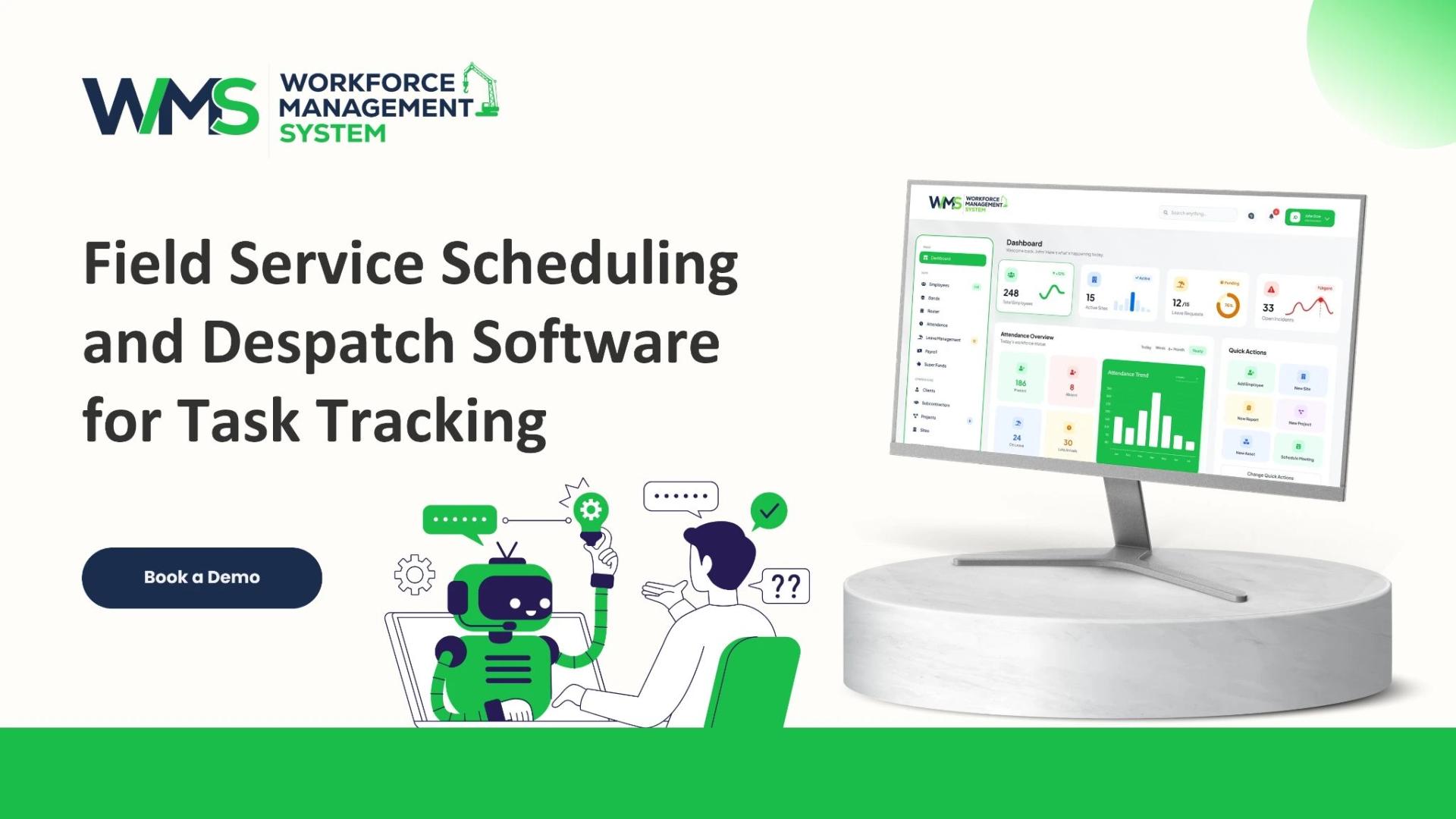
Field Service Scheduling and Despatch Software for Task Tracking
Field service scheduling and despatch software helps managers assign jobs, balance workloads, and track tasks live. See how WorkforceMS keeps visits on time.
Muhammad Asim
10 Nov 2026
Ready to secure your operations?
