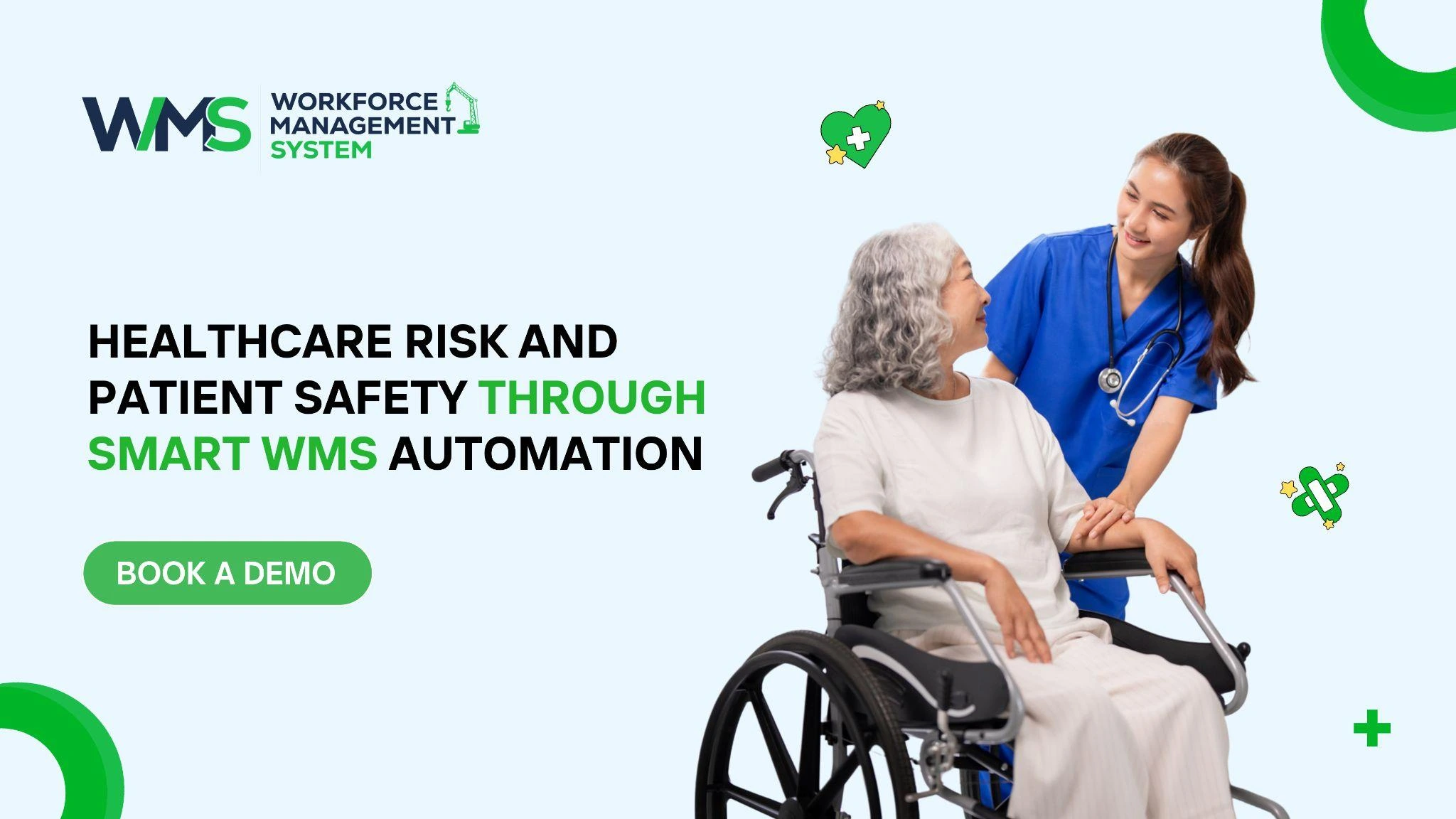
Healthcare Risk and Patient Safety Through Smart WMS Automation
Improve healthcare risk and patient safety with smart WMS automation. Plan safer rosters, fill shifts fast and track all staff credentials in one place.

Share this article
Streamline your frontline operations
See how WMS simplifies scheduling, compliance and workforce management in one powerful platform.
Healthcare Risk and Patient Safety Through Smart WMS Automation
Healthcare teams are responsible and expected to be available, competent and present to provide care when needed. Having the right people, at the right time, at the right place, is the first step to good healthcare risk management and patient safety. This guide will show providers how smart automation can help them in planning staffing, identifying and preventing risks and protecting all patients.
Digital Tools for Safer Patient Care
There are lots of little things to consider when working with patient safety. To be rostered correctly on the right ward, a nurse needs to be, a clinician to have the appropriate qualifications and a handover to pass on what matters.
A digital tool makes it possible to have rosters, staff records, credentials, and shift notes all connected in one place. Managers have the big picture without having to pursue information, and clinical staff are aware of the need and why. More time at the bedside and less time on paperwork care makes the difference! Providers can also look at national health workforce data to see staffing trends and plan for future needs.
Less Admin, More Care
A big portion of healthcare workers' day is spent on admin. Rostering, shift changes, ticket verification and record updating are all time-consuming. Staff do not feel stressed when these tasks are simple and quick, and managers can more effectively help staff.
A more relaxed environment can result in improved communication, decreased errors and a happier patient. This is particularly relevant in hospitals and aged care homes where there is a lot of activity.
Healthcare Risk and Patient Safety Planning
One of the initial steps to good planning is to become familiar with the risks. Staffing challenges like understaffing on a particular shift, insufficient or mismatched skill sets, fatigue and lack of proper credential checks and handovers are frequently encountered risks in healthcare.
Looking at past data can give you an idea of when wards are particularly busy, when sick leave is more likely to increase and which wards are usually vulnerable to running out of stock. Leaders can then construct rosters based on the current demand, not just last week's demand.
Smarter Clinical Staff Allocation
All clinical staff are not the same. Different skills, experience and training are required in the various wards, such as a busy surgical ward, an aged care unit and the emergency department. Smart allocation considers the availability of resources, the qualifications of resources and where patients need the most resources.
The goal is to be able to match the right people to the need, not simply fill in a space. Continuity matters too. It can make patients feel happier when they see familiar faces, and knowing a ward can lead staff to quickly notice any changes in the patient. Allocation tools can support managers in retaining good teams in place and provide for leave and unexpected changes.
Right Skills, Right Ward
It poses a risk to all parties if a nurse/carer is sent to an area beyond his/her scope of practice. Increased skills & experience, as well as recent training, will be recorded in one profile, which will make matching easier and safer.
Managers can identify the readiness of staff to learn and the need for support, as well as who can work in a specialty area in a few seconds. This will also become evident over time, indicating additional training that is required.
Benefits of Better Healthcare Rostering
Rostering is straightforward; however, it influences a lot of various aspects of the change. A good roster ensures safe staffing to protect patients and a fair hours roster - rest for staff. The lack of a good roster can leave wards understaffed, cause workers to work overtime and create fatigue and mistakes. One of the most effective ways of enhancing safety is to get rostering right.
There are several aspects to remember:
- Safe rosters minimise patient cover breaks.
- Take fatigue out of the equation, as well as the possibility of error.
- Having clear rosters assists staff in making plans for their lives and in keeping them in the system.
- Audits and reviews are easier to do when there is accurate record-keeping.
Trust is further developed with better rostering. Attending to staff well-being by ensuring they feel fairly treated increases the chances that they will report risks, while informing and communicating early about rosters with the manager helps to avoid last-minute stress. Anyone who has developed these habits will find them to be worthwhile; they take time to develop.
Real-Time Shift Coverage
Changes don't stop, and neither does healthcare! Staff members fall ill, there is an increase in patients, and a ward could suddenly require an additional pair of hands. Real-time shift coverage tells you where gaps are NOT last week, but in real time. This can aid the leader in making early decisions, which will prevent pressure from building up on the team.
A WMS lets employees inform the system on their cell phone, which lets managers know who is qualified, free and close by. Gaps may be provided to the appropriate individuals in an unambiguous sequence, and all will be informed up front. The ward is aware of help on the way, and this alleviates pressure on the team on duty.
Filling Gaps Fast
The speed of a short shift is important. A fast, relaxed procedure allows spacebanks to be filled while not impacting care. Staff value clear notification and fair offers, while it is never noticed by patients. Attendance records can also be used to monitor, e.g. attendance on shifts and can inform the leader of patterns which they can then plan for the next time round.
Healthcare Risk and Patient Safety Monitoring
Monitoring involves keeping an eye out for signs and symptoms. These may be in terms of workforce, such as additional overtime hours, reduced breaks, increased incidents on one ward and/or frequent short staffing. All of these symptoms are not necessarily indicative of a problem, but they do indicate areas of concern.
These signs can be communicated to a manager's screen without having to sift through a lot of alerts and reports. Somebody then checks the facts and makes a decision on what to do, for example, changing a roster or providing additional support.
Staff and patient information is important, and patient information should not be made available to anyone who doesn't need it, consistent with the Australian Privacy Act.
WMS for Healthcare Workforce Planning

A workforce management system brings together all of your rosters and timesheets, staff information, credentials and reports. No managers will be managing more than one file: there will be one up-to-date record. This will help to reduce the risk of double entry, missing information, and give a more complete picture of the staffing provision of leaders for each ward, clinic and site.
A WMS also plays a part in the longer-term planning. Leaders can see if there is an increase or decrease in hours worked against demand, review leave patterns and identify training or recruitment areas.
Staff Credentials and Compliance Tracking
Staff in the healthcare service must have the appropriate registrations, checks and training. This can be professional registration, police checks, working with vulnerable people and immunisation records, as well as manual handling.
It's hard, time-consuming, and risky to manually track these items. Digital records can hold all credentials and their expiration dates and alert staff and managers when they're about to expire.
| Credential | Why It Matters |
|---|---|
| Professional registration | Confirms the person can practise in their role |
| Working with vulnerable people check | Protects patients and residents |
| First aid and CPR | Supports a fast emergency response |
| Immunisation record | Reduces infection risk for patients and staff |
Alerts Before Expiry
Staff are given sufficient time to renew their credentials without undue stress by sending reminders weeks in advance of the credential's expiration date. Managers have a view of what is coming up for every member of the team and can make plans for cover if necessary.
The fewer the number of ward changes made last minute, the more stable the wards will be and the fewer gaps there will be in patient care. The process is clear and fair, which also provides support for the staff.
Improving Care Through Workforce Insights
Data help turn everyday work into meaningful lessons. Reports can include hours worked, overtime, attendance on sick leave(s), shift changes, and credential status by each ward or site. When the numbers are side by side, patterns that were difficult to see on an everyday basis are apparent. Leaders don't have to make any guesses or remember anything.
These ideas are used to inform decision-making in practice. If a ward is frequently short-staffed, additional permanent staffing may be required, and if the ward has a large overtime, it may be necessary to improve their rosters. Clear figures also support leaders in being able to make confident statements to leaders, funders and boards about needs, and demonstrate that "safety decisions are evidence-based".
Learning From the Numbers
Every review is an opportunity to make it better. Rosters can be adjusted if the number of sick days increases following a certain number of shifts. Where regular staffing may need to be reviewed, a ward may require additional cover frequently on weekends. Providing results to teams can also help to establish trust, as staff will know that the feedback is resulting in action.
Conclusion
Well-planned, skilled and supported staff help to enhance healthcare risk and patient safety. WorkforceMS allows providers to maintain one place to hold their rosters, credentials and reports. Schedule a demo to witness the power of smart automation and have it run every shift safely.
Optimise your operations with WMS
Streamline scheduling, compliance, and workforce management in one platform.
Frequently Asked Questions
It automates rostering, credential reminders/shift updates in one system. Teams don't spend too much time on administration and too little on care.
Aids in identifying early on short staffing, skill deficiencies and fatigue. Protected rosters and transparent records subsequently safeguard patients.
Yes, managers can see who is free, qualified and nearby when there is a shift opening. Patients receive care in the gaps, which are filled rapidly.
It will remember each credential and remind you before it expires. Staff are only rostered to be with patients if they have been cleared.
Useful indicators, such as overtime or missed breaks, indicate where there is a problem. Early intervention means that minor problems don't become major problems for patients.
Yes, WorkforceMS combines rosters, availability and reports into one. Managers can have a better understanding of the current situation to plan for safer shifts.
Related Articles
Explore more insights on workforce management, compliance, and operations.
Security Monitoring and Alarm Response with Predictive WMS
Improve security monitoring and alarm response with a predictive WMS. Map risks, send the right guard fast and keep every incident record in one place.

Muhammad Asim
27 Oct 2026
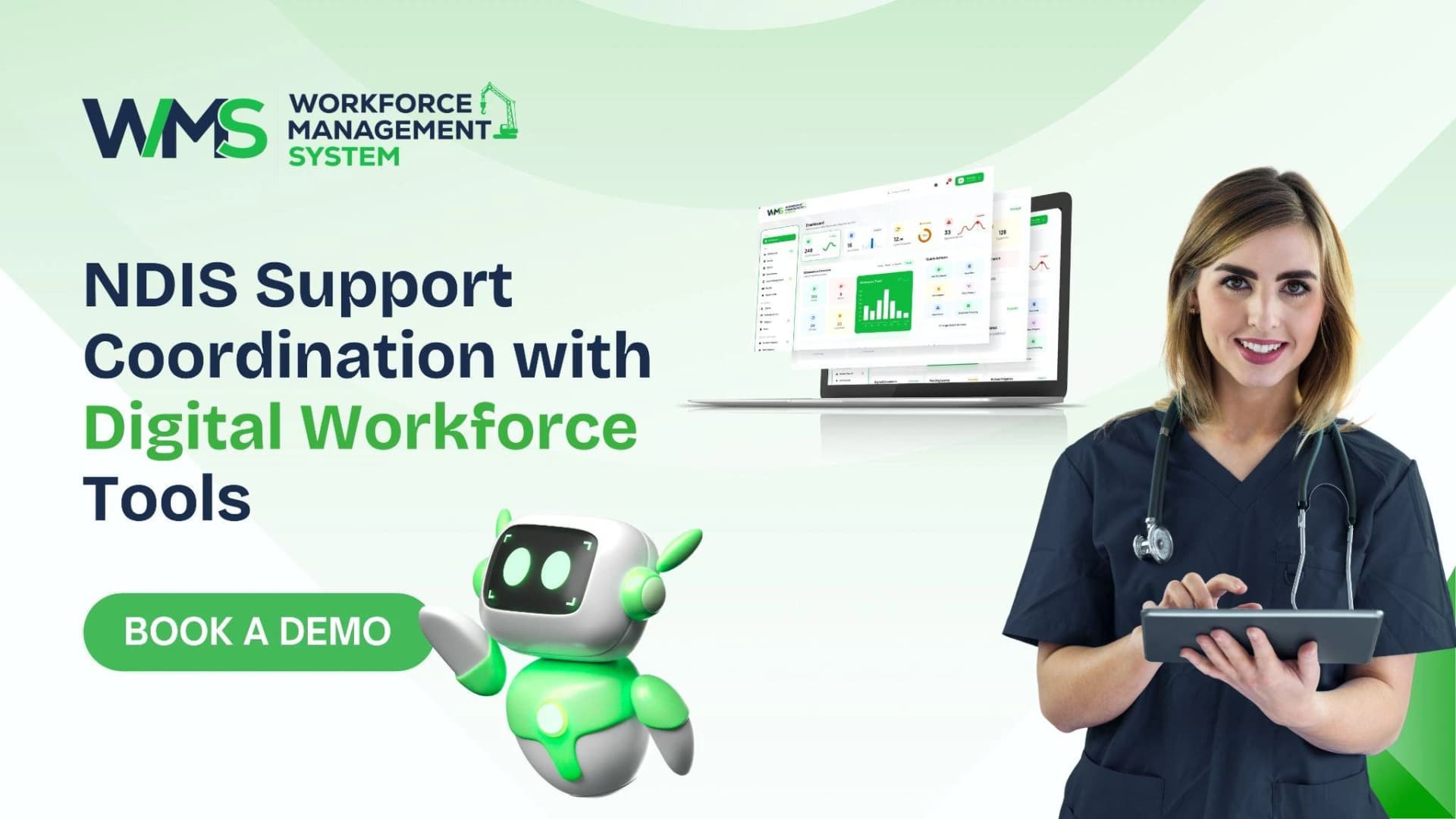
NDIS Support Coordination with Digital Workforce Tools
Improve NDIS support coordination with digital workforce tools. Match workers to participants, plan flexible rosters and track availability in one place.
Muhammad Asim
26 Oct 2026

Construction and Civil Labour Hire Through Smart WMS
Simplify construction and civil labour hire with a smart WMS. Plan rosters, track worker tickets, and manage multi-site crews in one place with less admin.
Muhammad Asim
23 Oct 2026
Ready to secure your operations?
