Top Workforce Management System Trends in Construction
Discover the top Workforce Management System trends in construction for 2026. A simple guide for Australian builders to manage teams and stay compliant.

Share this article
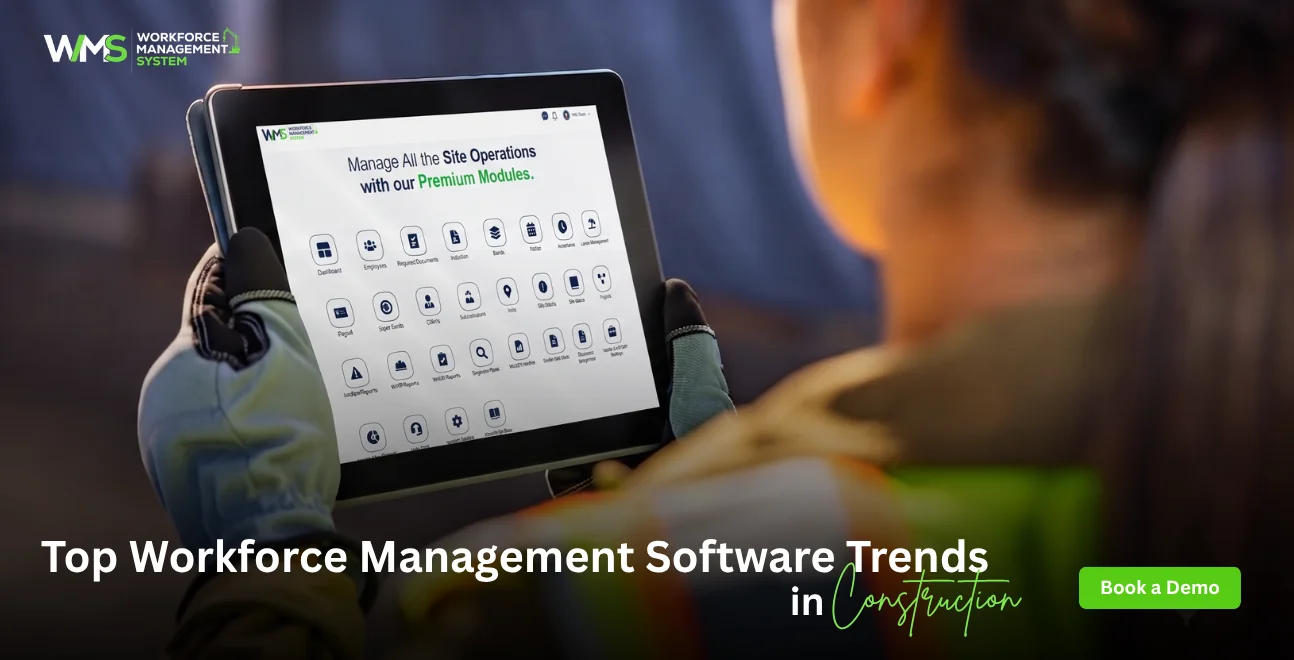
Streamline your frontline operations
See how WMS simplifies scheduling, compliance and workforce management in one powerful platform.
Running a construction business in Australia in 2026 is really tough. Projects are getting more complex, clients want more and small mistakes can cost a lot. That's why many builders are now using Workforce Management System to keep their teams, sites and budgets under control.
Workforce Management System trends in construction are changing fast. The tools are getting smarter and easier to use. Can do more than ever before. This article explains what's happening now, what's coming next and what it means for your construction business.
What Is Workforce Management System in Construction
Workforce Management System is a platform that helps construction businesses manage workers, schedules, time tracking, compliance and costs all in one place. Instead of using paper forms, spreadsheets or multiple disconnected apps everything is handled through one system.
For construction companies this kind of software is especially important. Sites change daily workers move between jobs, subcontractors come and go and compliance requirements are always updating. A good workforce management system keeps all of that under control without adding work to your plate.
It gives managers real-time sight over who's on site, what tasks are actually getting wrapped up and whether the project is staying within the labour budget, kind of, overall.
Why Builders Are Moving to Digital Tools
Paper Processes Are Holding Teams Back
Most construction businesses still lose hours every week on manual work. Paper timesheets, phone based rosters and spreadsheets that never quite match each other. These routines are slow, a bit mistake-prone, and expensive to unwind if something goes wrong.
When labour costs make up the biggest slice of any construction project budget, even little errors in time tracking or scheduling can lead to serious budget overages.
Workforce Management System removes these errors by handling the admin work automatically. Workers clock in using an app timesheets are approved digitally and payroll data is synced without anyone manually entering a single number.
Why Workforce Planning Matters More Right Now
Construction projects in Australia are moving faster than ever. Deadlines are tighter budgets. Clients expect results on time. When workforce planning is done properly projects run smoothly. Costs stay under control. When there are no delays and budget overruns follow quickly.
The right Workforce Management System gives construction businesses a picture of their team at all times. Managers can plan ahead with confidence, make decisions when things change and keep every project moving in the right direction. Planning rosters in advance avoiding overtime and keeping labour costs on track all become much easier with the right platform in place.
Old Way vs New Way
| Area | Old Way | New Way With WMS |
|---|---|---|
| Timesheets | Paper forms, manual data entry | Digital, auto-synced to payroll |
| Rosters | Phone calls and spreadsheets | Smart scheduling, real-time updates |
| Safety Checks | Paper toolbox forms on site | Mobile pre-start, auto-recorded |
| Subcontractor Records | Email chains and folders | Verified online, audit-ready |
| Compliance Monitoring | End-of-month payroll review | Real-time alerts at scheduling stage |
| Attendance Tracking | Paper sign-in sheets | GPS check-in, verified records |
| Reporting | Manual weekly summaries | Live dashboards, instant data |
Trends in 2026
1. Cloud Software Is Now the Standard
Cloud-based Workforce Management System has become the standard for construction businesses in 2026. All workforce data. Timesheets, rosters, compliance records and worker details. Is stored online and accessible from any device at any time.
For a manager running sites this means full visibility from a single screen without making a single phone call. No lost paperwork, no endless spreadsheets, and honestly you don't even have to be in the office to see what is going on, at the site.
If you are managing three construction projects, across different locations, you can check the workforce situation on each site straight away. Tools like WorkforceMS are built for exactly this multi-site, kind of insight, so you are not guessing.
2. Mobile Portals Built for Site Workers
Construction workers are not sitting at a desk. They are on scaffolding, operating machinery or working in the field. That is why mobile-first workforce portals are one of the most important trends in construction Workforce Management System right now.
Simple Tools Workers Actually Use
A mobile workforce portal lets workers just check shifts, send timesheets, finish safety checklists, and report incidents from their smartphones. So it helps with those annoying delays, fewer missed forms, and stronger back-and-forth between the site and the office. Site supervisors can approve timesheets in seconds, hand out tasks while they're out and about, and get alerts when something needs attention right away.
Less Admin, More Time on Site
The WorkforceMS Sites and Projects feature is designed with site workers in mind. Simple to use and built for the construction environment. Supervisors spend less time chasing paperwork and more time managing the actual work on the ground. And that really boosts productivity on construction sites where every hour counts and matters more than most people think.
3. Smarter Scheduling and Shift Planning
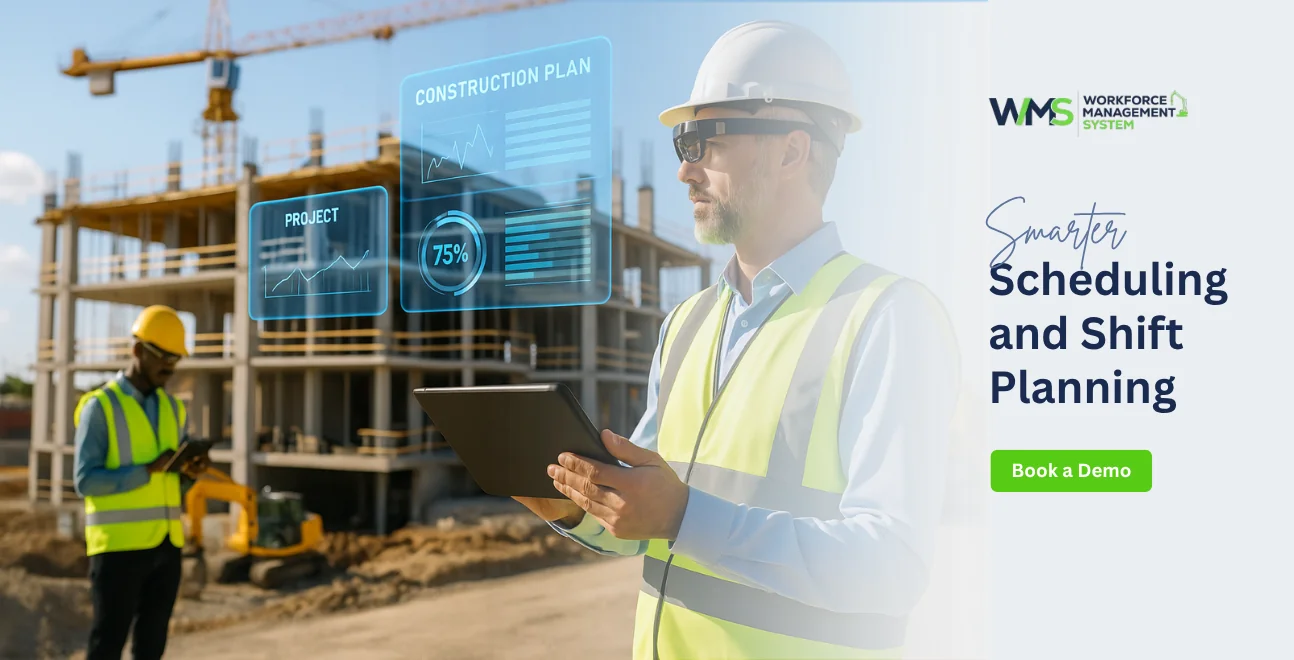
Scheduling in construction is one of the hardest tasks for any manager. Getting the workers with the right qualifications to the right site at the right time. While staying within Award conditions and budget. Takes a lot of effort when done manually. In 2026 smarter scheduling tools are taking over this task completely.
These tools look at worker availability, skills, site requirements and labour cost limits then automatically build the best possible roster.
Managers set the parameters and the system does the work. If a worker is about to exceed their weekly hours the system catches it before the shift is confirmed. Not after the overtime bill arrives. This prevents budget blowouts. Keeps things compliant, without needing extra effort from anyone.
4. Subcontractor Management in One Place
Australian construction projects involve a mix of direct employees and subcontractors. Managing both groups through the same system is something many businesses have struggled with for years. In 2026 unified subcontractor management through a workforce portal is one of the clearest trends in the industry.
A good workforce management system lets builders onboard subcontractors verify their licences and insurances, assign them to tasks and track their time and attendance. All in one place. This removes the need for separate systems and reduces the compliance risk that comes with poorly managed subcontractor records.
Under Australian WHS law principal contractors can be held responsible for the safety and compliance of subcontractors on their sites. Having clean audit-ready records is not optional. It is a necessity. The WorkforceMS Subcontractor Management module is built to handle this in one straightforward workflow.
5. Safety and Compliance Built Into Daily Work
Work health and safety is one of the top priorities for any construction business in Australia. WHS laws require documented safety processes, trained workers and clear incident reporting procedures. In 2026 Workforce Management System is including built-in safety and compliance features as a core part of the platform. Not an optional add-on.
Toolbox talks, pre-start checklists, incident reports and safety inductions can all be managed digitally through the same system used for scheduling and timekeeping. Everything is recorded, timestamped and stored for auditing purposes. Instead of paper forms that get lost or damaged on site workers complete these checks through the workforce management portal on their phones.
Managers can see instantly who has completed the check and follow up immediately if needed. The WorkforceMS Toolbox and Pre-start feature is an example of how safety is being embedded directly into daily workflows.
6. Payroll and HR Connected to Workforce Data
One of the most frustrating problems in construction has always been the disconnect between timesheet data and payroll processing. Workers submit hours then someone manually enters them into a payroll system and errors creep in. In 2026 seamless integration between Workforce Management System and payroll is eliminating this problem.
When time and attendance data flows directly into payroll processing is faster, more accurate and compliant with Modern Award rules including penalty rates, overtime and allowances. Beyond payroll, full HR management is also being brought into the platform. Employee records, leave management onboarding documents, certifications and performance tracking all in one place.
This is particularly valuable for construction businesses managing large rotating workforces across projects. WorkforceMS HRM brings construction businesses a practical HR tool that works alongside scheduling, compliance, and project management, all inside one linked system, so it lands in the same flow, more or less.
7. Tender and Project Management Integration
A trend gaining traction in 2026 is connecting Workforce Management System with tender and project management tools. In the past businesses would win a project. Then figure out the workforce requirements. Now smart construction companies are building workforce plans into their tender submissions from the beginning.
This is about using project workforce data to get labour costs more precisely and quickly, also to spot resource gaps early on, so tenders can be priced more competitively.
When project management and workforce management are both in the same platform, site managers can see which tasks are mapped to which workers, monitor progress in real time, and then fine tune resources as the whole project starts to shift and evolve. The WorkforceMS Tender Management and Sites and Projects features bring this integrated approach to life for construction businesses of all sizes.
Trends at a Glance: Now vs Future
| Trend Area | What Is Happening Now (2026) | What Is Coming Next (2027+) |
|---|---|---|
| Scheduling | AI-assisted roster building | Fully automated predictive scheduling with zero manual input |
| Compliance | Real-time Award breach alerts | Auto-correction of shifts before approval, zero manual review |
| Safety Checks | Digital pre-starts on mobile | AI flags safety risks before workers arrive on site |
| Subcontractor Management | Licence and insurance verification online | Automatic licence renewal alerts and instant site access blocking |
| Attendance Tracking | GPS mobile check-in | Biometric face recognition for tamper-proof site entry |
| Reporting | Live dashboards with current data | Predictive reports forecasting labour gaps weeks in advance |
| Worker Portals | Mobile apps for shifts and timesheets | Voice-activated workforce updates hands-free on site |
What Is Coming Next for Construction Workforce Software
Compliance Checking in Real Time
One of the biggest changes coming in Workforce Management System is checking if everything is okay in real-time. In the past problems with following the rules were only found when it was time to do payroll. Which meant it was too late. Now the best software checks if everything is okay before a shift is confirmed.
If a shift would cause a worker to break their Modern Award rules. Like not having a break or working too long. The system tells you right away. This helps workers. Protects the business from getting in trouble and having to pay extra.
Australian construction businesses are also dealing with rules from the Closing Loopholes Act 2024. These rules are about employment and labour hire. Real-time compliance tools make it easy to follow these rules.
GPS Check-In
Paper sign-in sheets are being replaced by GPS check-ins through workforce management portals. Workers use their phones to check in. The system records where they are, what time it is and who they are. This creates a record of who was at work and when.
This is important for two reasons. First it helps the business during safety inspections and audits by providing records. Second, it helps managers see who is actually at work in real time. Which paper sheets can't do.
Predicting Problems Before They Happen
The next big step in Workforce Management System is predicting what might happen. Instead of just showing what already happened the latest software shows what might happen. So you can take action early.
This includes finding out which projects might have labour shortages identifying when compliance risks might happen and forecasting labour costs. For businesses managing complex projects having this kind of visibility is a big advantage.
Choosing the Right Software for Your Business
Built for Construction Specifically
Not all Workforce Management System is the same. A general HR platform will not cover what a construction business actually needs: multi-site management, subcontractor compliance, WHS tools, Award interpretation, and project-based workforce planning.
Also, make it a rule to pick a platform that is actually built for the construction industry, and that gets the usual constraints, deadlines and field realities, not some generic scheduling tool that kind of "works".
Simple Enough for Site Workers
The best Workforce Management System is the software that your workers will actually use. If the app is confusing or slow, people will not use it, and the business loses all the benefits. Look for a clean, simple mobile experience that workers can pick up with minimal training.
Whether it is clocking in, checking a roster, or completing a safety check, it should take no more than a minute.
Ready to Grow With Your Business
Your Workforce Management System should grow as your business grows. A cloud-based platform scales easily, whether you are managing 10 workers or 300, the system adjusts without requiring new hardware or a complete system change every time you win a bigger contract.
WorkforceMS covers HRM, Safety and Compliance, Asset Management, and Reporting all designed to scale with Australian construction businesses at every stage.
Conclusion
Workforce Management System trends in construction are moving in one direction. Smarter tools, better compliance and everything connected. In 2026 Australian builders using these tools are saving time, reducing labour costs and following the rules. The cost of getting workforce management wrong is too high.
Over 2,300 construction firms in Australia have collapsed since 2023. Many are linked to cost control and workforce mismanagement. The right software doesn't just save time. It protects the business.
WorkforceMS gives construction businesses everything they need in one platform. Built for the industry, easy to use and ready to grow. Explore the platform or contact the team today.
Optimise your operations with WMS
Streamline scheduling, compliance, and workforce management in one platform.
Frequently Asked Questions
Well, the most noticeable shift includes cloud based platforms, mobile portals, AI aided scheduling, real time compliance checks, and a more single view of subcontractor management. Basically these tools are moving away from paper workflows across Australian sites, kinda replacing the whole paper stack, all at once, or step by step depending on the company.
Yes, there are construction focused options, for example platforms like WorkforceMS, which can combine scheduling, subcontractor oversight, safety compliance, and HR related tasks in one place. In comparison, generic HR software often misses those construction specific capabilities, so the gap can be pretty obvious pretty fast.
Because SaaS, especially cloud hosted systems, lets managers pull workforce data from any site, from pretty much any device, without installations and without doing manual update cycles. For multi site builders this approach is quickly becoming the default, and it keeps feeling more normal every quarter.
Next up, expect this kind of predictive scheduling, compliance checks that land in real time while people are still getting rostered, and tools that can foresee labour shortages ahead of time. Those improvements are anticipated to roll out gradually somewhere between 2026 and 2027, not in one big leap or sudden change.
They should check for scheduling automation, quick compliance alerts in real time, subcontractor tracking that doesn't get messy, plus mobile access so site workers can actually use it. Also, it should scale without turning into a headache when the business grows, not just work for the current headcount.
Yes, it provides real time visibility, like how many workers are on a given site, what roles they're in, and whether they're available. That makes it easier for managers to plan labour demand across multiple projects, and adjust before problems show up.
Related Articles
Explore more insights on workforce management, compliance, and operations.

Security Operations and Monitoring Workforce Planning
Plan guard rosters, track live attendance and cover every shift with WorkforceMS. Strengthen security operations and monitoring with smarter workforce planning.

Muhammad Asim
09 Oct 2026

Telehealth and Digital Healthcare Scheduling WMS
Simplify telehealth and digital healthcare scheduling with WorkforceMS. Manage rosters, remote clock-ins and compliance records in one easy-to-use platform.
Muhammad Asim
08 Oct 2026

Healthcare Workforce Management for Aged Care
Simplify rostering, credential tracking and payroll for aged care healthcare teams. Discover how WorkforceMS gives your carers more time with residents.
Muhammad Asim
05 Oct 2026
Ready to secure your operations?
