What Is Workforce Management?
Explore workforce management, its key responsibilities, and how it helps construction, NDIS, healthcare, labour hire, trades, security, and cleaning teams.

Share this article
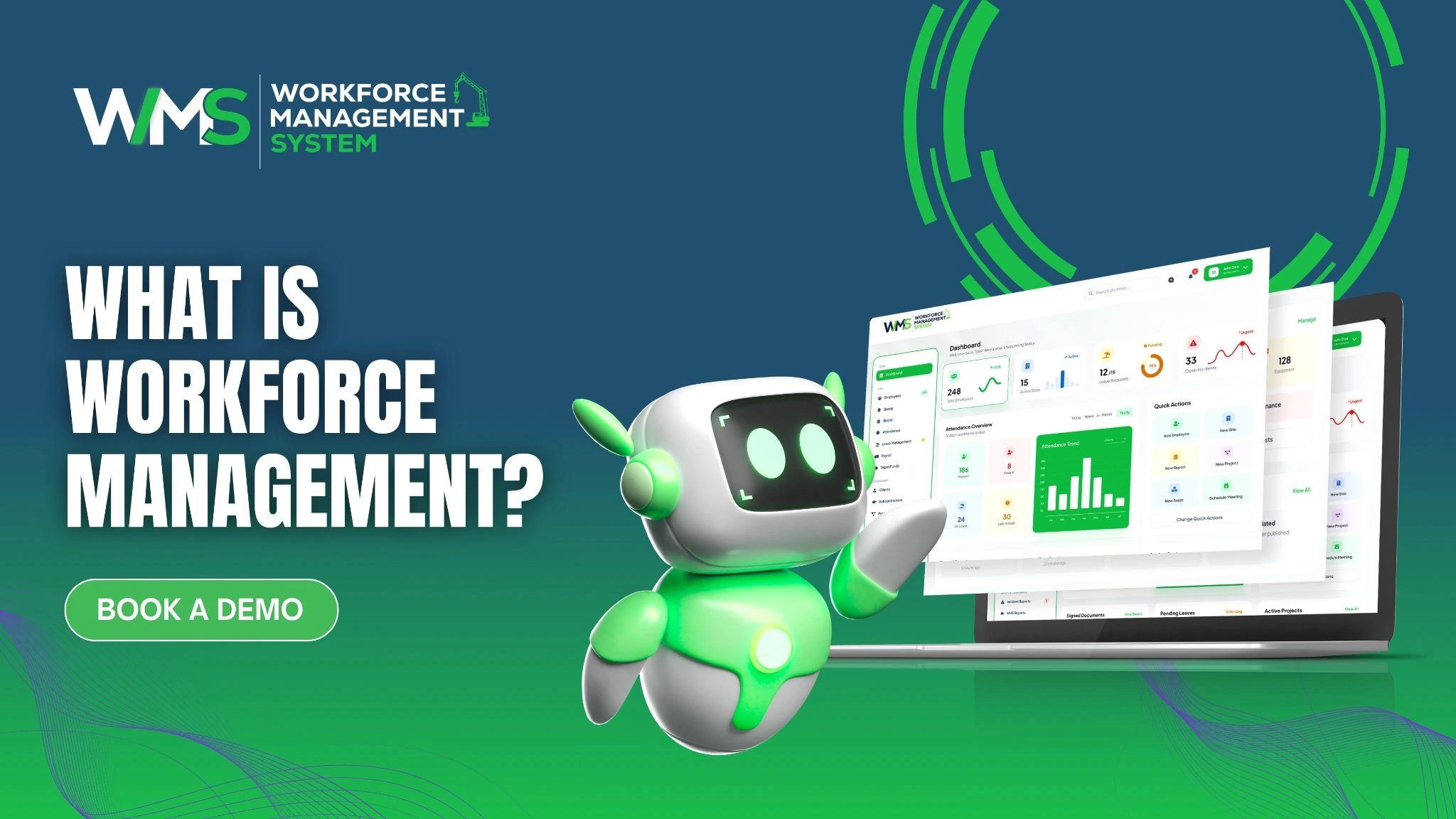
Streamline your frontline operations
See how WMS simplifies scheduling, compliance and workforce management in one powerful platform.
What Is Workforce Management?
Human resources are essential to every business. People must have the right skills, people, and time. Workforce management (WFM) is how a business schedules, coordinates, and manages its workers to ensure tasks are completed on time and to a high standard.
It contains information on who is working and when, what they are doing and how their hours are being paid. When done properly, it is seen as reliable customer service, and customers feel valued. In this article, the concept is explained in layman's terms and how it plays out in 7 different industries. It's as important for a small team of five as for a large company of five hundred.
Workforce Management Across Daily Operations
Nearly every working day is spent on handling workforce management. The manager makes the decision on how many people are required to work a shift, who is to be on vacation, and when will the breaks be? The supervisor makes sure staff are in place, and work is progressing well.
There are a number of payroll employees who ensure that hours are recorded properly. Imagine that there's a company that has three stores. If one store doesn't have employees on a Saturday, a store owner will need to find someone to cover for them promptly without leaving another store without employees.
There are many little things that all contribute. The day is smooth, and issues are identified promptly if handled properly. They go unnoticed, modifications don't take place, people start to become exhausted, and, at some point, customers become aware of what's going on.
The Main Responsibilities of Workforce Management
There are four main responsibilities of workforce management:
- Forecasting: Approximating the amount of work that's expected and the number of people required.
- Scheduling: Ensuring that the appropriate staff are scheduled for appropriate shifts.
- Attendance: Keeping track of attendance, hours and leave.
- Restrictions: Ensuring pay, breaks and licences are in accordance with laws and regulations.
All the responsibilities are interdependent:
- The only difference between a forecast and a guess is that a guess doesn't include a schedule.
- This schedule will not be checked if it does not contain tracking.
- All four have been considered essential for a business to have to deal with busy times and pay questions and audits.
- They don't make many of the expensive errors either.
Combined, these four activities make a group of individuals into one powerful team.
Workforce Planning Beyond Staff Scheduling
Workforce management is perceived as being solely about rosters by many. While a roster is necessary, there's one question it can answer: WHO WORKS TOMORROW? Workforce planning is done on a longer-term basis. It questions the business on what it will require in 6 months and/or 12 months. Planning considers areas of growth, leave, training and skills that are scarce.
For instance, a company may just need additional employees within a couple of weeks of receiving a massive contract. Without a plan, it has to hire on the spur of the moment, and if anyone is available, it will hire them. With a plan, it can recruit, train and prepare in a calm manner. Planning also reveals when a team relies on too many individuals or if it relies on one or two key individuals.
Workforce Management and Business Productivity
When it comes to people, it's easier for them to do their jobs when they are not confused. Staff are clear on when/where to start with clear rosters. Describe the tasks that they need to complete. With very few last-minute changes, there are fewer hassles and fewer frustrated customers.
Workforce management also helps to reduce the hidden waste. All the wasted time due to idle time, double bookings and repeated paperwork detracts from productive time. If managers can observe the use of time, then they will be able to resolve these issues at an early stage.
When staff feel organised and respected, they work with increased care, don't take too many unplanned days off and stay longer. This is a long-term strategy that helps to raise outcomes while not requiring anyone to do more work.
Balancing Labour Costs and Employee Workloads
When deciding how many people to hire, wages are likely to be a large portion of a business's expenses, and it's obvious that it's better to have as few employees as possible. This can backfire. When load management is not adequate, people become fatigued, make errors and quit.
Time and money will be required to replace them, and those who are left with the staff will have an added burden. The aim is balance. Overtime is monitored by managers, as they compare the time spent with the work done and reduce the overtime if it continues to be a problem.
If the team is working overtime, then it's likely that it's too small. If it's on the large side, it may mean that there's too much idle time. Fair workloads are of benefit not only to the team's budget but to the health of the team as well. They will also help you to make better predictions of the costs each month.
Staff Availability, Skills and Work Demands
A good roster is a combination of 3 things – when people are able to work, what they can do and what the business needs. But if one of these is missing, there are problems. If no one has the right licence, then a complete shift will be of no help. If they are rostered but cannot attend, they are of no benefit to a skilled worker.
Clear records of skills/availability enable managers to be able to select the right person fast - even at the last moment.
Workforce Management Across Different Industries

In the table below, the seven industries are listed along with a brief description of what workforce management is all about in each of these industries.
| Industry | Main Workforce Focus |
|---|---|
| Construction | Moving crews between sites, with licences and inductions checked |
| NDIS | Matching support workers to each participant's needs |
| Healthcare | Safe staffing on every shift, with current registrations |
| Labour hire | Placing workers quickly with different clients |
| Trades and field services | Sending the right licensed person to each job |
| Security | Covering every post, every hour of every day |
| Cleaning | Managing teams across many locations and tasks |
Workforce Management Across Construction Projects
Construction crews transfer from one site to another, or from one trade to another within the project. Labourers can be needed on a site one week, electricians the next and finishing crews the following week. The changing pattern needs to be followed by workforce management.
Fewer than the necessary number of employees leads to delays; more than the necessary number of employees means people waste money. There is the added layer of safety. Employees must be inducted, have a white card and have a trade licence before they can enter a site.
Subcontractors and labour hire workers should be counted as well. A Construction Workforce Management System gives construction managers a view into who is on which site, what they're capable of doing and how much time they've been on site. WorkforceMS was designed to meet these needs and is ideal for crews that don't often stay in one location for extended periods.
NDIS Teams and Individual Support Needs
NDIS providers help people with disability, and each person has unique needs. Some might need assistance with morning tasks, while others require access to the community in the afternoon.
Care needs to be taken when matching a support worker with a participant in workforce management. Consistency matters. Language, gender or special skills may be important to many participants, and participants may prefer the same worker on each visit.
Managers should also observe budget restrictions on plans and maintain an accurate log of the assistance provided to plans. A sudden change (e.g., cancelling a visit) must be handled promptly and courteously without leaving any member without assistance. However, participant dependence on trusted people at home means that worker screening checks and training also need to remain up-to-date.
Healthcare Staffing and Patient Care
Staffing impacts patient safety in healthcare. Doctors and nurses, as well as other support personnel, are required to have the right balance of staff on each shift, including evenings and during public holidays. Demand can fluctuate rapidly in the event of an emergency or during the flu season. One of the main considerations is registration.
Both clinicians' registration and the knowledge of who can perform which tasks are important. Long shifts can be tiring, and getting a rest break is a part of patient care, and fair rosters help prevent this. Effective workforce management ensures the safety of the workforce and ensures patients receive consistent and predictable care.
Labour Hire and a Changing Workforce
Labour Hire businesses provide their employees to other businesses for a few days or months. They are constantly changing their workforce. Demand may increase rapidly after the contract is awarded to a client and decrease as quickly as the contract is terminated. This means quickness and precision are of importance.
The managers need to be aware of whom to hire, who has the right tickets and who is cleared to work at each client's location. They also should have accurate timesheets to ensure a proper record for worker pay and client bills. Good communication ensures that employees are informed and clients have trust in the services that they receive.
Trades and Field Service Responsibilities
Most electricians, plumbers and technicians work outside of the office. The jobs are assigned to an address, a time window and a customer waiting. Time is of the essence, or it may be the wrong skills, and it can lead to an additional trip and an unhappy customer. Workforce management can facilitate this by ensuring that the right worker who has the right licence is sent to the right job.
It also includes the distance of the travel, length of the job and the materials used. With accurate hours and job information, companies can charge customers a fair price, and they will be able to bill customers promptly. This can save small trade business owners numerous evenings of paperwork.
Security Teams and Continuous Site Coverage
Security work doesn't end at 5:00! There are a lot of sites that require a guard on post during every hour of the day, even on weekends and public holidays. An empty post is a hazard to persons and property. Managers must construct rosters that make sure that they don't overwork their team and still cover all hours.
All rests, licence checks and handovers count. Often guards are alone; knowing who is on site and when they arrived is important. The records are also useful in case there are disagreements, as they give the client a sense of being covered by the insurance and prevent any delays in the resolution of claims.
Cleaning Operations Across Multiple Locations
Office and shop cleaning companies are likely to service a school or medical centre as well. There are a lot of jobs that take place in early morning or late night hours, when the managers are not present. Teams can be small, and there are different tasks and standards for each location. There are different cleaning requirements for a shop than for a school, cleaned at five in the morning.
These are the places that are organised by workforce management. It ensures that the correct number of cleaners is deployed to each site, provides for absence coverage and compares the hours worked to the time specified. It also assists managers to ensure that tasks that were agreed to were completed. Regular teams at regular sites foster client trust, and they minimise complaints.
Building a More Reliable Workforce
A quality workforce is not simply a 'by-product' of the process. It's a result of good planning, equitable rostering, record-keeping and honest communication. The ideas are the same whether it is a business that builds houses, cares for people with disabilities, cares for patients, or cleans offices.
Start small. Examine the patterns of work filling, hours worked, and skills logging. Close the largest hole first and progressively add on from there. This is what WorkforceMS do for businesses in the construction sector, NDIS, healthcare, labour hire, trades, security and cleaning industries. If done well, it's an improvement for the work, the clients and the team.
Optimise your operations with WMS
Streamline scheduling, compliance, and workforce management in one platform.
Frequently Asked Questions
HR is about hiring, training and employee relations, and workforce management is about staffing, scheduling, attendance and workloads.
Workforce management is typically used in conjunction with HR but also includes day-to-day staffing and scheduling, as well as operational planning.
WFM is workforce management and can include making staff schedules, attendance records and managing workloads.
It assists in matching a support worker to a participant's needs, ensuring support consistency and managing staff availability for participants.
It supports construction companies to manage their teams and simplify coordination between various worksites, verify worker licences and adapt to evolving project requirements.
It is ideal for keeping sites covered and for security teams coordinating staff, handling absences, and scheduling activities between sites for cleaning businesses.
Related Articles
Explore more insights on workforce management, compliance, and operations.
Healthcare Strategic Planning for Changing Staff Demands
Plan rosters, leave and skills for busy and quiet seasons with WorkforceMS. Strengthen healthcare strategic planning and keep care steady all year round.

Muhammad Asim
15 Oct 2026
Trades and Field Services Job and Invoice Management
Book jobs, record on-site hours, and send accurate invoices with WorkforceMS. Simplify trades and field services job and invoice management and get paid faster.
Muhammad Asim
14 Oct 2026
Cleaning Firm Roster Management with Task Verification
Plan cleaning rosters, track attendance and prove every task is done with WorkforceMS. Simplify cleaning firm roster management and keep clients confident.
Muhammad Asim
13 Oct 2026
Ready to secure your operations?
