Boosting Site Efficiency with Workforce Planning and Analytics
Workforce planning and analytics help construction sites put the right people in the right place at the right time. A construction WMS brings scheduling, attendance, and cost data into one system so firms can plan staffing and control labour costs with real data instead of guesswork.

Share this article
Streamline your frontline operations
See how WMS simplifies scheduling, compliance and workforce management in one powerful platform.
Workforce planning and analytics sort of help construction sites put the right people, in the right place, at the right time. That is not easy across multiple sites and subcontractors. A construction WMS solves this by using real data instead of guesswork.
A construction WMS brings scheduling, attendance, and cost data into one simple system. This helps construction firms plan staffing, control labour costs, and keep projects on track without missed hires or overlooked certifications slowing things down.
This article looks at what workforce planning and analytics mean in a construction WMS, and how the right system boosts efficiency across every project.
What Is Workforce Planning and Analytics in a Construction WMS?
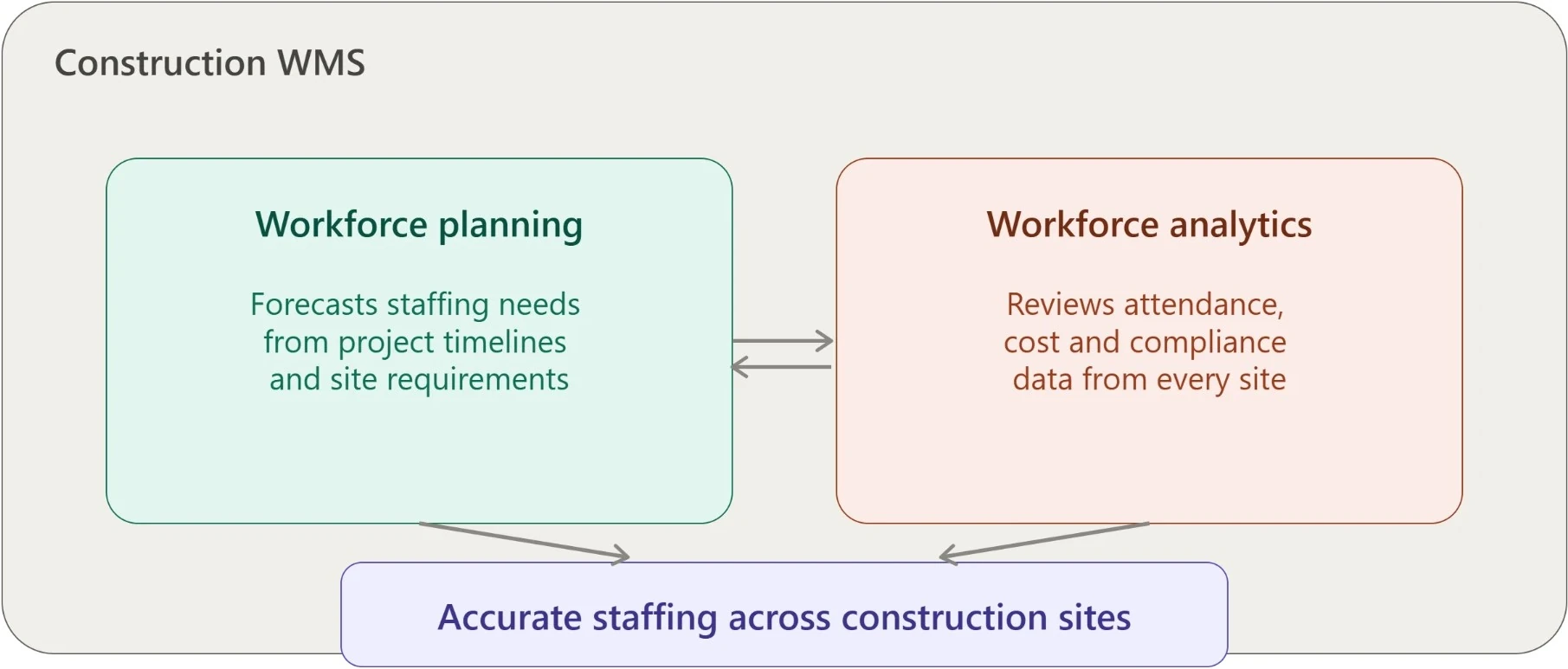
Within a workforce management system, workforce planning and analytics work as two connected activities. Planning forecasts staffing needs based on project timelines and site requirements.
The analytics side reviews workforce data like attendance and labor costs, to get a real sense of how the job site is performing, not just what someone thinks is happening.
And for construction specifically, it means dealing with changing crews, juggling multiple sites, plus subcontractors who show up and then move along, as the work shifts from one project phase to the next.
Why Workforce Planning and Analytics Matter in Construction
Construction projects are never completely predictable. You have to deal with weather delays, material shortages and changes in what the project needs. The planning part of a Workforce Management System helps site managers stay on top of these changes while the analytics part gives them the information they need to plan with confidence.
Planning Staffing Around Project Timelines
Every construction project has phases and each phase needs a different number of staff. At the beginning you might need a team with special skills but later on you need a lot more people with different trades. Using a Workforce Management System to plan staffing around these timelines helps you avoid not having staff, which slows things down and having too many staff, which costs too much.
A good Workforce Management System also thinks about whether subcontractors are available well in advance. Construction businesses that only plan a week ahead often have trouble finding the right subcontractors when everyone in the industry needs them. Booking trades early based on a project schedule in the system reduces the risk of last-minute gaps that can delay the project.
You also need to think about things that happen in Australian construction like rainy weather affecting outdoor work or holiday periods when subcontractors are not available. If you put these patterns into a Workforce Management System, by treating them like surprises you can make staffing more reliable all year round.
Turning Site Data into Insights
The analytics part of a Workforce Management System takes raw data from the site like attendance records and hours worked and turns it into useful information for making decisions. By looking at individual timesheets site managers can use the system to see patterns in the whole project or across many sites at once.
This might show that one site always has overtime than similar projects or that one phase of work always has staffing problems. This information helps businesses plan better for projects instead of having the same problems over and over.
Turning data into information also means looking at more than one site at a time. When you compare workforce data from projects in one system you can see which planning approaches work well and which ones cause problems. This is hard to do by hand. It becomes easy when all the data is in one place.
Core Components of Workforce Planning and Analytics
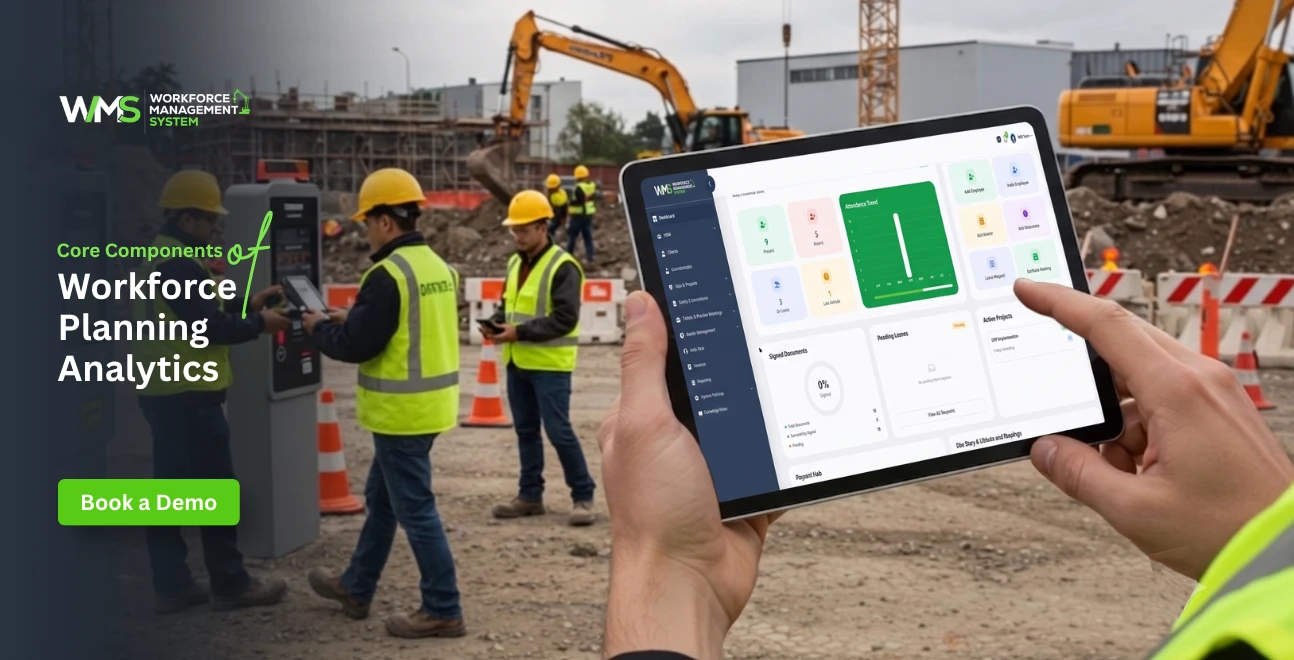
A construction business needs a workforce management system that has important parts that work together.
Forecasting Labour Needs by Project Phase
Forecasting is a part of planning in any workforce management system. This means figuring out how many workers are needed and what skills they should have at each stage of a project. To do this you need to look at what happened in projects in the past and think about the timeline and requirements of the current project.
Forecasting also has to think about how it takes to get subcontractors. Some jobs need a lot of notice. If you forecast too close to a project phase you might not have enough staff. A good workforce management system makes sure to include this time when forecasting so you do not have to deal with last-minute staffing problems.
Good forecasting also thinks about how different trades depend on each other. Some parts of construction cannot start until earlier work is done so the workforce management system needs to show these sequences. When forecasting thinks about these dependencies it is easier to avoid situations where a crew is booked but has no work to do.
Attendance and Labour Cost Data
Attendance and labour cost data are the basis of the analytics part of a workforce management system. This includes hours worked, overtime and days off which are tracked the way at every site. When this data is all in one place in a workforce management system than being written down by hand at each site it is easier to compare how things are going and find problems early.
Labour cost data is very important in construction because labour is often one of the expenses. Tracking labour costs for each part of the project in the workforce management system rather than just looking at the total cost helps you see where your budget is being used well and where it is not.
Having attendance data also makes payroll more fair and accurate. When a workforce management system automatically records hours worked there is a chance of mistakes, between site records and payroll calculations which reduces paperwork and helps workers and management trust each other.
Types of Workforce Analytics Supporting Construction Planning
Workforce analytics in a Workforce Management System (WMS) is not one type of report. Different analytics support planning stages.
Descriptive and Diagnostic Analytics
Descriptive analytics looks at what happened on a site. For example it shows total hours worked or attendance rates over the month. This gives a record of performance. It helps with analysis in the WMS.
Diagnostic analytics finds out why certain things happened. If a site always goes over its labour budget, diagnostic analytics in a WMS can help find out if it is due to scheduling, too much overtime or other reasons. This step is important. It helps to get a clearer idea about what caused the problem, so it can be fixed , not just noticed.
Predictive Analytics for Future Staffing Plans
Analytics uses past data in a WMS to forecast future workforce needs. Construction businesses can use analytics to plan recruitment or subcontractor engagement ahead of time. They do not have to react when a staffing shortfall happens.
This is especially helpful for construction firms with projects. Staffing needs across sites can change quickly based on project progress. Predictive analytics also helps businesses plan for growth. New projects can be resourced based on evidence from past work in the WMS. This is better than starting from scratch each time.
Key WMS Metrics That Connect Planning and Analytics
Certain metrics sit at the intersection of workforce planning and workforce analytics within a WMS, since they inform both forward planning and performance review.
| Metric | What It Shows | Why It Matters for Planning |
|---|---|---|
| Labour cost per project phase | Spending against budget at each stage | Helps forecast costs for similar future phases |
| Overtime hours | Frequency and cause of extra hours worked | Signals where staffing levels need adjustment |
| Workforce utilisation rate | How effectively available labour is used | Identifies under or overstaffed sites |
| Certification expiry tracking | Upcoming compliance deadlines | Supports proactive scheduling of training or renewals |
When these metrics are tracked consistently across sites, through one workforce management system, construction businesses can plan upcoming projects using real evidence, not depending on past experience, as if it's the only guide. Also, checking the metrics on a steady rhythm, instead of only when something becomes visible , keeps workforce planning more proactive, less like a scramble.
Benefits of Workforce Planning and Analytics in Construction
When planning and analytics work together within one Workforce Management System the benefits extend across the business from individual site performance to overall project delivery.
Better Visibility for Planning Decisions
A Workforce Management System gives site managers visibility into current workforce data and how it connects to upcoming project needs. This makes it possible to adjust staffing plans early based on trends rather than waiting until a problem affects the project timeline.
This visibility is particularly valuable across sites, where a head office team may otherwise struggle to compare performance consistently without a centralised Workforce Management System.
With visibility project managers and head office teams can work from the same information, which supports faster and more confident decision-making about the Workforce Management System.
Stronger Compliance and Reporting Support
The construction industry is heavy. A Workforce Management System supports compliance in a practical way.
Tracking certification expiry dates and safety training completion as part of regular Workforce Management System reporting helps ensure requirements are met on time without relying on follow-up.
This consistent reporting also makes it easier to demonstrate compliance when needed since records are centralised and up to date across every site using the Workforce Management System.
For businesses managing a number of subcontractors this level of visibility also makes it simpler to confirm that every worker on site meets the required standards before work begins with the help of the Workforce Management System.
Workforce Planning and Analytics in Action: Construction WMS Use Cases
Seeing how workforce planning and analytics kind of applies in practice inside a WMS can make the whole idea clearer for construction teams, you know, like less abstract.
For example, a construction firm that's running a few residential projects at once might take advantage of predictive analytics in their WMS to estimate labour needs for the next quarter. They can do it off project timelines plus past staffing patterns, and then suddenly it's not just "we'll see". That way recruitment and subcontractor engagement can be arranged well ahead of time, instead of being handled at short notice, or worse in a rush.
Then there is another angle: diagnostic analytics, meaning the "why is this happening" side, that a business might use inside their workforce management system. Say a specific site is seeing higher labour costs than other similar projects. By checking attendance trends and overtime records, they may find it's less about project complexity and more about scheduling adjustments that weren't matching reality. Fix the schedule, the costs should come down, pretty simply.
Compliance tracking also shows up a lot. A WMS can highlight upcoming certification expiries across the workforce, so planning teams can book renewals before anything turns into a compliance problem. In each of these cases, the planning side and the analytics side work together inside the same setup, with information from one job feeding decisions on the next.
Choosing a Workforce Management System Built for Construction
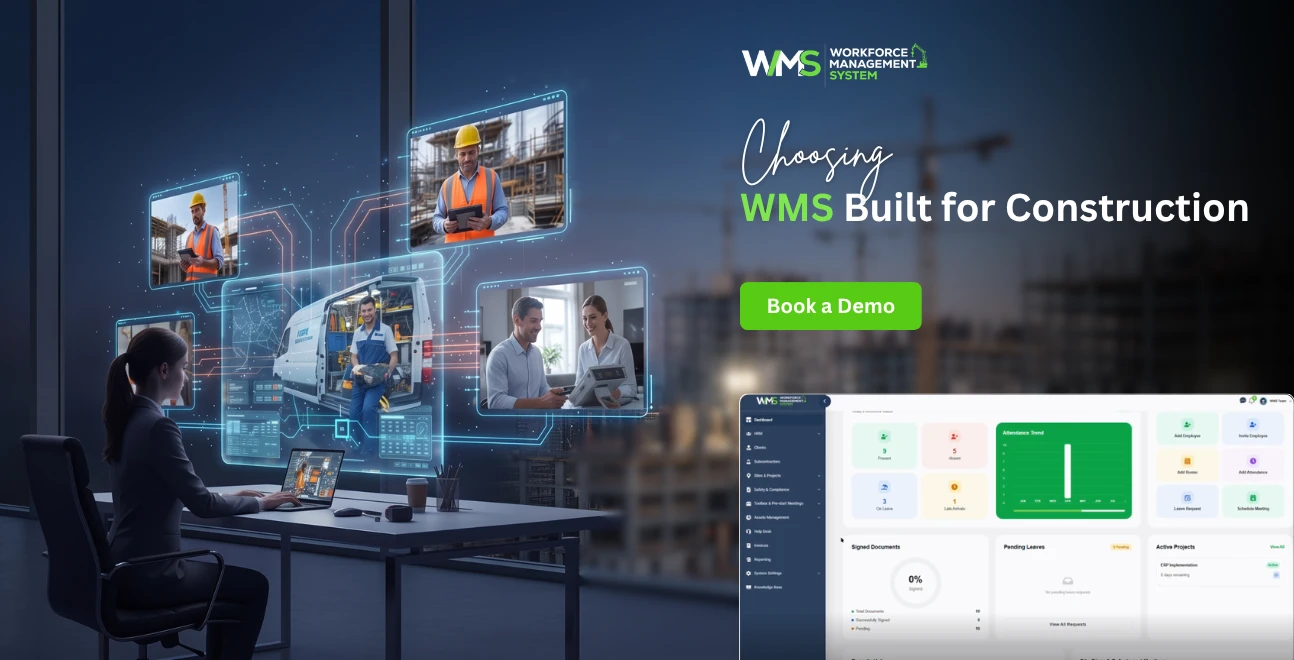
Selecting the right WMS is an important decision for any construction business. The right workforce management system should be built specifically for construction, supporting both planning and analytics together, rather than treating them as separate tools.
| Feature to Look For | Why It Matters |
|---|---|
| Multi-site scheduling and forecasting | Supports planning across several projects at once |
| Real-time reporting dashboards | Makes analytics easy to review without manual reports |
| Subcontractor management tools | Reflects how construction workforces are actually structured |
| Compliance and certification tracking | Keeps planning aligned with regulatory requirements |
A workforce management system designed for construction, such as WorkforceMS, brings planning and analytics together in a single WMS. This allows construction businesses to forecast staffing needs and review performance data side by side, without switching between disconnected tools. Having both functions in one system also means updates made during planning, such as a schedule change, are reflected immediately in reporting, keeping data accurate at all times.
Getting Started with Data-Driven Workforce Planning
Workforce planning and analytics is no longer a "nice to have" for construction businesses. Inside a WMS, it acts like a direct lever for controlling labour costs, making better staffing decisions, and backing compliance across every site.
The best starting point is reviewing how workforce data is currently being managed. Where data is scattered across spreadsheets or handled separately at each site, moving to an integrated workforce management system is the most effective way to bring planning and analytics together.
Starting with a small set of key metrics, and building consistent reporting habits within the WMS from there, allows workforce planning to become genuinely proactive. Over time, this supports stronger site efficiency and better outcomes across every project a construction business takes on.
Optimise your operations with WMS
Streamline scheduling, compliance, and workforce management in one platform.
FAQS
Workforce planning is the process of figuring out how people need to work on a construction site. We do this by looking at the project timeline. What the site needs.
Workforce analytics is the process of looking at the data from the construction site. We look at things like who showed up to work. How much we spent on labor to see how the site is really doing.
We use workforce planning software because it helps us keep track of everything in one place. This includes schedules, attendance and costs. It helps construction companies put the people on the site and stay within budget.
To do workforce planning right we need to be able to predict what we will need. We also need to think about how it takes to get subcontractors and how different parts of the project depend on each other.
No workforce analytics is not the same as HR analytics. HR analytics looks at all kinds of data about people. Workforce analytics focuses on things like who is on the site, how much we are spending on labor and if we are following the rules.
Workforce analytics includes things like tracking when people work overtime, how much labor costs for each part of the project and when certifications expire across all the construction sites. Workforce analytics helps us understand workforce planning and make decisions about the workforce.
Related Articles
Explore more insights on workforce management, compliance, and operations.

Security Operations and Monitoring Workforce Planning
Plan guard rosters, track live attendance and cover every shift with WorkforceMS. Strengthen security operations and monitoring with smarter workforce planning.

Muhammad Asim
09 Oct 2026

Telehealth and Digital Healthcare Scheduling WMS
Simplify telehealth and digital healthcare scheduling with WorkforceMS. Manage rosters, remote clock-ins and compliance records in one easy-to-use platform.
Muhammad Asim
08 Oct 2026

Healthcare Workforce Management for Aged Care
Simplify rostering, credential tracking and payroll for aged care healthcare teams. Discover how WorkforceMS gives your carers more time with residents.
Muhammad Asim
05 Oct 2026
Ready to secure your operations?
