Workforce Management System Alternatives and Comparisons
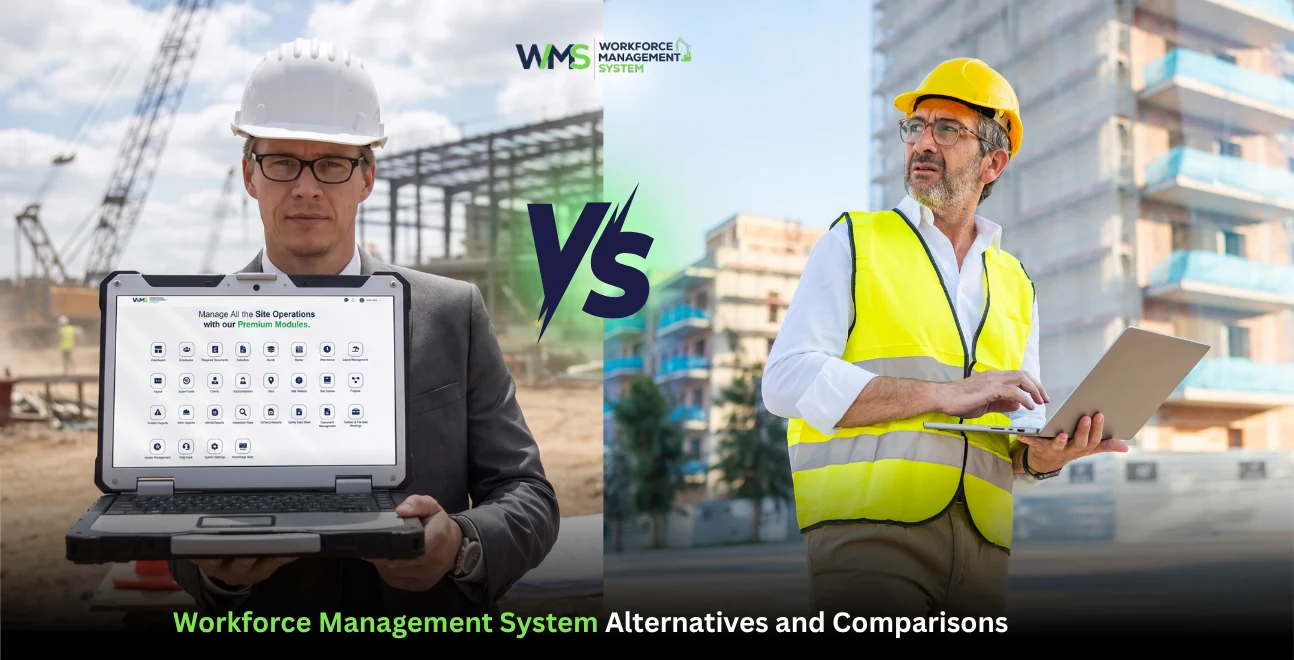
Compare the top workforce management system alternatives for Australian construction, including WorkforceMS, Deputy, Employment Hero, Procore, Assignar and Simpro, across features, pricing, usability and scalability.

Share this article
Streamline your frontline operations
See how WMS simplifies scheduling, compliance and workforce management in one powerful platform.
Introduction
Running a construction business in Australia is a job that requires keeping track of many things at the same time. You have employees working at job sites, subcontractors coming and going from the project, safety rules to follow every day, bids to submit, equipment to keep track of and bills to send out. All while trying to keep projects on schedule and within budget.
Most businesses start out doing all of this by hand using spreadsheets, paper forms or a combination of apps. For a little while, that works okay. As the business gets bigger, those manual systems start to fail. Things get forgotten. The risk of not following the rules increases. The time spent on administration gets longer.
The cost of all those inefficiencies starts to show up in the business finances. That is why more and more construction businesses in Australia are using workforce management systems. Software that brings all of these work tasks together in one place. Here is where it gets confusing. There are platforms available today. Some are made for stores. Some are made for hospitals. Some are tools for managing projects but are not really systems for managing employees. Very few are designed for the specific way construction businesses in Australia work.
This article is your guide to comparing and finding alternatives to workforce management systems. We look at the platforms to show you what each one is good at, where each one has weaknesses and how they compare. So you can make a smart decision for your construction business in Australia.
Alternatives
Let us start by covering the workforce management system alternatives available to construction businesses in Australia. These are the platforms you're most likely to come across when doing your research.
1. WorkforceMS: Purpose-Built for Australian Construction
WorkforceMS, developed by G-Tech Solutions, is a workforce management system built specifically for the Australian construction industry. It is not an HR platform adapted for construction. It was designed from the ground up with construction workflows in mind. That difference shows in every module.
WorkforceMS is built around the way construction businesses actually operate. This means managing sites, working with subcontractors, staying on top of safety obligations, running toolbox meetings, tracking equipment and raising invoices tied to real project work.
What WorkforceMS Covers
One System That Connects Every Part of Your Operation
WorkforceMS doesn't really act like some HR tool with a couple of extra features. It is more like a fully integrated platform, where each part of the system plugs into the rest, sort of always talking to each other. So when a worker is assigned to a site, their HR files, certifications and the compliance standing all move along with them, together, not separate.
When a project moves forward, tasks and invoices and reporting all update in sync. When a safety incident is recorded on site, it flows directly into your compliance documentation. This level of integration is what separates WorkforceMS from every platform on this list. WorkforceMS covers the construction workflow from the moment you win a tender and onboard a worker, all the way through project delivery, site safety, asset tracking and final invoicing. Inside a single system that your whole team can access in real time.
Built for the Way Construction Businesses Actually Work
WorkforceMS is built for the way construction businesses actually work. For construction businesses, this means no more switching between five different platforms to get a complete picture of what is happening across your projects. No more reconciling data from systems. Everything your business needs to operate, stay compliant and deliver projects profitably is built into WorkforceMS. To see how WorkforceMS works in practice for a business like yours, visit workforcems.com.au and book a demo with WorkforceMS.
2. Deputy: Scheduling and Time Tracking
Deputy is an Australian-born workforce management tool. It is widely used in hospitality, retail and healthcare where shift-based scheduling is needed.
What Deputy Does Well
Deputy makes employee scheduling quick and easy. Managers can build rosters, publish them via mobile app, track clock-ins and clock-outs, and handle leave requests. Deputy has award interpretation features that support payroll compliance. It also integrates well with payroll systems.
Where Deputy Falls Short
Deputy is mainly a scheduling and time tracking tool. It does not have project management, subcontractor management, a safety compliance module or asset tracking. For construction businesses needing operational coverage, Deputy will leave significant gaps. These gaps require additional tools, adding cost and creating data silos.
Who Deputy Is Best For
Deputy is best for businesses in hospitality, retail or healthcare. These businesses need simple scheduling and time tracking.
3. Employment Hero: HR and Payroll Management
Employment Hero is an Australian HR platform. It combines employee management, payroll automation and employee benefits in one system. It is a choice for businesses wanting to modernise their HR and payroll functions.
What Employment Hero Does Well
Employment Hero covers the HR lifecycle well. This includes onboarding, contracts, leave management, performance reviews and payroll processing. It has an award interpretation engine that handles payroll complexity. Its employee benefits marketplace is a retention tool.
Where Employment Hero Falls Short
Employment Hero is built for HR and payroll, not construction operations. There is no site management. There is no project or task management, tender tracking, subcontractor management, toolbox meeting module or asset tracking.
Who Employment Hero Is Best For
Employment Hero is best for medium-sized businesses across any industry. These businesses need an HR and payroll platform without complex field or project management requirements.
4. Procore: Construction Project Management
Procore is one of the well-known construction management platforms in the world. It is a tool for managing documents and projects in construction. Procore is very good at managing construction project documents, including drawings, contracts and budgets. For companies that manage complex projects, Procore is extremely capable.
What Procore Does Well
Procore is great at managing construction project documentation. This includes things like drawings, contracts and budgets.
Where Procore Falls Short
Procore is a project management and document control platform. It is not a system for managing workers. Procore does not handle things like human resources management or scheduling employees. It also does not manage tools or assets. Procore is also one of the most expensive platforms. This makes it hard for small businesses to use.
Who Procore Is Best For
Procore is best for construction companies with project management and document control needs and a budget to match.
5. Assignar: Field Operations and Compliance
Assignar is a platform from Australia used for managing field operations in construction and other areas. Assignar focuses on scheduling workers and managing compliance documents. It also collects data from the field.
What Assignar Does Well
Assignar is good at scheduling field workers and managing compliance. Its mobile forms are useful for collecting data from the field. Assignar was built with construction compliance in mind.
Where Assignar Falls Short
Assignar does a job with scheduling and compliance. However, it does not handle all human resources management. It also does not manage clients, bids or invoices. Assignar is not a full system for managing workers. Assignar is more focused on infrastructure construction. It is not as focused on residential construction.
Who Assignar Is Best For
Assignar is best for infrastructure companies that need to manage field scheduling and compliance documents.
6. Simpro: Trade and Field Service Management
Simpro is a platform for managing jobs used by trade and field service businesses. This includes electricians, plumbers and builders. Simpro handles things like quotes, job scheduling and invoices. It also manages field workers.
What Simpro Does Well
Simpro is strong on the operational side. It handles quotes, job scheduling and invoices. This makes it a popular choice for trade businesses.
Where Simpro Falls Short
Simpro is not a system for managing workers. It lacks human resources management. It also does not have safety compliance tools. Simpro is known for being hard to learn and set up.
Who Simpro Is Best For
Simpro is best for trade businesses including electricians, plumbers and HVAC companies. These businesses need to manage jobs, quotes and invoices.
Comparisons
Now that we have covered each platform one by one, let's bring them together and compare directly across the features, price, usability and scalability that really matter most for construction firms.
Here is the shortened feature comparison table, with only the most important and SEO relevant features kept.
Feature-by-Feature Comparison
| Feature | WorkforceMS | Deputy | Employment Hero | Procore | Assignar | Simpro |
|---|---|---|---|---|---|---|
| HRM and Employee Records | ✅ Full | ⚠️ Basic | ✅ Full | ❌ | ⚠️ Basic | ❌ |
| Subcontractor Management | ✅ Full | ❌ | ❌ | ⚠️ Partial | ⚠️ Partial | ❌ |
| Sites and Project Management | ✅ Full | ❌ | ❌ | ✅ Full | ❌ | ⚠️ Partial |
| Safety and Compliance | ✅ Full | ❌ | ❌ | ⚠️ Partial | ✅ | ❌ |
| Toolbox and Prestart Meetings | ✅ | ❌ | ❌ | ❌ | ❌ | ❌ |
| Invoicing | ✅ | ❌ | ❌ | ⚠️ Partial | ❌ | ✅ |
| Reporting and Analytics | ✅ Full | ⚠️ Basic | ⚠️ Basic | ✅ Full | ⚠️ Basic | ⚠️ Basic |
| Australian Compliance Built-In | ✅ | ✅ | ✅ | ❌ | ⚠️ Partial | ✅ |
| Built for Construction | ✅ | ❌ | ❌ | ✅ | ⚠️ Partial | ⚠️ Partial |
Pricing Comparison
Pricing across these platforms is pretty different depending on your team size, how many people you have, and which features are actually included. Deputy has entry-level pricing for smaller teams, though it ramps up fast when you grow. Employment Hero uses a per-employee monthly setup, but for larger teams, it gets pretty pricey.
Procore has enterprise-grade pricing, and it is only available if you request it. Assignar and Simpro tend to land in the mid to upper band. WorkforceMS, on the other hand, replaces several separate tools within one subscription, so it feels like the best overall deal for construction businesses.
| Platform | Pricing Model | Best Value For |
|---|---|---|
| WorkforceMS | Tailored quote | All-in-one construction value |
| Deputy | Per user/month | Small teams, basic scheduling |
| Employment Hero | Per employee/month | HR and payroll only |
| Procore | Enterprise quote | Large firms, big budgets |
| Assignar | Per user/month | Civil and field compliance |
| Simpro | Per user/month | Trade job management |
For the most accurate numbers for your situation, reach out to workforcems.com.au directly and ask for a tailored quote.
Ease of Use Comparison
A powerful platform your team struggles to use will not deliver results. Deputy and Employment Hero are generally considered easy to learn for non-technical users. Procore and Simpro are both known for steep learning curves and complex initial setup. Assignar is functional but not always intuitive for first-time users. WorkforceMS is built around workflows that construction teams already understand, meaning faster adoption and lower resistance across your entire team.
| Platform | Ease of Use | Learning Curve |
|---|---|---|
| WorkforceMS | ✅ High | Low: built for construction users |
| Deputy | ✅ High | Low: simple scheduling focus |
| Employment Hero | ✅ High | Low: clean HR interface |
| Procore | ⚠️ Moderate | High: complex, enterprise setup |
| Assignar | ⚠️ Moderate | Medium: functional but technical |
| Simpro | ⚠️ Moderate | High: steep initial setup |
Scalability Comparison
As your construction business grows, your workforce management system needs to grow with it. Procore scales well for large enterprises but is overpriced for smaller businesses. Deputy and Employment Hero scale on user numbers but not on operational depth. Assignar and Simpro have defined limits at higher complexity levels. WorkforceMS is built to scale at every stage, from a single site to twenty active projects, without requiring additional tools or a disruptive platform migration.
| Platform | Scales for Growth | Suitable Business Size |
|---|---|---|
| WorkforceMS | ✅ Full scalability | Small to large construction |
| Deputy | ⚠️ Limited depth | Small businesses |
| Employment Hero | ⚠️ Limited depth | Small to medium businesses |
| Procore | ✅ Enterprise scale | Large construction firms |
| Assignar | ⚠️ Moderate | Small to mid-sized civil businesses |
| Simpro | ⚠️ Moderate | Small to mid-sized trade businesses |
How to Choose the Right Workforce Management System

Match the Platform to Your Construction Industry
When it comes down to it, how do you really decide on a platform? The first thing you need to think about is whether the platform is really made for the construction industry. You cannot use a tool that is made for retail or healthcare in construction because it will not work well. The way construction companies work is different, and a platform that does not understand this will cause problems in solving them. You should always look for a system that is made for construction operations.
Make Sure It Covers Your Construction Operation
The next thing you need to think about is whether the platform can handle your construction operation. If you have to use a lot of tools to get everything done, it will cost more money and be more complicated. Your team will also have to learn and use a lot of systems. It is better to have one system that can do everything. This way, your daily construction work will be smoother and more efficient.
Check for Australian Compliance Support
You also need to think about compliance when you are choosing a platform. Your construction workforce management system needs to support Fair Work obligations and workplace health and safety regulations. It also needs to support payroll rules. And honestly, you really don't want to be surprised later, like discovering too late that your tool does not support the basics you were relying on. So before you sign up, double-check if the platform is compliant or at least it fits what you need.
Prioritise Ease of Use for Your Construction Team
Ease of use is also very important for your construction team. A platform that is too hard to use will not be used at all. The best system is the one that your construction team will use every day. So you should think about how easy it is to use when you are evaluating different options.
Think About Where Your Construction Business Is Headed
Finally, you need to think about where your construction business is going in the future. The right workforce management system should be able to handle your construction business as it grows. In three to five years, you may have more construction projects and a bigger team. Your system should be able to handle this growth without you having to change systems.
Why WorkforceMS Stands Apart
When you really think about all these options, one thing stands out. Most platforms are made for general business use or are just one part of a department. They might be good at one thing. They leave big gaps that construction businesses have to fill with extra tools, manual work or expensive integrations.
WorkforceMS is not like that. It was made for construction businesses in Australia, and it covers everything. Human resources, clients, subcontractors, sites, tenders, projects, tasks, safety, meetings, equipment, invoicing and reports. All of this is in one system.
Your human resources team, project managers, site supervisors, safety officers and finance team can all use the platform and see the same information at the same time. You do not have to enter information more than once. You do not have to chase paper forms. You do not have to worry about missing something that could put your business in trouble.
For construction businesses in Australia who want to run an efficient and safe operation, WorkforceMS is the best option. You can go to workforcems.com.au to learn more or book a demo that's just for you.
Final Thoughts
Choosing a system to manage your workforce is a big deal. The right system saves your team a lot of time, reduces the risk of mistakes, helps you see what is going on with your projects and gives your business a foundation to grow. The wrong system, or not using a system at all, will hold you back, create work and leave your business open to expensive mistakes and missed deadlines.
Take your time. Really think about your options. Do not just look at what features each system has. Think about which system was made for businesses like yours. For construction businesses in Australia, the answer is clear. WorkforceMS was made for your business. You can go to workforcems.com.au to get started with WorkforceMS.
Optimise your operations with WMS
Streamline scheduling, compliance, and workforce management in one platform.
Frequently Asked Questions
If you are looking for a WMS alternative for construction, WorkforceMS is a great option. It is a workforce management system built specifically for Australian construction businesses. This system helps with HR, subcontractors, safety, tenders, projects, invoicing and reporting on one platform.
Each platform has its strengths. Deputy is good for scheduling. Employment Hero is good for payroll. Procore is good for project documentation. WorkforceMS covers the construction workflow. WorkforceMS is the platform that does everything in one system.
When it comes to safety and compliance, WorkforceMS is the option. It has modules for safety documentation, incident tracking and toolbox meetings. Some other platforms, like Assignar, cover compliance, but not as much as WorkforceMS.
WFM software is a tool that helps businesses handle their workforce. For construction companies, it also tends to include safety stuff, subcontractors, projects and invoicing, so it does a lot more than basic time tracking. Basically, this software supports planning, scheduling, and keeping tabs on what work is actually happening.
Some popular examples are WorkforceMS, Deputy, Employment Hero, Procore, Assignar and Simpro. Each one is different and serves different needs. WorkforceMS is the one built specifically for Australian construction.
Some key Workforce Management System companies in Australia are WorkforceMS, Deputy, Employment Hero, Assignar, Procore and Simpro. WorkforceMS is the one built specifically for Australian construction.
Related Articles
Explore more insights on workforce management, compliance, and operations.

Security Operations and Monitoring Workforce Planning
Plan guard rosters, track live attendance and cover every shift with WorkforceMS. Strengthen security operations and monitoring with smarter workforce planning.

Muhammad Asim
09 Oct 2026

Telehealth and Digital Healthcare Scheduling WMS
Simplify telehealth and digital healthcare scheduling with WorkforceMS. Manage rosters, remote clock-ins and compliance records in one easy-to-use platform.
Muhammad Asim
08 Oct 2026

Healthcare Workforce Management for Aged Care
Simplify rostering, credential tracking and payroll for aged care healthcare teams. Discover how WorkforceMS gives your carers more time with residents.
Muhammad Asim
05 Oct 2026
Ready to secure your operations?
